
Before Memmo my notes were scattered across PDFs. Now a workspace pulls everything into one place — I see exactly what's still left to study.
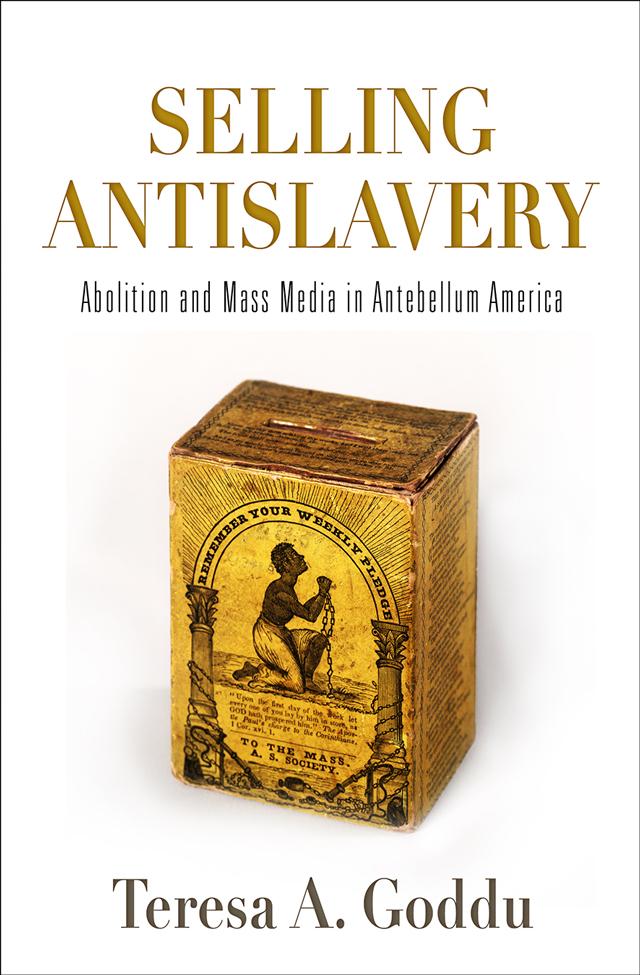
Beginning with its establishment in the early 1830s, the American Anti-Slavery Society (AASS) recognized the need to reach and consolidate a diverse and increasingly segmented audience. To do so, it produced a wide array of print, material, and visual media: almanacs and slave narratives, pincushions and gift books, broadsides and panoramas. Building on the distinctive practices of British antislavery and evangelical reform movements, the AASS utilized innovative business strategies to market its productions and developed a centralized distribution system to circulate them widely. In Selling Antislavery, Teresa A. Goddu shows how the AASS operated at the forefront of a new culture industry and, by framing its media as cultural commodities, made antislavery sentiments an integral part of an emerging middle-class identity. She contends that, although the AASS's dominance waned after 1840 as the organization splintered, it nevertheless created one of the first national mass markets.
Goddu maps this extensive media culture, focusing in particular on the material produced by AASS in the decade of the 1830s. She considers how the dissemination of its texts, objects, and tactics was facilitated by the quasi-corporate and centralized character of the organization during this period and demonstrates how its institutional presence remained important to the progress of the larger movement. Exploring antislavery's vast archive and explicating its messages, she emphasizes both the discursive and material aspects of antislavery's appeal, providing a richly textured history of the movement through its artifacts and the modes of circulation it put into place.
Featuring more than seventy-five illustrations, Selling Antislavery offers a thorough case study of the role of reform movements in the rise of mass media and argues for abolition's central importance to the shaping of antebellum middle-class culture.
Before Memmo my notes were scattered across PDFs. Now a workspace pulls everything into one place — I see exactly what's still left to study.
Memmo's summaries are gold before exams. I don't have to re-read 800 pages two weeks before — just the important parts.
The AI chat has saved me the night before an exam more than once. I just keep asking until I get it — no waiting on a study group to reply.
The quizzes hit exactly what I need to know. Memmo tracks what I get stuck on — so I only practice what's worth it.
Flashcards with spaced repetition are magic. Memmo knows when I'm about to forget something and brings it back.
The AI podcasts are my favorite. I listen on my way to school and get a recap without sitting at a computer.

Handbok i kvalitativa metoder
281 kr

Hållbar utveckling: en introduktion för ingenjörer och andra problemlösare
334 kr

Brymans Samhällsvetenskapliga metoder
390 kr

Projektledning
491 kr

Den orättvisa hälsan: om socioekonomiska skillnader i hälsa och livslängd
326 kr

Vetenskapsteori för nybörjare
196 kr

Organizational Leadership
429 kr

På väg mot läraryrket
172 kr

Det sociala livet i skolan: Socialpsykologiska perspektiv
253 kr

Betygsättningens didaktik
151 kr

Personality
402 kr

Studying Leadership
404 kr

Managing Innovation
477 kr

Introduktion till samhällsvetenskaplig metod
347 kr

The Psychology of Sex and Gender
698 kr

Evidens och kunskap för socialt arbete
207 kr

Introduction to Leadership
605 kr