
Before Memmo my notes were scattered across PDFs. Now a workspace pulls everything into one place — I see exactly what's still left to study.
Expert analysis of American governance challenges and recommendations for reform
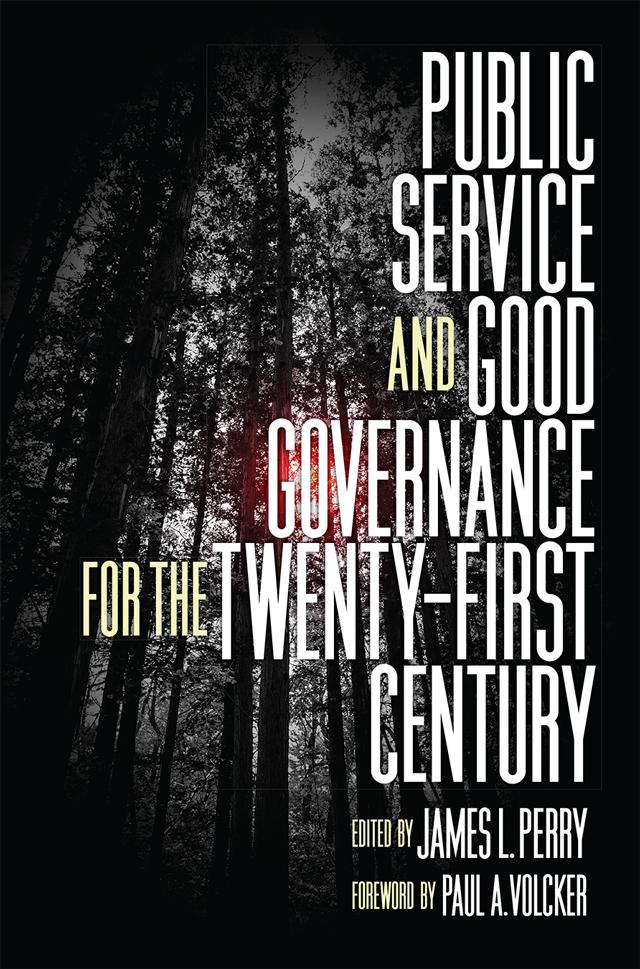
Two big ideas serve as the catalyst for the essays collected in this book. The first is the state of governance in the United States, which Americans variously perceive as broken, frustrating, and unresponsive. Editor James Perry observes in his Introduction that this perception is rooted in three simultaneous developments: government's failure to perform basic tasks that once were taken for granted, an accelerating pace of change that quickly makes past standards of performance antiquated, and a dearth of intellectual capital that generate the capacity to bridge the gulf between expectations and performance. The second idea hearkens back to the Progressive era, when Americans revealed themselves to be committed to better administration of their government at all levels—federal, state, and local.
These two ideas—the diminishing capacity for effective governance and Americans' expectations for reform—are veering in opposite directions. Contributors to Public Service and Good Governance for the Twenty-First Century explore these central ideas by addressing such questions as: what is the state of government today? Can future disruptions of governance and public service be anticipated? What forms of government will emerge from the past and what institutions and structures will be needed to meet future challenges? And lastly, and perhaps most importantly, what knowledge, skills, and abilities will need to be fostered for tomorrow's civil servants to lead and execute effectively?
Public Service and Good Governance for the Twenty-First Century offers recommendations for bending the trajectories of governance capacity and reform expectations toward convergence, including reversing the trend of administrative disinvestment, developing talent for public leadership through higher education, creating a federal civil service to meet future needs, and rebuilding bipartisanship so that the sweeping changes needed to restore good government become possible.
Contributors: Sheila Bair, William W. Bradley, John J. DiIulio, Jr., Angela Evans, Francis Fukuyama, Donald F. Kettl, Ramayya Krishnan, Paul C. Light, Shelley Metzenbaum, Norman J. Ornstein, James L. Perry, Norma M. Riccucci, Paul R. Verkuil, Paul A. Volcker.
Before Memmo my notes were scattered across PDFs. Now a workspace pulls everything into one place — I see exactly what's still left to study.
Memmo's summaries are gold before exams. I don't have to re-read 800 pages two weeks before — just the important parts.
The AI chat has saved me the night before an exam more than once. I just keep asking until I get it — no waiting on a study group to reply.
The quizzes hit exactly what I need to know. Memmo tracks what I get stuck on — so I only practice what's worth it.
Flashcards with spaced repetition are magic. Memmo knows when I'm about to forget something and brings it back.
The AI podcasts are my favorite. I listen on my way to school and get a recap without sitting at a computer.

Handbok i kvalitativa metoder
281 kr

Hållbar utveckling: en introduktion för ingenjörer och andra problemlösare
334 kr

Brymans Samhällsvetenskapliga metoder
390 kr

Projektledning
491 kr

Den orättvisa hälsan: om socioekonomiska skillnader i hälsa och livslängd
326 kr

Vetenskapsteori för nybörjare
196 kr

Organizational Leadership
429 kr

På väg mot läraryrket
172 kr

Det sociala livet i skolan: Socialpsykologiska perspektiv
253 kr

Betygsättningens didaktik
151 kr

Personality
402 kr

Studying Leadership
404 kr

Managing Innovation
477 kr

Introduktion till samhällsvetenskaplig metod
347 kr

The Psychology of Sex and Gender
698 kr

Evidens och kunskap för socialt arbete
207 kr

Introduction to Leadership
605 kr