
Before Memmo my notes were scattered across PDFs. Now a workspace pulls everything into one place — I see exactly what's still left to study.
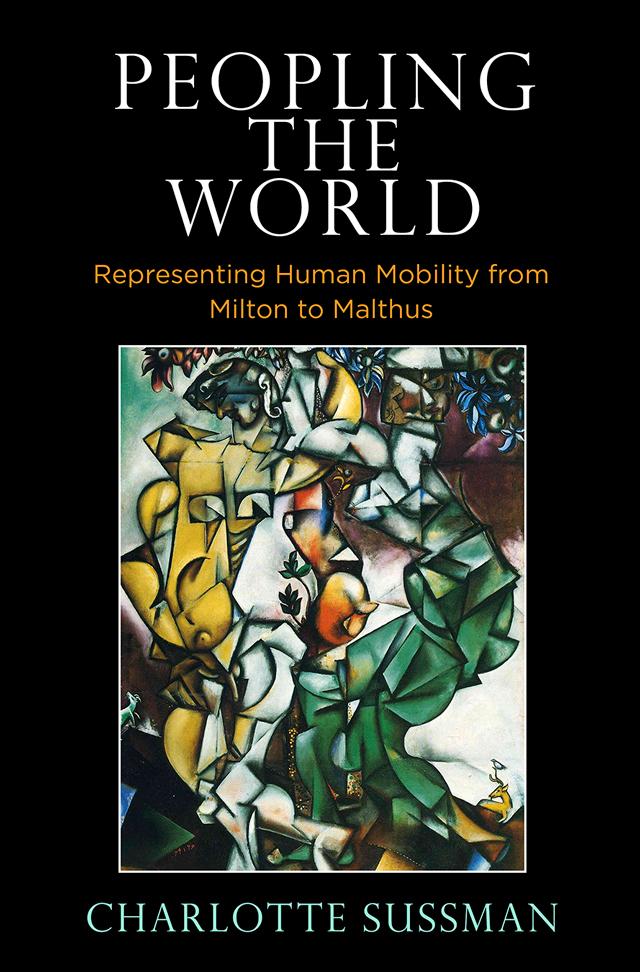
A compelling study of views about population and demographic mobility in the British long eighteenth century
In John Milton's Paradise Lost of 1667, Adam and Eve are promised they will produce a "race to fill the world," a thought that consoles them even after the trauma of the fall. By 1798, the idea that the world would one day be entirely filled by people had become, in Thomas Malthus's hands, a nightmarish vision. In Peopling the World, Charlotte Sussman asks how and why this shift took place. How did Britain's understanding of the value of reproduction, the vacancy of the planet, and the necessity of moving people around to fill its empty spaces change? Sussman addresses these questions through readings of texts by Malthus, Milton, Swift, Defoe, Goldsmith, Sir Walter Scott, Mary Shelley, and others, and by placing these authors in the context of debates about scientific innovation, emigration, cultural memory, and colonial settlement.
Sussman argues that a shift in thinking about population and mobility occurred in the third quarter of the eighteenth century. Before that point, both political and literary texts were preoccupied with "useless" populations that could be made useful by being dispersed over Britain's domestic and colonial territories; after 1760, a concern with the depopulation caused by emigration began to take hold. She explains this change in terms of the interrelated developments of a labor theory of value, a new idea of national identity after the collapse of Britain's American empire, and a move from thinking of reproduction as a national resource to thinking of it as an individual choice. She places Malthus at the end of this history because he so decisively moved thinking about population away from a worldview in which there was always more space to be filled and toward the temporal inevitability of the whole world filling up with people.
Before Memmo my notes were scattered across PDFs. Now a workspace pulls everything into one place — I see exactly what's still left to study.
Memmo's summaries are gold before exams. I don't have to re-read 800 pages two weeks before — just the important parts.
The AI chat has saved me the night before an exam more than once. I just keep asking until I get it — no waiting on a study group to reply.
The quizzes hit exactly what I need to know. Memmo tracks what I get stuck on — so I only practice what's worth it.
Flashcards with spaced repetition are magic. Memmo knows when I'm about to forget something and brings it back.
The AI podcasts are my favorite. I listen on my way to school and get a recap without sitting at a computer.

Handbok i kvalitativa metoder
281 kr

Hållbar utveckling: en introduktion för ingenjörer och andra problemlösare
334 kr

Brymans Samhällsvetenskapliga metoder
390 kr

Projektledning
491 kr

Den orättvisa hälsan: om socioekonomiska skillnader i hälsa och livslängd
326 kr

Vetenskapsteori för nybörjare
196 kr

Organizational Leadership
429 kr

På väg mot läraryrket
172 kr

Det sociala livet i skolan: Socialpsykologiska perspektiv
253 kr

Betygsättningens didaktik
151 kr

Personality
402 kr

Studying Leadership
404 kr

Managing Innovation
477 kr

Introduktion till samhällsvetenskaplig metod
347 kr

The Psychology of Sex and Gender
698 kr

Evidens och kunskap för socialt arbete
207 kr

Introduction to Leadership
605 kr