
Before Memmo my notes were scattered across PDFs. Now a workspace pulls everything into one place — I see exactly what's still left to study.
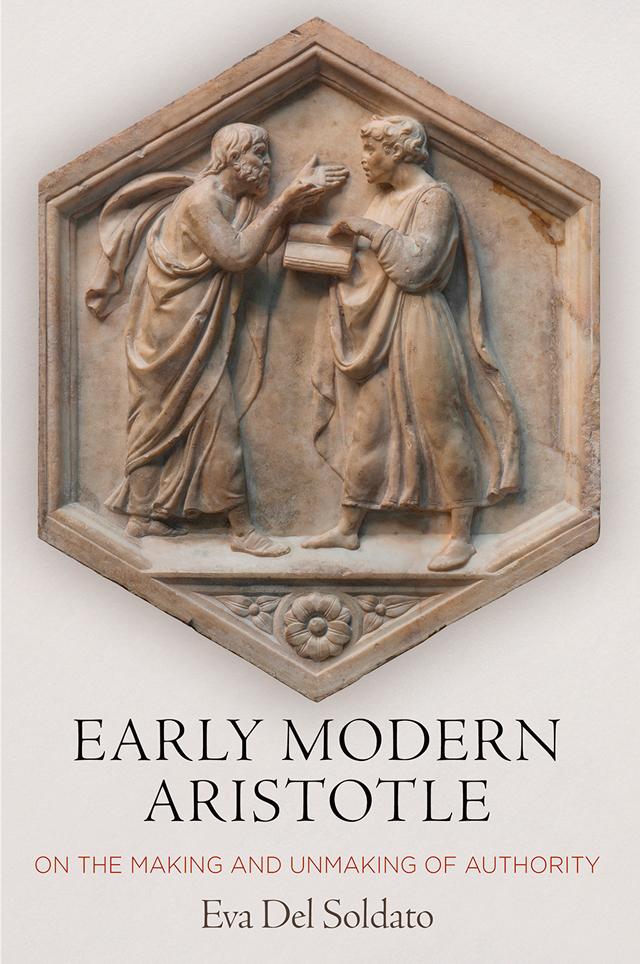
A reassessment of how the legacy of ancient philosophy functioned in early modern Europe
In his Nicomachean Ethics, Aristotle affirms that despite his friendship with Plato, he was a better friend of the truth. With this statement, he rejected his teacher's authority, implying that the pursuit of philosophy does not entail any such obedience. Yet over the centuries Aristotle himself became the authority par excellence in the Western world, and even notorious anti-Aristotelians such as Galileo Galilei preferred to keep him as a friend rather than to contradict him openly. In Early Modern Aristotle, Eva Del Soldato contends that because the authority of Aristotle—like that of any other ancient, including Plato—was a construct, it could be tailored and customized to serve agendas that were often in direct contrast to one another, at times even in open conflict with the very tenets of Peripatetic philosophy.
Arguing that recourse to the principle of authority was not merely an instrument for inculcating minds with an immutable body of knowledge, Del Soldato investigates the ways in which the authority of Aristotle was exploited in a variety of contexts. The stories the five chapters tell often develop along the same chronological lines, and reveal consistent diachronic and synchronic patterns. Each focuses on strategies of negotiation, integration and rejection of Aristotle, considering both macro-phenomena, such as the philosophical genre of the comparatio (that is, a comparison of Aristotle and Plato's lives and doctrines), and smaller-scale receptions, such as the circulation of legends, anecdotes, fictions, and rhetorical tropes ("if Aristotle were alive . . ."), all featuring Aristotle as their protagonist. Through the analysis of surprisingly neglected episodes in intellectual history, Early Modern Aristotle traces how the authority of the ancient philosopher—constantly manipulated and negotiated—shaped philosophical and scientific debate in Europe from the fifteenth century until the dawn of the Enlightenment.
Before Memmo my notes were scattered across PDFs. Now a workspace pulls everything into one place — I see exactly what's still left to study.
Memmo's summaries are gold before exams. I don't have to re-read 800 pages two weeks before — just the important parts.
The AI chat has saved me the night before an exam more than once. I just keep asking until I get it — no waiting on a study group to reply.
The quizzes hit exactly what I need to know. Memmo tracks what I get stuck on — so I only practice what's worth it.
Flashcards with spaced repetition are magic. Memmo knows when I'm about to forget something and brings it back.
The AI podcasts are my favorite. I listen on my way to school and get a recap without sitting at a computer.

Handbok i kvalitativa metoder
281 kr

Hållbar utveckling: en introduktion för ingenjörer och andra problemlösare
334 kr

Brymans Samhällsvetenskapliga metoder
390 kr

Projektledning
491 kr

Den orättvisa hälsan: om socioekonomiska skillnader i hälsa och livslängd
326 kr

Vetenskapsteori för nybörjare
196 kr

Organizational Leadership
429 kr

På väg mot läraryrket
172 kr

Det sociala livet i skolan: Socialpsykologiska perspektiv
253 kr

Betygsättningens didaktik
151 kr

Personality
402 kr

Studying Leadership
404 kr

Managing Innovation
477 kr

Introduktion till samhällsvetenskaplig metod
347 kr

The Psychology of Sex and Gender
698 kr

Evidens och kunskap för socialt arbete
207 kr

Introduction to Leadership
605 kr