
Before Memmo my notes were scattered across PDFs. Now a workspace pulls everything into one place — I see exactly what's still left to study.
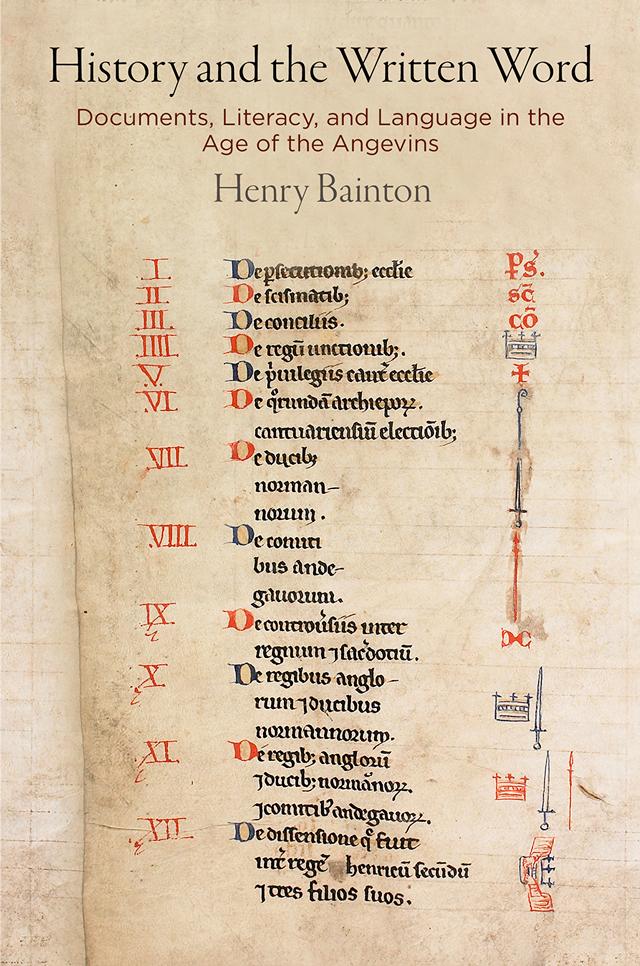
A thought-provoking look at the Angevin aristocracy's literary practices and historical record
Coming upon the text of a document such as a charter or a letter inserted into the fabric of a medieval chronicle and quoted in full or at length, modern readers might well assume that the chronicler is simply doing what good historians have always done—that is, citing his source as evidence. Such documentary insertions are not ubiquitous in medieval historiography, however, and are in fact particularly characteristic of the history-writing produced by the Angevins in England and Northern France in the later twelfth century.
In History and the Written Word, Henry Bainton puts these documentary gestures center stage in an attempt to understand what the chroniclers were doing historiographically, socially, and culturally when they transcribed a document into a work of history. Where earlier scholars who have looked at the phenomenon have explained this increased use of documents by considering the growing bureaucratic state and an increasing historiographical concern for documentary evidence, Bainton seeks to resituate these histories, together with their authors and users, within literate but sub-state networks of political power. Proposing a new category he designates "literate lordship" to describe the form of power with which documentary history-writing was especially concerned, he shows how important the vernacular was in recording the social lives of these literate lords and how they found it a particularly appropriate medium through which to record their roles in history.
Drawing on the perspectives of modern and medieval narratology, medieval multilingualism, and cultural memory, History and the Written Word argues that members of an administrative elite demonstrated their mastery of the rules of literate political behavior by producing and consuming history-writing and its documents.
Before Memmo my notes were scattered across PDFs. Now a workspace pulls everything into one place — I see exactly what's still left to study.
Memmo's summaries are gold before exams. I don't have to re-read 800 pages two weeks before — just the important parts.
The AI chat has saved me the night before an exam more than once. I just keep asking until I get it — no waiting on a study group to reply.
The quizzes hit exactly what I need to know. Memmo tracks what I get stuck on — so I only practice what's worth it.
Flashcards with spaced repetition are magic. Memmo knows when I'm about to forget something and brings it back.
The AI podcasts are my favorite. I listen on my way to school and get a recap without sitting at a computer.

Handbok i kvalitativa metoder
281 kr

Hållbar utveckling: en introduktion för ingenjörer och andra problemlösare
334 kr

Brymans Samhällsvetenskapliga metoder
390 kr

Projektledning
491 kr

Den orättvisa hälsan: om socioekonomiska skillnader i hälsa och livslängd
326 kr

Organizational Leadership
429 kr

Vetenskapsteori för nybörjare
196 kr

På väg mot läraryrket
172 kr

Det sociala livet i skolan: Socialpsykologiska perspektiv
253 kr

Betygsättningens didaktik
151 kr

Personality
402 kr

Studying Leadership
404 kr

Managing Innovation
477 kr

Introduktion till samhällsvetenskaplig metod
347 kr

The Psychology of Sex and Gender
698 kr

Evidens och kunskap för socialt arbete
207 kr

Introduction to Leadership
605 kr