
Before Memmo my notes were scattered across PDFs. Now a workspace pulls everything into one place — I see exactly what's still left to study.
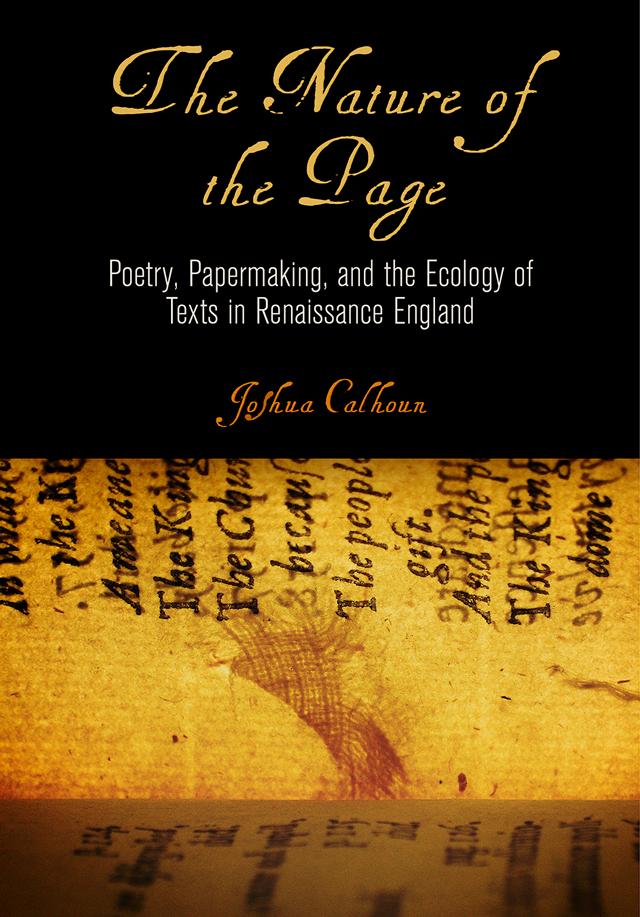
An innovative study of books and reading that focuses on papermaking in the Renaissance
In The Nature of the Page, Joshua Calhoun tells the story of handmade paper in Renaissance England and beyond. For most of the history of printing, paper was made primarily from recycled rags, so this is a story about using old clothes to tell new stories, about plants used to make clothes, and about plants that frustrated papermakers' best attempts to replace scarce natural resources with abundant ones. Because plants, like humans, are susceptible to the ravages of time, it is also a story of corruption and the hope that we can preserve the things we love from decay.
Combining environmental and bibliographical research with deft literary analysis, Calhoun reveals how much we have left to discover in familiar texts. He describes the transformation of plant material into a sheet of paper, details how ecological availability or scarcity influenced literary output in the sixteenth and seventeenth centuries, and examines the impact of the various colors and qualities of paper on early modern reading practices. Through a discussion of sizing—the mixture used to coat the surface of paper so that ink would not blot into its fibers—he reveals a surprising textual interaction between animals and readers. He shows how we might read an indistinct stain on the page of an early modern book to better understand the mixed media surfaces on which readers, writers, and printers recorded and revised history. Lastly, Calhoun considers how early modern writers imagined paper decay and how modern scholars grapple with biodeterioration today.
Exploring the poetic interplay between human ideas and the plant, animal, and mineral forms through which they are mediated, The Nature of the Page prompts readers to reconsider the role of the natural world in everything from old books to new smartphones.
Before Memmo my notes were scattered across PDFs. Now a workspace pulls everything into one place — I see exactly what's still left to study.
Memmo's summaries are gold before exams. I don't have to re-read 800 pages two weeks before — just the important parts.
The AI chat has saved me the night before an exam more than once. I just keep asking until I get it — no waiting on a study group to reply.
The quizzes hit exactly what I need to know. Memmo tracks what I get stuck on — so I only practice what's worth it.
Flashcards with spaced repetition are magic. Memmo knows when I'm about to forget something and brings it back.
The AI podcasts are my favorite. I listen on my way to school and get a recap without sitting at a computer.

Handbok i kvalitativa metoder
281 kr

Hållbar utveckling: en introduktion för ingenjörer och andra problemlösare
334 kr

Brymans Samhällsvetenskapliga metoder
390 kr

Projektledning
491 kr

Den orättvisa hälsan: om socioekonomiska skillnader i hälsa och livslängd
326 kr

Vetenskapsteori för nybörjare
196 kr

Organizational Leadership
429 kr

På väg mot läraryrket
172 kr

Det sociala livet i skolan: Socialpsykologiska perspektiv
253 kr

Betygsättningens didaktik
151 kr

Personality
402 kr

Studying Leadership
404 kr

Managing Innovation
477 kr

Introduktion till samhällsvetenskaplig metod
347 kr

The Psychology of Sex and Gender
698 kr

Evidens och kunskap för socialt arbete
207 kr

Introduction to Leadership
605 kr