
Before Memmo my notes were scattered across PDFs. Now a workspace pulls everything into one place — I see exactly what's still left to study.
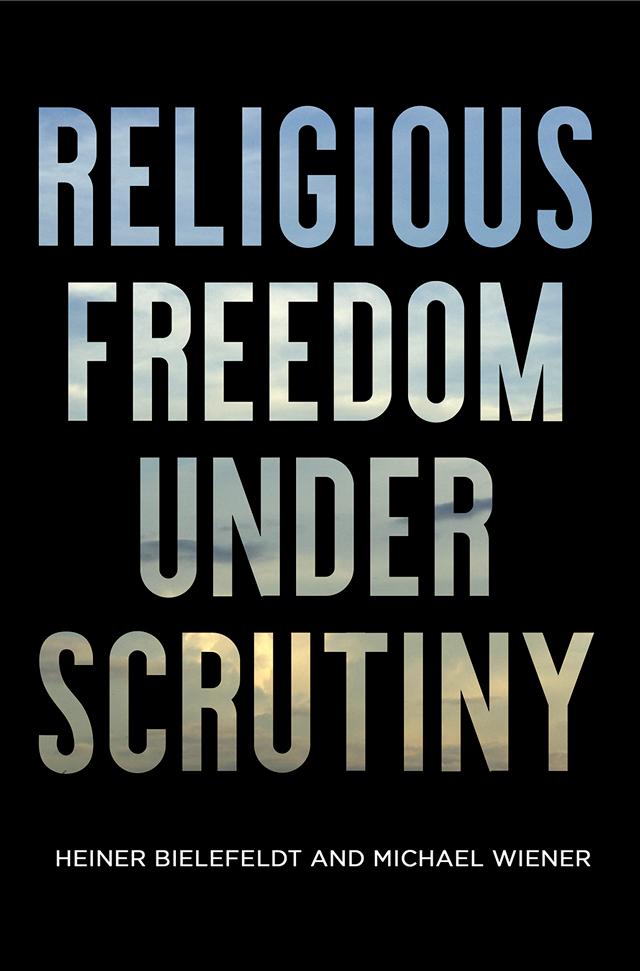
Freedom of religion or belief is deeply entrenched in international human rights conventions and constitutional traditions around the world. Article 18 of the Universal Declaration of Human Rights enshrines the right to freedom of thought, conscience, and religion as does the International Covenant on Civil and Political Rights, which the United Nations General Assembly adopted in 1966. A rich jurisprudence on freedom of religion or belief is based on the European Convention on Human Rights, drafted in 1950 by the Council of Europe. Similar regional guarantees exist in the framework of the Organization of American States as well as within the African Union. Freedom of religion or belief has found recognition in numerous national constitutions, and some governments have shown a particularly strong commitment to the international promotion of this right.
As Heiner Bielefeldt and Michael Wiener observe, however, freedom of religion or belief remains a source of political conflict, legal controversy, and intellectual debate. In Religious Freedom Under Scrutiny, Bielefeldt and Wiener explore various critiques leveled at this right. For example, does freedom of religion contribute to the spread of Western neoliberal values to the detriment of religious and cultural diversity? Can religious freedom serve as the entry point for antifeminist agendas within the human rights framework? Drawing on their considerable experience in the field, Bielefeldt and Wiener provide a typological overview and analysis of violations around the world that illustrate the underlying principles as well as the relationship between freedom of religion or belief and other human rights.
Religious Freedom Under Scrutiny argues that without freedom of religion or belief, human rights cannot fully address our complex needs, yearnings, and vulnerabilities as human beings. Furthermore, ignoring or marginalizing freedom of religion or belief would weaken the plausibility, attractiveness, and legitimacy of the entire system of human rights.
Before Memmo my notes were scattered across PDFs. Now a workspace pulls everything into one place — I see exactly what's still left to study.
Memmo's summaries are gold before exams. I don't have to re-read 800 pages two weeks before — just the important parts.
The AI chat has saved me the night before an exam more than once. I just keep asking until I get it — no waiting on a study group to reply.
The quizzes hit exactly what I need to know. Memmo tracks what I get stuck on — so I only practice what's worth it.
Flashcards with spaced repetition are magic. Memmo knows when I'm about to forget something and brings it back.
The AI podcasts are my favorite. I listen on my way to school and get a recap without sitting at a computer.

Handbok i kvalitativa metoder
281 kr

Hållbar utveckling: en introduktion för ingenjörer och andra problemlösare
334 kr

Brymans Samhällsvetenskapliga metoder
390 kr

Projektledning
491 kr

Den orättvisa hälsan: om socioekonomiska skillnader i hälsa och livslängd
326 kr

Vetenskapsteori för nybörjare
196 kr

Organizational Leadership
429 kr

På väg mot läraryrket
172 kr

Det sociala livet i skolan: Socialpsykologiska perspektiv
253 kr

Betygsättningens didaktik
151 kr

Personality
402 kr

Studying Leadership
404 kr

Managing Innovation
477 kr

Introduktion till samhällsvetenskaplig metod
347 kr

The Psychology of Sex and Gender
698 kr

Evidens och kunskap för socialt arbete
207 kr

Introduction to Leadership
605 kr