
Before Memmo my notes were scattered across PDFs. Now a workspace pulls everything into one place — I see exactly what's still left to study.
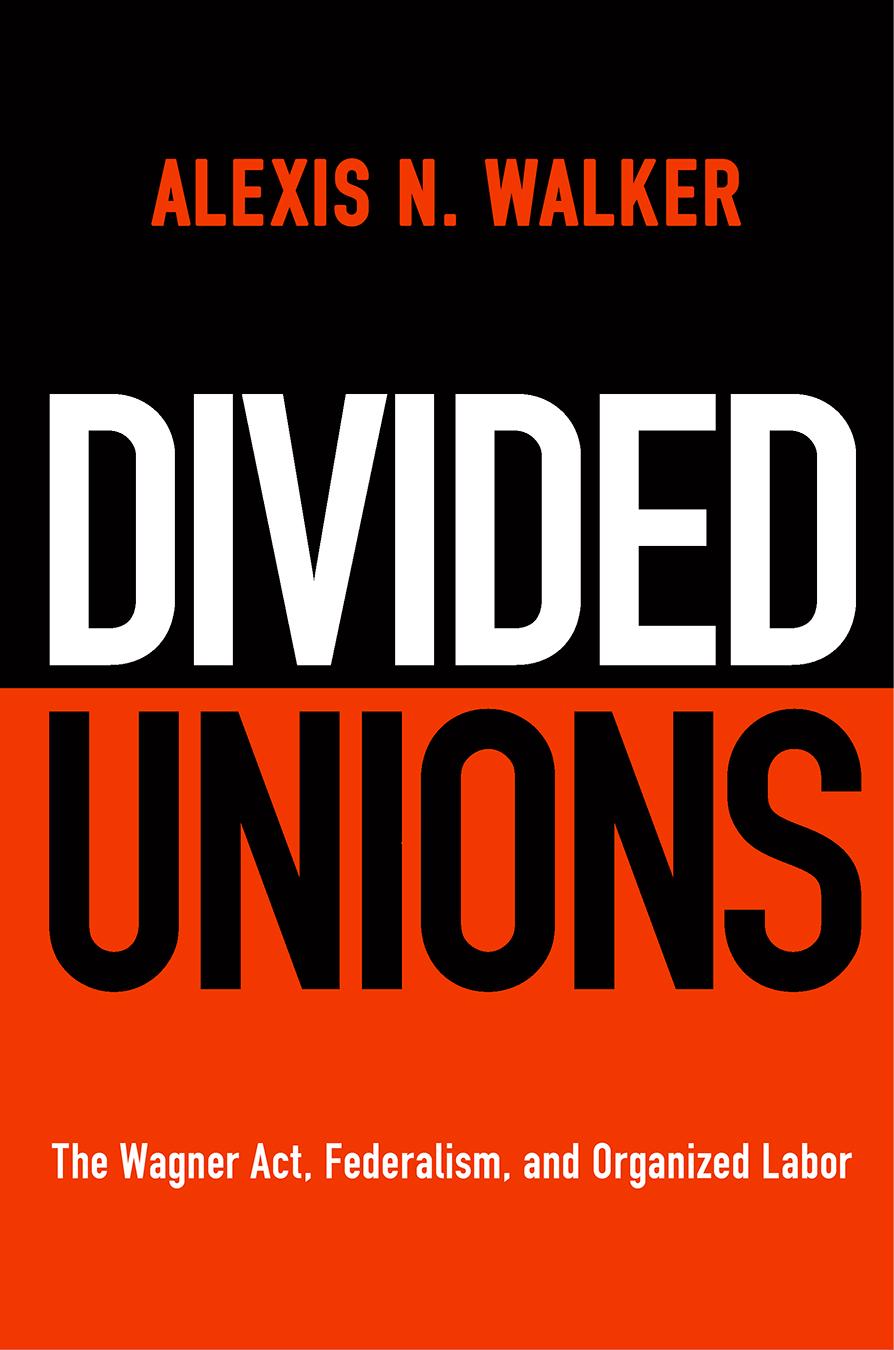
A comparative history of public and private sector unions from the Wagner Act of 1935 until today
The 2011 battle in Wisconsin over public sector employees' collective bargaining rights occasioned the largest protests in the state since the Vietnam War. Protestors occupied the state capitol building for days and staged massive rallies in downtown Madison, receiving international news coverage. Despite an unprecedented effort to oppose Governor Scott Walker's bill, Act 10 was signed into law on March 11, 2011, stripping public sector employees of many of their collective bargaining rights and hobbling government unions in Wisconsin. By situating the events of 2011 within the larger history of public sector unionism, Alexis N. Walker demonstrates how the passage of Act 10 in Wisconsin was not an exceptional moment, but rather the culmination of events that began over eighty years ago with the passage of the Wagner Act in 1935.
Although explicitly about government unions, Walker's book argues that the fates of public and private sector unions are inextricably linked. She contends that the exclusion of public sector employees from the foundation of private sector labor law, the Wagner Act, firmly situated private sector law at the national level, while relegating public sector employees' efforts to gain collective bargaining rights to the state and local levels. She shows how private sector unions benefited tremendously from the national-level protections in the law while, in contrast, public sector employees' efforts progressed slowly, were limited to union-friendly states, and the collective bargaining rights that they finally did obtain were highly unequal and vulnerable to retrenchment. As a result, public and private sector unions peaked at different times, preventing a large, unified labor movement. The legacy of the Wagner Act, according to Walker, is that labor remains geographically concentrated, divided by sector, and hobbled in its efforts to represent working Americans politically in today's era of rising economic inequality.
Before Memmo my notes were scattered across PDFs. Now a workspace pulls everything into one place — I see exactly what's still left to study.
Memmo's summaries are gold before exams. I don't have to re-read 800 pages two weeks before — just the important parts.
The AI chat has saved me the night before an exam more than once. I just keep asking until I get it — no waiting on a study group to reply.
The quizzes hit exactly what I need to know. Memmo tracks what I get stuck on — so I only practice what's worth it.
Flashcards with spaced repetition are magic. Memmo knows when I'm about to forget something and brings it back.
The AI podcasts are my favorite. I listen on my way to school and get a recap without sitting at a computer.

Handbok i kvalitativa metoder
281 kr

Hållbar utveckling: en introduktion för ingenjörer och andra problemlösare
334 kr

Brymans Samhällsvetenskapliga metoder
390 kr

Projektledning
491 kr

Den orättvisa hälsan: om socioekonomiska skillnader i hälsa och livslängd
326 kr

Organizational Leadership
429 kr

Vetenskapsteori för nybörjare
196 kr

På väg mot läraryrket
172 kr

Det sociala livet i skolan: Socialpsykologiska perspektiv
253 kr

Betygsättningens didaktik
151 kr

Personality
402 kr

Studying Leadership
404 kr

Managing Innovation
477 kr

Introduktion till samhällsvetenskaplig metod
347 kr

The Psychology of Sex and Gender
698 kr

Evidens och kunskap för socialt arbete
207 kr

Introduction to Leadership
605 kr