
Before Memmo my notes were scattered across PDFs. Now a workspace pulls everything into one place — I see exactly what's still left to study.
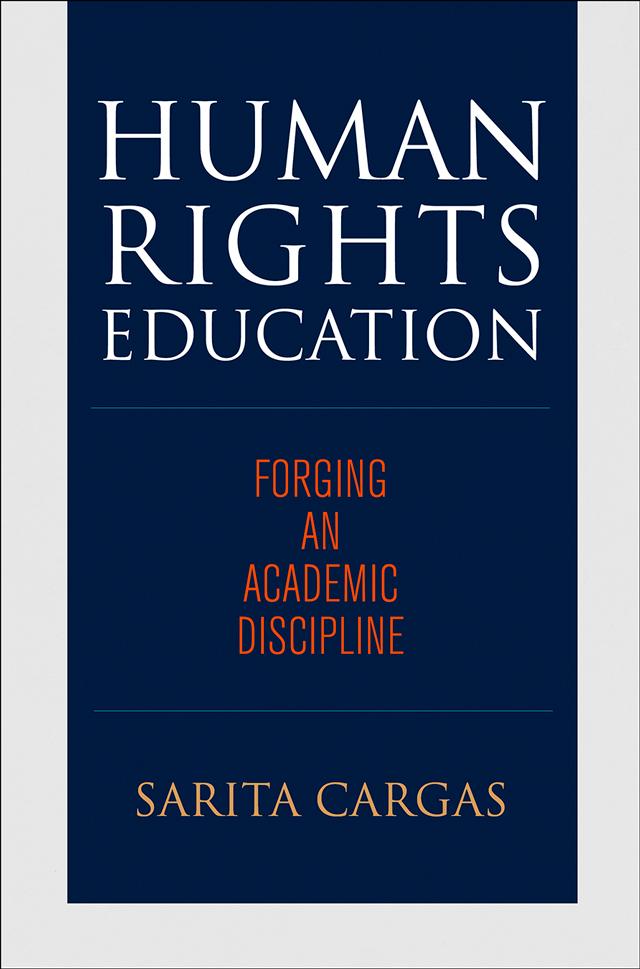
In tracing the origins of the modern human-rights movement, historians typically point to two periods: the 1940s, in which decade the Universal Declaration of Human Rights (UDHR) was ratified by the United Nations General Assembly; and the 1970s, during which numerous human rights nongovernmental organizations (NGOs), most notably Amnesty International and Médecins Sans Frontières, came into existence. It was also in the 1970s, Sarita Cargas observes, when the first classes in international human rights began to be taught in law schools and university political science departments in the United States.
Cargas argues that the time has come for human rights to be acknowledged as an academic discipline. She notes that human rights has proven to be a relevant field to scholars and students in political science and international relations and law for over half a century. It has become of interest to anthropology, history, sociology, and religious studies, as well as a requirement even in social work and education programs. However, despite its interdisciplinary nature, Cargas demonstrates that human rights meets the criteria that define an academic discipline in that it possesses a canon of literature, a shared set of concerns, a community of scholars, and a methodology.
In an analysis of human rights curricula in Australia, Canada, the United Kingdom, and the United States, Cargas identifies an informal consensus on the epistemological foundations of human rights, including familiarity with human rights law; knowledge of major actors including the United Nations, governments, NGOS, and multinational corporations; and, most crucially, awareness and advocacy of the rights and freedoms detailed in the articles of the UDHR. The second half of the book offers practical recommendations for creating a human rights major or designing courses at the university level in the United States.
Before Memmo my notes were scattered across PDFs. Now a workspace pulls everything into one place — I see exactly what's still left to study.
Memmo's summaries are gold before exams. I don't have to re-read 800 pages two weeks before — just the important parts.
The AI chat has saved me the night before an exam more than once. I just keep asking until I get it — no waiting on a study group to reply.
The quizzes hit exactly what I need to know. Memmo tracks what I get stuck on — so I only practice what's worth it.
Flashcards with spaced repetition are magic. Memmo knows when I'm about to forget something and brings it back.
The AI podcasts are my favorite. I listen on my way to school and get a recap without sitting at a computer.

Handbok i kvalitativa metoder
281 kr

Hållbar utveckling: en introduktion för ingenjörer och andra problemlösare
334 kr

Brymans Samhällsvetenskapliga metoder
390 kr

Projektledning
491 kr

Den orättvisa hälsan: om socioekonomiska skillnader i hälsa och livslängd
326 kr

Vetenskapsteori för nybörjare
196 kr

Organizational Leadership
429 kr

På väg mot läraryrket
172 kr

Det sociala livet i skolan: Socialpsykologiska perspektiv
253 kr

Betygsättningens didaktik
151 kr

Personality
402 kr

Studying Leadership
404 kr

Managing Innovation
477 kr

Introduktion till samhällsvetenskaplig metod
347 kr

The Psychology of Sex and Gender
698 kr

Evidens och kunskap för socialt arbete
207 kr

Introduction to Leadership
605 kr