
Before Memmo my notes were scattered across PDFs. Now a workspace pulls everything into one place — I see exactly what's still left to study.
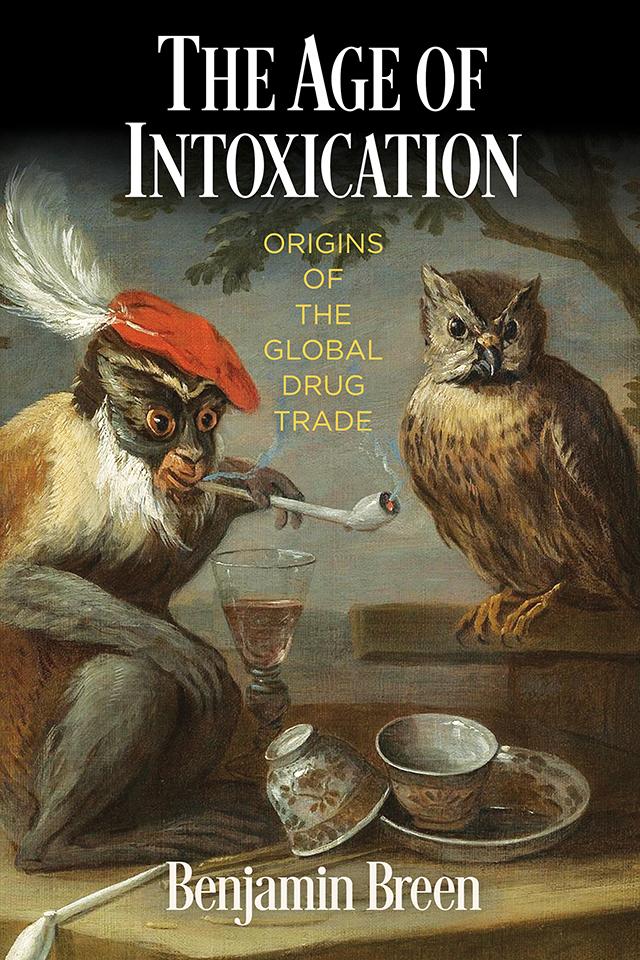
Eating the flesh of an Egyptian mummy prevents the plague. Distilled poppies reduce melancholy. A Turkish drink called coffee increases alertness. Tobacco cures cancer. Such beliefs circulated in the seventeenth and eighteenth centuries, an era when the term "drug" encompassed everything from herbs and spices—like nutmeg, cinnamon, and chamomile—to such deadly poisons as lead, mercury, and arsenic. In The Age of Intoxication, Benjamin Breen offers a window into a time when drugs were not yet separated into categories—illicit and licit, recreational and medicinal, modern and traditional—and there was no barrier between the drug dealer and the pharmacist.
Focusing on the Portuguese colonies in Brazil and Angola and on the imperial capital of Lisbon, Breen examines the process by which novel drugs were located, commodified, and consumed. He then turns his attention to the British Empire, arguing that it owed much of its success in this period to its usurpation of the Portuguese drug networks. From the sickly sweet tobacco that helped finance the Atlantic slave trade to the cannabis that an East Indies merchant sold to the natural philosopher Robert Hooke in one of the earliest European coffeehouses, Breen shows how drugs have been entangled with science and empire from the very beginning.
Featuring numerous illuminating anecdotes and a cast of characters that includes merchants, slaves, shamans, prophets, inquisitors, and alchemists, The Age of Intoxication rethinks a history of drugs and the early drug trade that has too often been framed as opposites—between medicinal and recreational, legal and illegal, good and evil. Breen argues that, in order to guide drug policy toward a fairer and more informed course, we first need to understand who and what set the global drug trade in motion.
Before Memmo my notes were scattered across PDFs. Now a workspace pulls everything into one place — I see exactly what's still left to study.
Memmo's summaries are gold before exams. I don't have to re-read 800 pages two weeks before — just the important parts.
The AI chat has saved me the night before an exam more than once. I just keep asking until I get it — no waiting on a study group to reply.
The quizzes hit exactly what I need to know. Memmo tracks what I get stuck on — so I only practice what's worth it.
Flashcards with spaced repetition are magic. Memmo knows when I'm about to forget something and brings it back.
The AI podcasts are my favorite. I listen on my way to school and get a recap without sitting at a computer.

Handbok i kvalitativa metoder
281 kr

Hållbar utveckling: en introduktion för ingenjörer och andra problemlösare
334 kr

Brymans Samhällsvetenskapliga metoder
390 kr

Projektledning
491 kr

Den orättvisa hälsan: om socioekonomiska skillnader i hälsa och livslängd
326 kr

Organizational Leadership
429 kr

Vetenskapsteori för nybörjare
196 kr

På väg mot läraryrket
172 kr

Det sociala livet i skolan: Socialpsykologiska perspektiv
253 kr

Betygsättningens didaktik
151 kr

Personality
402 kr

Studying Leadership
404 kr

Managing Innovation
477 kr

Introduktion till samhällsvetenskaplig metod
347 kr

The Psychology of Sex and Gender
698 kr

Evidens och kunskap för socialt arbete
207 kr

Introduction to Leadership
605 kr