
Before Memmo my notes were scattered across PDFs. Now a workspace pulls everything into one place — I see exactly what's still left to study.
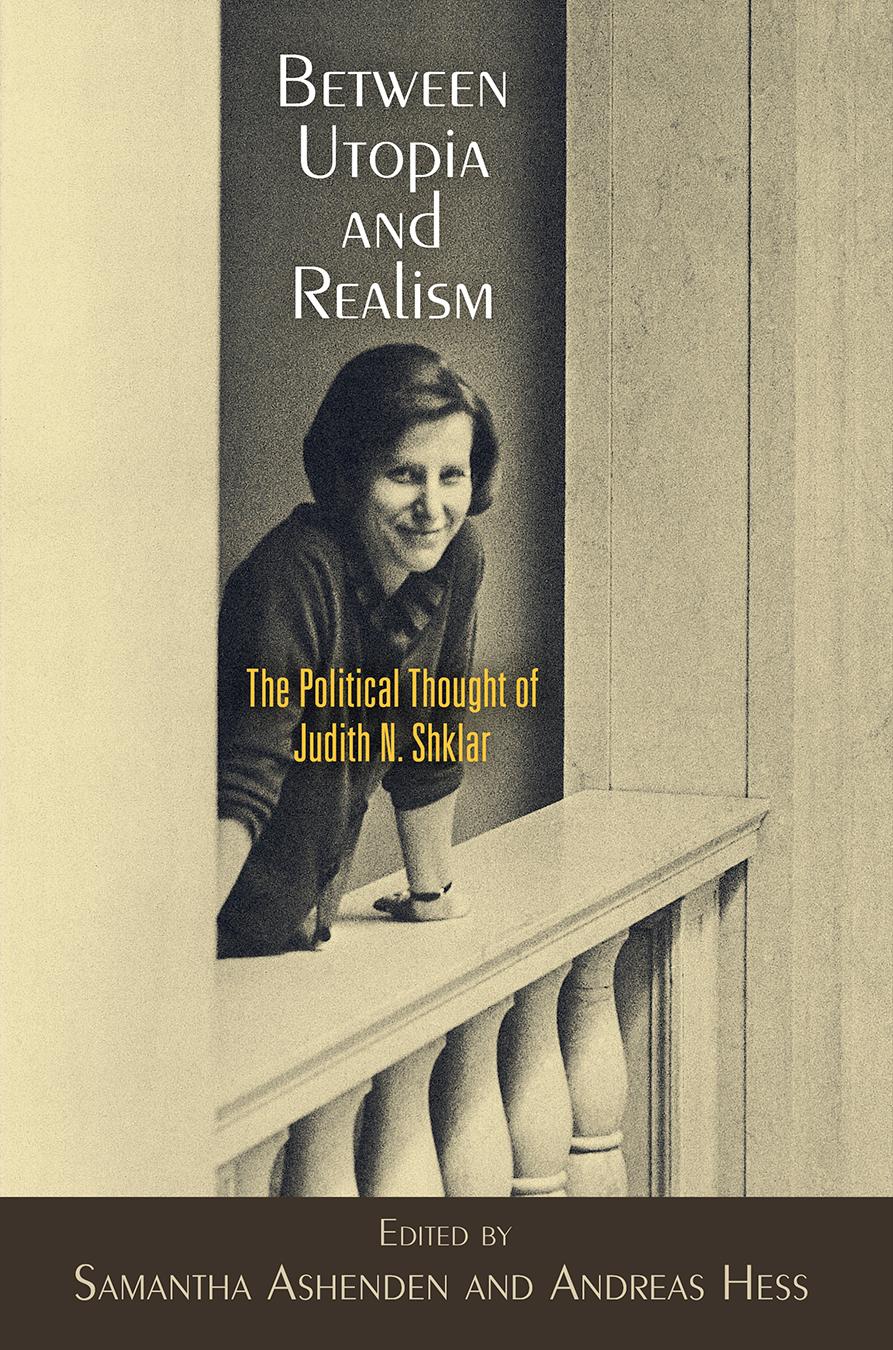
From her position at Harvard University's Department of Government for over thirty-five years, Judith Shklar (1928-92) taught a long list of prominent political theorists and published prolifically in the domains of modern and American political thought. She was a highly original theorist of liberalism, possessing a broad and deep knowledge of intellectual history, which informed her writing in interesting and unusual ways. Her work emerged between the "end of ideology" discussions of the 1950s and the "end of history" debate of the early 1990s. Shklar contributed significantly to social and political thought by arguing for a new, more skeptical version of liberalism that brought political theory into close contact with real-life experience.
The essays collected in Between Utopia and Realism reflect on and refract Shklar's major preoccupations throughout a lifetime of thinking and demonstrate the ways in which her work illuminates contemporary debates across political theory, international relations, and law. Contributors address Shklar's critique of Cold War liberalism, interpretation of Montaigne and its connection to her genealogy of liberal morals, lectures on political obligation, focus on cruelty, and her late reflections on exile. Others consider her role as a legal theorist, her interest in literary tropes and psychological experience, and her famed skepticism.
Between Utopia and Realism showcases Shklar's approach to addressing the intractable problems of social life. Her finely honed political skepticism emphasized the importance of diagnosing problems over proffering excessively optimistic solutions. As this collection makes clear, her thought continues to be useful in addressing cruelty, limiting injustice, and combating the cynicism of the present moment.
Contributors: Samantha Ashenden, Hannes Bajohr, James Brown, Katrina Forrester, Volker M. Heins, Andreas Hess, Samuel Moyn, Thomas Osborne, William E. Scheuerman, Quentin Skinner, Philip Spencer, Tracy B. Strong, Kamila Stullerova, Bernard Yack.
Before Memmo my notes were scattered across PDFs. Now a workspace pulls everything into one place — I see exactly what's still left to study.
Memmo's summaries are gold before exams. I don't have to re-read 800 pages two weeks before — just the important parts.
The AI chat has saved me the night before an exam more than once. I just keep asking until I get it — no waiting on a study group to reply.
The quizzes hit exactly what I need to know. Memmo tracks what I get stuck on — so I only practice what's worth it.
Flashcards with spaced repetition are magic. Memmo knows when I'm about to forget something and brings it back.
The AI podcasts are my favorite. I listen on my way to school and get a recap without sitting at a computer.

Handbok i kvalitativa metoder
281 kr

Hållbar utveckling: en introduktion för ingenjörer och andra problemlösare
334 kr

Brymans Samhällsvetenskapliga metoder
390 kr

Projektledning
491 kr

Den orättvisa hälsan: om socioekonomiska skillnader i hälsa och livslängd
326 kr

Organizational Leadership
429 kr

Vetenskapsteori för nybörjare
196 kr

På väg mot läraryrket
172 kr

Det sociala livet i skolan: Socialpsykologiska perspektiv
253 kr

Betygsättningens didaktik
151 kr

Personality
402 kr

Studying Leadership
404 kr

Managing Innovation
477 kr

Introduktion till samhällsvetenskaplig metod
347 kr

The Psychology of Sex and Gender
698 kr

Evidens och kunskap för socialt arbete
207 kr

Introduction to Leadership
605 kr