
Before Memmo my notes were scattered across PDFs. Now a workspace pulls everything into one place — I see exactly what's still left to study.
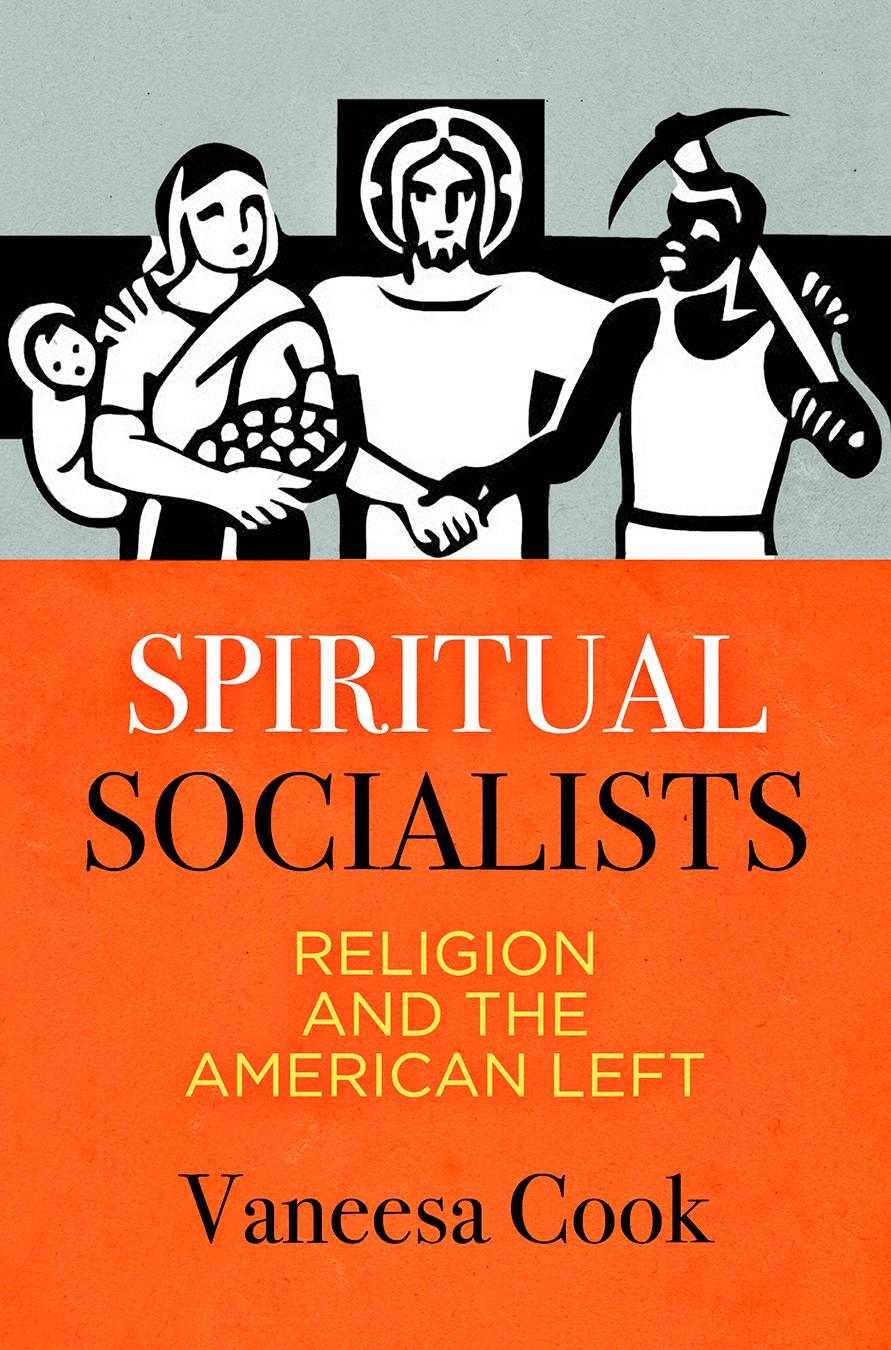
Refuting the common perception that the American left has a religion problem, Vaneesa Cook highlights an important but overlooked intellectual and political tradition that she calls "spiritual socialism." Spiritual socialists emphasized the social side of socialism and believed the most basic expression of religious values—caring for the sick, tired, hungry, and exploited members of one's community—created a firm footing for society. Their unorthodox perspective on the spiritual and cultural meaning of socialist principles helped make leftist thought more palatable to Americans, who associated socialism with Soviet atheism and autocracy. In this way, spiritual socialism continually put pressure on liberals, conservatives, and Marxists to address the essential connection between morality and social justice.
Cook tells her story through an eclectic group of activists whose lives and works span the twentieth century. Sherwood Eddy, A. J. Muste, Myles Horton, Dorothy Day, Henry Wallace, Pauli Murray, Staughton Lynd, and Martin Luther King, Jr. spoke and wrote publicly about the connection between religious values and socialism. Equality, cooperation, and peace, they argued, would not develop overnight, and a more humane society would never emerge through top-down legislation. Instead, they believed that the process of their vision of the world had to happen in homes, villages, and cities, from the bottom up.
By insisting that people start treating each other better in everyday life, spiritual socialists transformed radical activism from projects of political policy-making to grass-roots organizing. For Cook, contemporary public figures such as Senator Bernie Sanders, Pope Francis, Reverend William Barber, and Cornel West are part of a long-standing tradition that exemplifies how non-Communist socialism has gained traction in American politics.
Before Memmo my notes were scattered across PDFs. Now a workspace pulls everything into one place — I see exactly what's still left to study.
Memmo's summaries are gold before exams. I don't have to re-read 800 pages two weeks before — just the important parts.
The AI chat has saved me the night before an exam more than once. I just keep asking until I get it — no waiting on a study group to reply.
The quizzes hit exactly what I need to know. Memmo tracks what I get stuck on — so I only practice what's worth it.
Flashcards with spaced repetition are magic. Memmo knows when I'm about to forget something and brings it back.
The AI podcasts are my favorite. I listen on my way to school and get a recap without sitting at a computer.

Handbok i kvalitativa metoder
281 kr

Hållbar utveckling: en introduktion för ingenjörer och andra problemlösare
334 kr

Brymans Samhällsvetenskapliga metoder
390 kr

Projektledning
491 kr

Den orättvisa hälsan: om socioekonomiska skillnader i hälsa och livslängd
326 kr

Vetenskapsteori för nybörjare
196 kr

Organizational Leadership
429 kr

På väg mot läraryrket
172 kr

Det sociala livet i skolan: Socialpsykologiska perspektiv
253 kr

Betygsättningens didaktik
151 kr

Personality
402 kr

Studying Leadership
404 kr

Managing Innovation
477 kr

Introduktion till samhällsvetenskaplig metod
347 kr

The Psychology of Sex and Gender
698 kr

Evidens och kunskap för socialt arbete
207 kr

Introduction to Leadership
605 kr