
Before Memmo my notes were scattered across PDFs. Now a workspace pulls everything into one place — I see exactly what's still left to study.
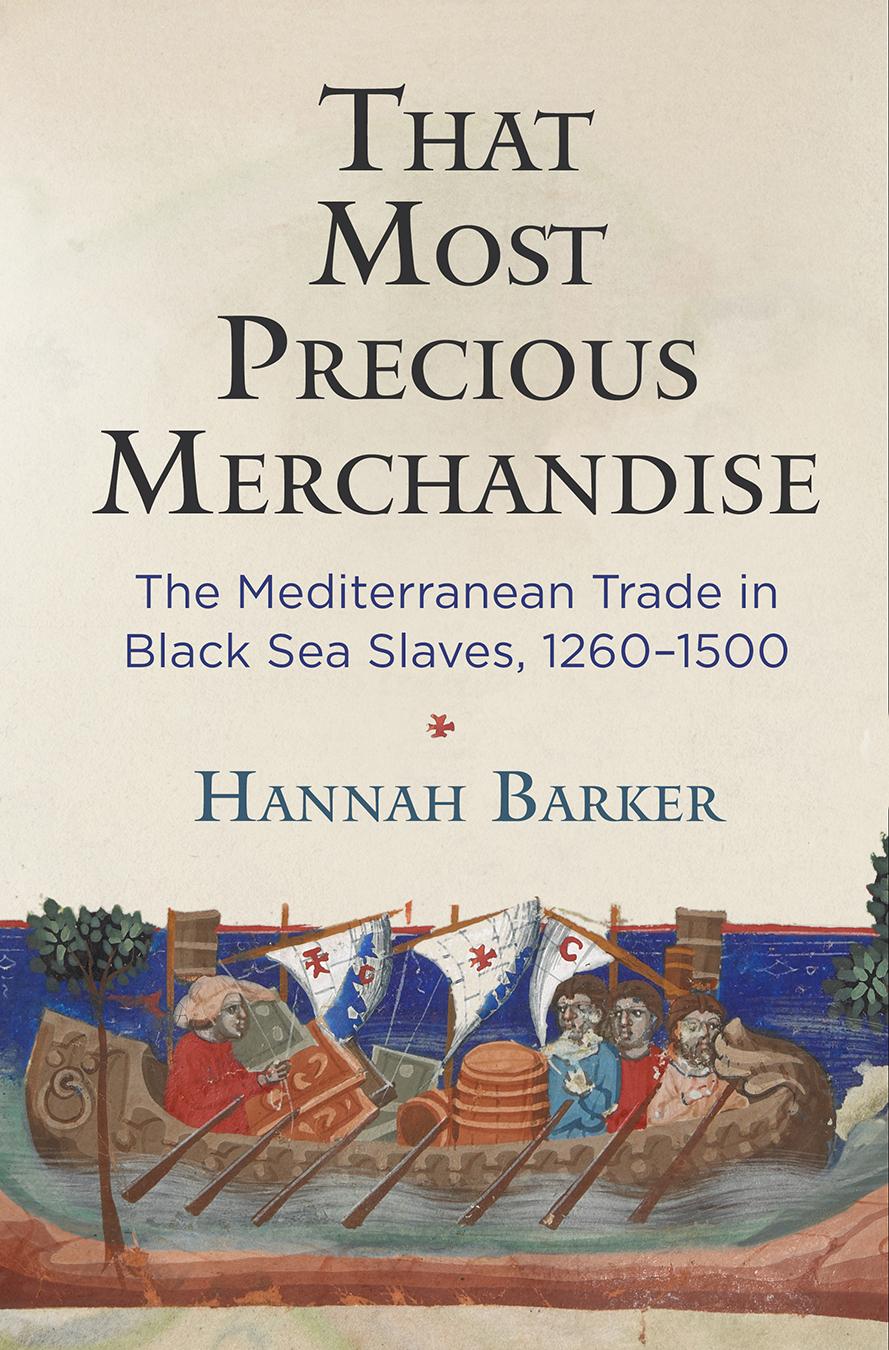
The history of the Black Sea as a source of Mediterranean slaves stretches from ancient Greek colonies to human trafficking networks in the present day. At its height during the fourteenth and early fifteenth centuries, the Black Sea slave trade was not the sole source of Mediterranean slaves; Genoese, Venetian, and Egyptian merchants bought captives taken in conflicts throughout the region, from North Africa, sub-Saharan Africa, the Balkans, and the Aegean Sea. Yet the trade in Black Sea slaves provided merchants with profit and prestige; states with military recruits, tax revenue, and diplomatic influence; and households with the service of women, men, and children.
Even though Genoa, Venice, and the Mamluk sultanate of Egypt and Greater Syria were the three most important strands in the web of the Black Sea slave trade, they have rarely been studied together. Examining Latin and Arabic sources in tandem, Hannah Barker shows that Christian and Muslim inhabitants of the Mediterranean shared a set of assumptions and practices that amounted to a common culture of slavery. Indeed, the Genoese, Venetian, and Mamluk slave trades were thoroughly entangled, with wide-ranging effects. Genoese and Venetian disruption of the Mamluk trade led to reprisals against Italian merchants living in Mamluk cities, while their participation in the trade led to scathing criticism by supporters of the crusade movement who demanded commercial powers use their leverage to weaken the force of Islam.
Reading notarial registers, tax records, law, merchants' accounts, travelers' tales and letters, sermons, slave-buying manuals, and literary works as well as treaties governing the slave trade and crusade propaganda, Barker gives a rich picture of the context in which merchants traded and enslaved people met their fate.
Before Memmo my notes were scattered across PDFs. Now a workspace pulls everything into one place — I see exactly what's still left to study.
Memmo's summaries are gold before exams. I don't have to re-read 800 pages two weeks before — just the important parts.
The AI chat has saved me the night before an exam more than once. I just keep asking until I get it — no waiting on a study group to reply.
The quizzes hit exactly what I need to know. Memmo tracks what I get stuck on — so I only practice what's worth it.
Flashcards with spaced repetition are magic. Memmo knows when I'm about to forget something and brings it back.
The AI podcasts are my favorite. I listen on my way to school and get a recap without sitting at a computer.

Handbok i kvalitativa metoder
281 kr

Hållbar utveckling: en introduktion för ingenjörer och andra problemlösare
334 kr

Brymans Samhällsvetenskapliga metoder
390 kr

Projektledning
491 kr

Den orättvisa hälsan: om socioekonomiska skillnader i hälsa och livslängd
326 kr

Vetenskapsteori för nybörjare
196 kr

Organizational Leadership
429 kr

På väg mot läraryrket
172 kr

Det sociala livet i skolan: Socialpsykologiska perspektiv
253 kr

Betygsättningens didaktik
151 kr

Personality
402 kr

Studying Leadership
404 kr

Managing Innovation
477 kr

Introduktion till samhällsvetenskaplig metod
347 kr

The Psychology of Sex and Gender
698 kr

Evidens och kunskap för socialt arbete
207 kr

Introduction to Leadership
605 kr