
Before Memmo my notes were scattered across PDFs. Now a workspace pulls everything into one place — I see exactly what's still left to study.
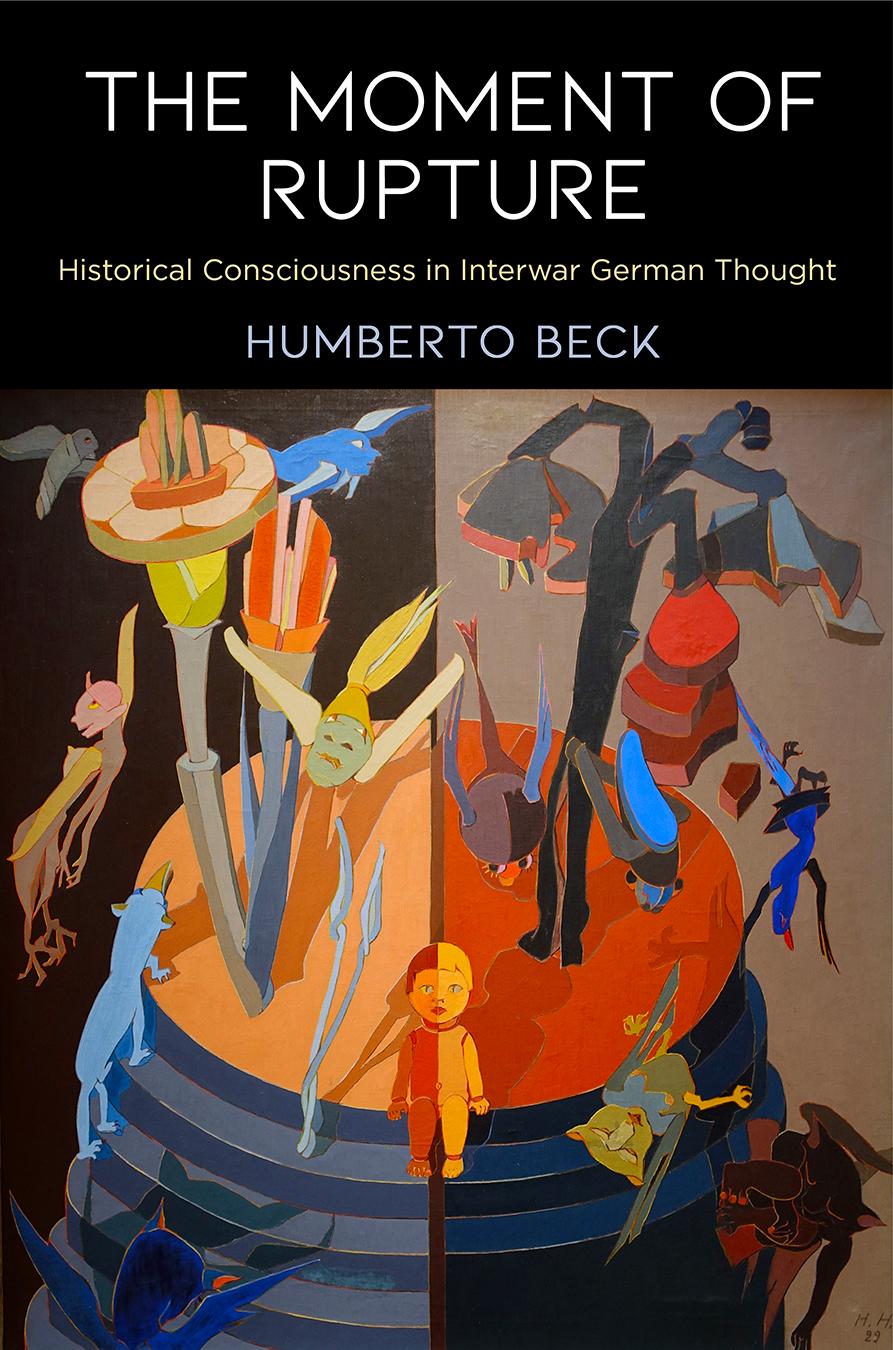
An instant is the shortest span in which time can be divided and experienced. In an instant, there is no duration: it is an interruption that happens in the blink of an eye. For the ancient Greeks, kairos, the time in which exceptional, unrepeatable events occurred, was opposed to chronos, measurable, quantitative, and uniform time. In The Moment of Rupture, Humberto Beck argues that during the years of the First World War, the Russian Revolution, and the rise of fascism in Germany, the notion of the instant migrated from philosophy and aesthetics into politics and became a conceptual framework for the interpretation of collective historical experience that, in turn, transformed the subjective perception of time.
According to Beck, a significant juncture occurred in Germany between 1914 and 1940, when a modern tradition of reflection on the instant—spanning the poetry of Goethe, the historical self-understanding of the French Revolution, the aesthetics of early Romanticism, the philosophies of Søren Kierkegaard and Friedrich Nietzsche, and the artistic and literary practices of Charles Baudelaire and the avant gardes—interacted with a new experience of historical time based on rupture and abrupt discontinuity. Beck locates in this juncture three German thinkers—Ernst Jünger, Ernst Bloch, and Walter Benjamin—who fused the consciousness of war, crisis, catastrophe, and revolution with the literary and philosophical formulations of the instantaneous and the sudden in order to intellectually represent an era marked by the dissolution between the extraordinary and the everyday. The Moment of Rupture demonstrates how Jünger, Bloch, and Benjamin produced a constellation of figures of sudden temporality that contributed to the formation of what Beck calls a distinct "regime of historicity," a mode of experiencing time based on the notion of a discontinuous present.
Before Memmo my notes were scattered across PDFs. Now a workspace pulls everything into one place — I see exactly what's still left to study.
Memmo's summaries are gold before exams. I don't have to re-read 800 pages two weeks before — just the important parts.
The AI chat has saved me the night before an exam more than once. I just keep asking until I get it — no waiting on a study group to reply.
The quizzes hit exactly what I need to know. Memmo tracks what I get stuck on — so I only practice what's worth it.
Flashcards with spaced repetition are magic. Memmo knows when I'm about to forget something and brings it back.
The AI podcasts are my favorite. I listen on my way to school and get a recap without sitting at a computer.

Handbok i kvalitativa metoder
281 kr

Hållbar utveckling: en introduktion för ingenjörer och andra problemlösare
334 kr

Brymans Samhällsvetenskapliga metoder
390 kr

Projektledning
491 kr

Den orättvisa hälsan: om socioekonomiska skillnader i hälsa och livslängd
326 kr

Vetenskapsteori för nybörjare
196 kr

Organizational Leadership
429 kr

På väg mot läraryrket
172 kr

Det sociala livet i skolan: Socialpsykologiska perspektiv
253 kr

Betygsättningens didaktik
151 kr

Personality
402 kr

Studying Leadership
404 kr

Managing Innovation
477 kr

Introduktion till samhällsvetenskaplig metod
347 kr

The Psychology of Sex and Gender
698 kr

Evidens och kunskap för socialt arbete
207 kr

Introduction to Leadership
605 kr