
Before Memmo my notes were scattered across PDFs. Now a workspace pulls everything into one place — I see exactly what's still left to study.
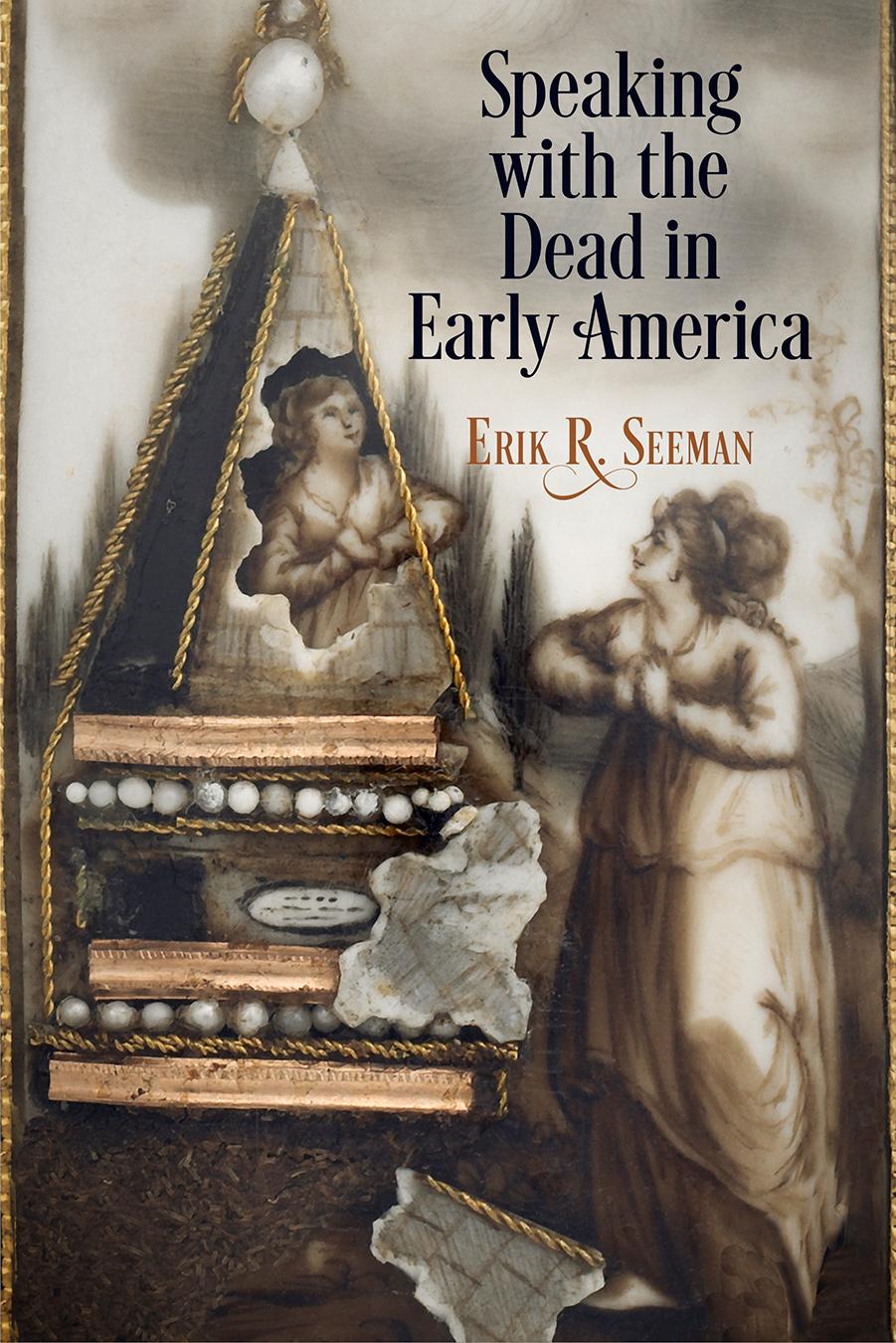
In late medieval Catholicism, mourners employed an array of practices to maintain connection with the deceased—most crucially, the belief in purgatory, a middle place between heaven and hell where souls could be helped by the actions of the living. In the early sixteenth century, the Reformation abolished purgatory, as its leaders did not want attention to the dead diminishing people's devotion to God. But while the Reformation was supposed to end communication between the living and dead, it turns out the result was in fact more complicated than historians have realized. In the three centuries after the Reformation, Protestants imagined continuing relationships with the dead, and the desire for these relations came to form an important—and since neglected—aspect of Protestant belief and practice.
In Speaking with the Dead in Early America, historian Erik R. Seeman undertakes a 300-year history of Protestant communication with the dead. Seeman chronicles the story of Protestants' relationships with the deceased from Elizabethan England to puritan New England and then on through the American Enlightenment into the middle of the nineteenth century with the explosion of interest in Spiritualism. He brings together a wide range of sources to uncover the beliefs and practices of both ordinary people, especially women, and religious leaders. This prodigious research reveals how sermons, elegies, and epitaphs portrayed the dead as speaking or being spoken to, how ghost stories and Gothic fiction depicted a permeable boundary between this world and the next, and how parlor songs and funeral hymns encouraged singers to imagine communication with the dead. Speaking with the Dead in Early America thus boldly reinterprets Protestantism as a religion in which the dead played a central role.
Before Memmo my notes were scattered across PDFs. Now a workspace pulls everything into one place — I see exactly what's still left to study.
Memmo's summaries are gold before exams. I don't have to re-read 800 pages two weeks before — just the important parts.
The AI chat has saved me the night before an exam more than once. I just keep asking until I get it — no waiting on a study group to reply.
The quizzes hit exactly what I need to know. Memmo tracks what I get stuck on — so I only practice what's worth it.
Flashcards with spaced repetition are magic. Memmo knows when I'm about to forget something and brings it back.
The AI podcasts are my favorite. I listen on my way to school and get a recap without sitting at a computer.

Handbok i kvalitativa metoder
281 kr

Hållbar utveckling: en introduktion för ingenjörer och andra problemlösare
334 kr

Brymans Samhällsvetenskapliga metoder
390 kr

Projektledning
491 kr

Den orättvisa hälsan: om socioekonomiska skillnader i hälsa och livslängd
326 kr

Vetenskapsteori för nybörjare
196 kr

Organizational Leadership
429 kr

På väg mot läraryrket
172 kr

Det sociala livet i skolan: Socialpsykologiska perspektiv
253 kr

Betygsättningens didaktik
151 kr

Personality
402 kr

Studying Leadership
404 kr

Managing Innovation
477 kr

Introduktion till samhällsvetenskaplig metod
347 kr

The Psychology of Sex and Gender
698 kr

Evidens och kunskap för socialt arbete
207 kr

Introduction to Leadership
605 kr