
Before Memmo my notes were scattered across PDFs. Now a workspace pulls everything into one place — I see exactly what's still left to study.
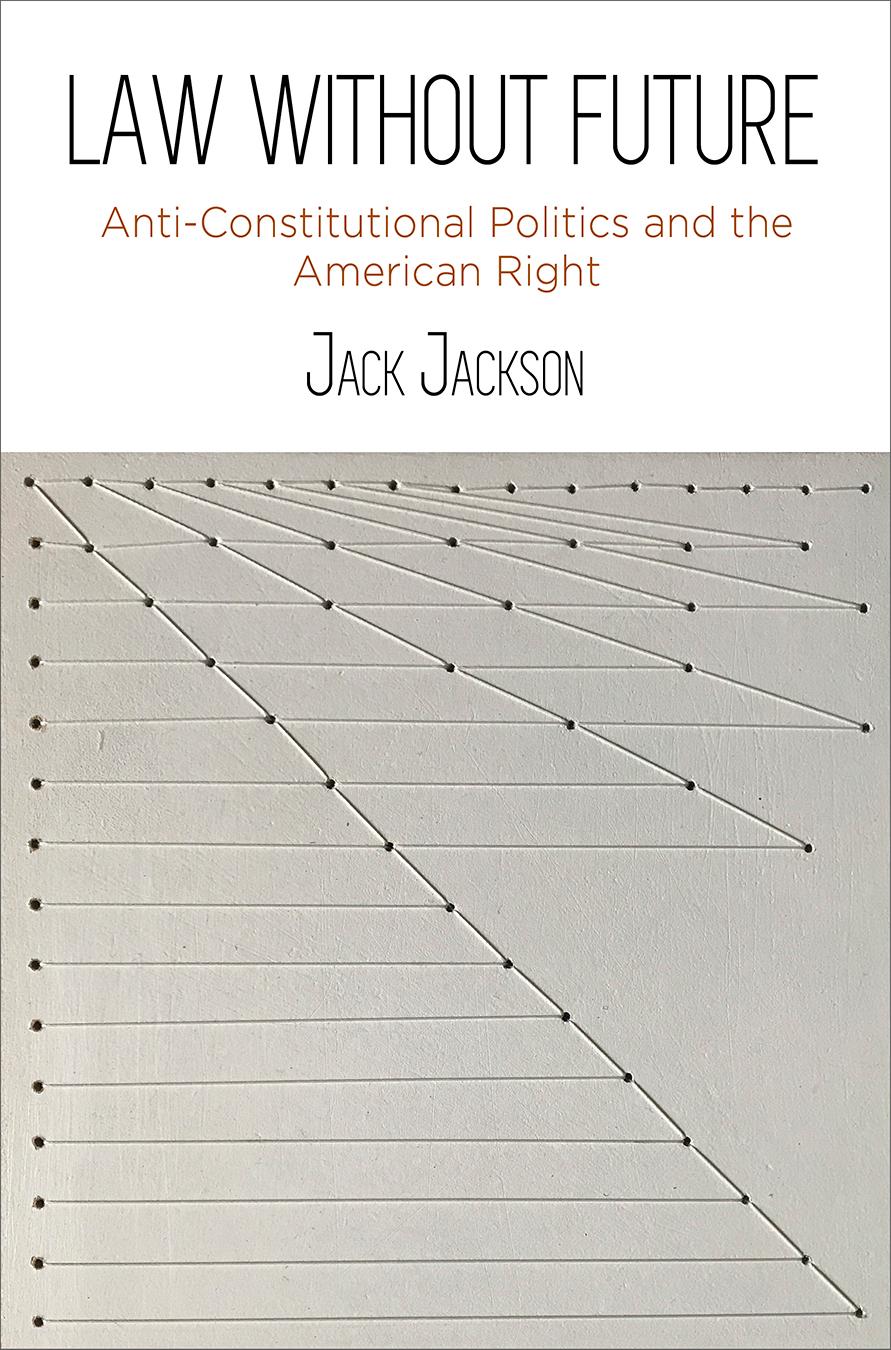
A provocative, sobering analysis of twenty-first century court cases that undermine the very idea of constitutional government
As the 2000 decision by the Supreme Court to effectively deliver the presidency to George W. Bush recedes in time, its real meaning comes into focus. If the initial critique of the Court was that it had altered the rules of democracy after the fact, the perspective of distance permits us to see that the rules were, in some sense, not altered at all. Here was a "landmark" decision that, according to its own logic, was applicable only once and that therefore neither relied on past precedent nor lay the foundation for future interpretations.
This logic, according to scholar Jack Jackson, not only marks a stark break from the traditional terrain of U.S. constitutional law but exemplifies an era of triumphant radicalism and illiberalism on the American Right. In Law Without Future, Jackson demonstrates how this philosophy has manifested itself across political life in the twenty-first century and locates its origins in overlooked currents of post-WWII political thought. These developments have undermined the very idea of constitutional government, and the resulting crisis, Jackson argues, has led to the decline of traditional conservatism on the Right and to the embrace on the Left of a studiously legal, apolitical understanding of constitutionalism (with ironically reactionary implications).
Jackson examines Bush v. Gore, the post-9/11 "torture memos," the 2005 Terri Schiavo controversy, the Republican Senate's norm-obliterating refusal to vote on President Obama's Supreme Court nominee Merrick Garland, and the ascendancy of Donald Trump in developing his claims. Engaging with a wide array of canonical and contemporary political thinkers—including St. Augustine, Alexis de Tocqueville, Karl Marx, Martin Luther King Jr., Hannah Arendt, Wendy Brown, Ronald Dworkin, and Hanna Pitkin—Law Without Future offers a provocative, sobering analysis of how these events have altered U.S. political life in the twenty-first century in profound ways—and seeks to think beyond the impasse they have created.
Before Memmo my notes were scattered across PDFs. Now a workspace pulls everything into one place — I see exactly what's still left to study.
Memmo's summaries are gold before exams. I don't have to re-read 800 pages two weeks before — just the important parts.
The AI chat has saved me the night before an exam more than once. I just keep asking until I get it — no waiting on a study group to reply.
The quizzes hit exactly what I need to know. Memmo tracks what I get stuck on — so I only practice what's worth it.
Flashcards with spaced repetition are magic. Memmo knows when I'm about to forget something and brings it back.
The AI podcasts are my favorite. I listen on my way to school and get a recap without sitting at a computer.

Handbok i kvalitativa metoder
281 kr

Hållbar utveckling: en introduktion för ingenjörer och andra problemlösare
334 kr

Brymans Samhällsvetenskapliga metoder
390 kr

Projektledning
491 kr

Den orättvisa hälsan: om socioekonomiska skillnader i hälsa och livslängd
326 kr

Organizational Leadership
429 kr

Vetenskapsteori för nybörjare
196 kr

På väg mot läraryrket
172 kr

Det sociala livet i skolan: Socialpsykologiska perspektiv
253 kr

Betygsättningens didaktik
151 kr

Personality
402 kr

Studying Leadership
404 kr

Managing Innovation
477 kr

Introduktion till samhällsvetenskaplig metod
347 kr

The Psychology of Sex and Gender
698 kr

Introduction to Leadership
605 kr

Evidens och kunskap för socialt arbete
207 kr