
Before Memmo my notes were scattered across PDFs. Now a workspace pulls everything into one place — I see exactly what's still left to study.
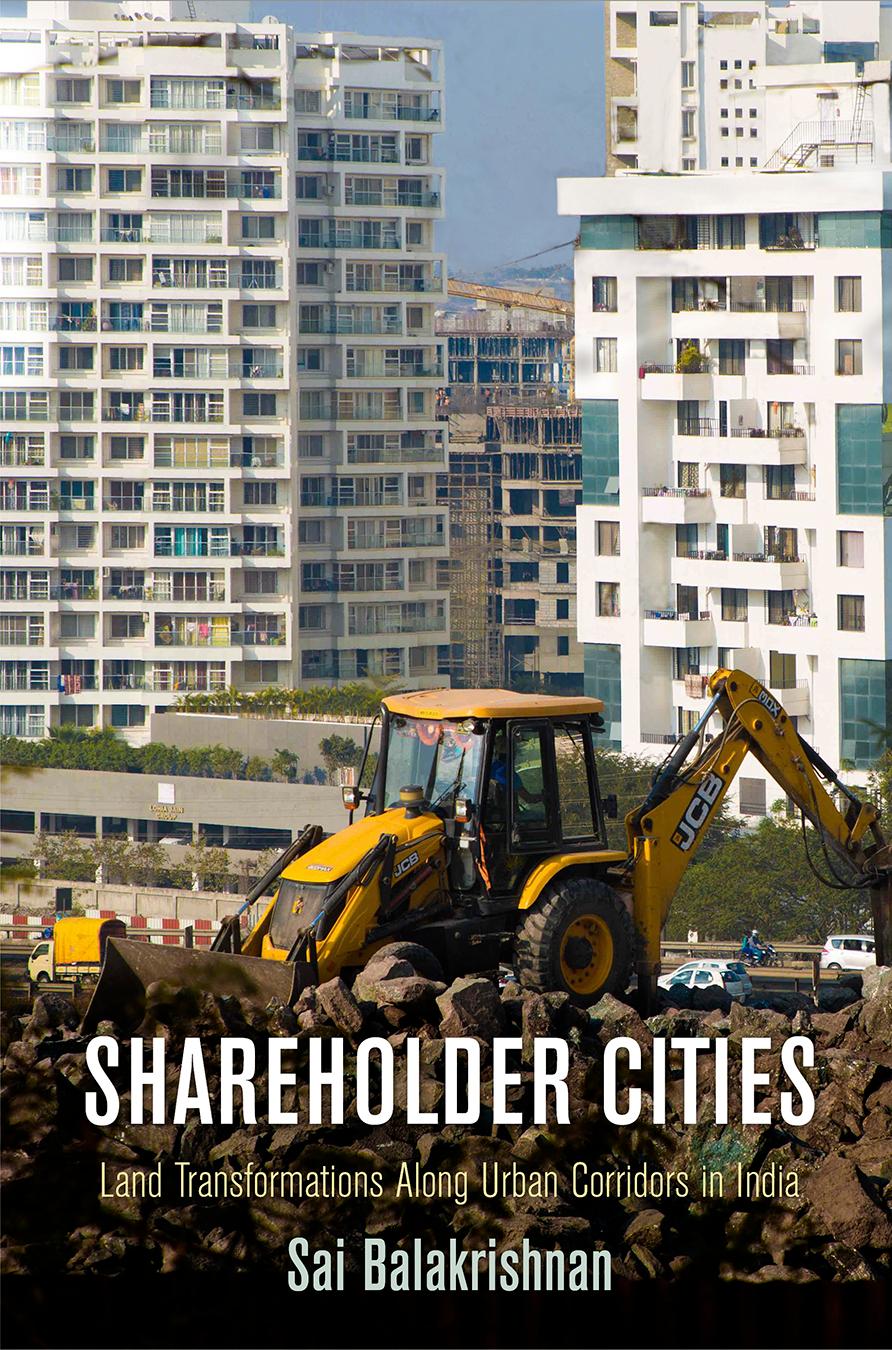
Economic corridors—ambitious infrastructural development projects that newly liberalizing countries in Asia and Africa are undertaking—are dramatically redefining the shape of urbanization. Spanning multiple cities and croplands, these corridors connect metropolises via high-speed superhighways in an effort to make certain strategic regions attractive destinations for private investment. As policy makers search for decentralized and market-oriented means for the transfer of land from agrarian constituencies to infrastructural promoters and urban developers, the reallocation of property control is erupting into volatile land-based social conflicts.
In Shareholder Cities, Sai Balakrishnan argues that some of India's most decisive conflicts over its urban future will unfold in the regions along the new economic corridors where electorally strong agrarian propertied classes directly encounter financially powerful incoming urban firms. Balakrishnan focuses on the first economic corridor, the Mumbai-Pune Expressway, and the construction of three new cities along it. The book derives its title from a current mode of resolving agrarian-urban conflicts in which agrarian landowners are being transformed into shareholders in the corridor cities, and the distributional implications of these new land transformations.
Shifting the focus of the study of India's contemporary urbanization away from megacities to these in-between corridor regions, Balakrishnan explores the production of uneven urban development that unsettles older histories of agrarian capitalism and the emergence of agrarian propertied classes as protagonists in the making of urban real estate markets. Shareholder Cities highlights the possibilities for a democratic politics of inclusion in which agrarian-urban encounters can create opportunities for previously excluded groups to stake new claims for themselves in the corridor regions.
Before Memmo my notes were scattered across PDFs. Now a workspace pulls everything into one place — I see exactly what's still left to study.
Memmo's summaries are gold before exams. I don't have to re-read 800 pages two weeks before — just the important parts.
The AI chat has saved me the night before an exam more than once. I just keep asking until I get it — no waiting on a study group to reply.
The quizzes hit exactly what I need to know. Memmo tracks what I get stuck on — so I only practice what's worth it.
Flashcards with spaced repetition are magic. Memmo knows when I'm about to forget something and brings it back.
The AI podcasts are my favorite. I listen on my way to school and get a recap without sitting at a computer.

Handbok i kvalitativa metoder
281 kr

Hållbar utveckling: en introduktion för ingenjörer och andra problemlösare
334 kr

Brymans Samhällsvetenskapliga metoder
390 kr

Projektledning
491 kr

Den orättvisa hälsan: om socioekonomiska skillnader i hälsa och livslängd
326 kr

Vetenskapsteori för nybörjare
196 kr

Organizational Leadership
429 kr

På väg mot läraryrket
172 kr

Det sociala livet i skolan: Socialpsykologiska perspektiv
253 kr

Betygsättningens didaktik
151 kr

Personality
402 kr

Studying Leadership
404 kr

Managing Innovation
477 kr

Introduktion till samhällsvetenskaplig metod
347 kr

The Psychology of Sex and Gender
698 kr

Evidens och kunskap för socialt arbete
207 kr

Introduction to Leadership
605 kr