
Before Memmo my notes were scattered across PDFs. Now a workspace pulls everything into one place — I see exactly what's still left to study.
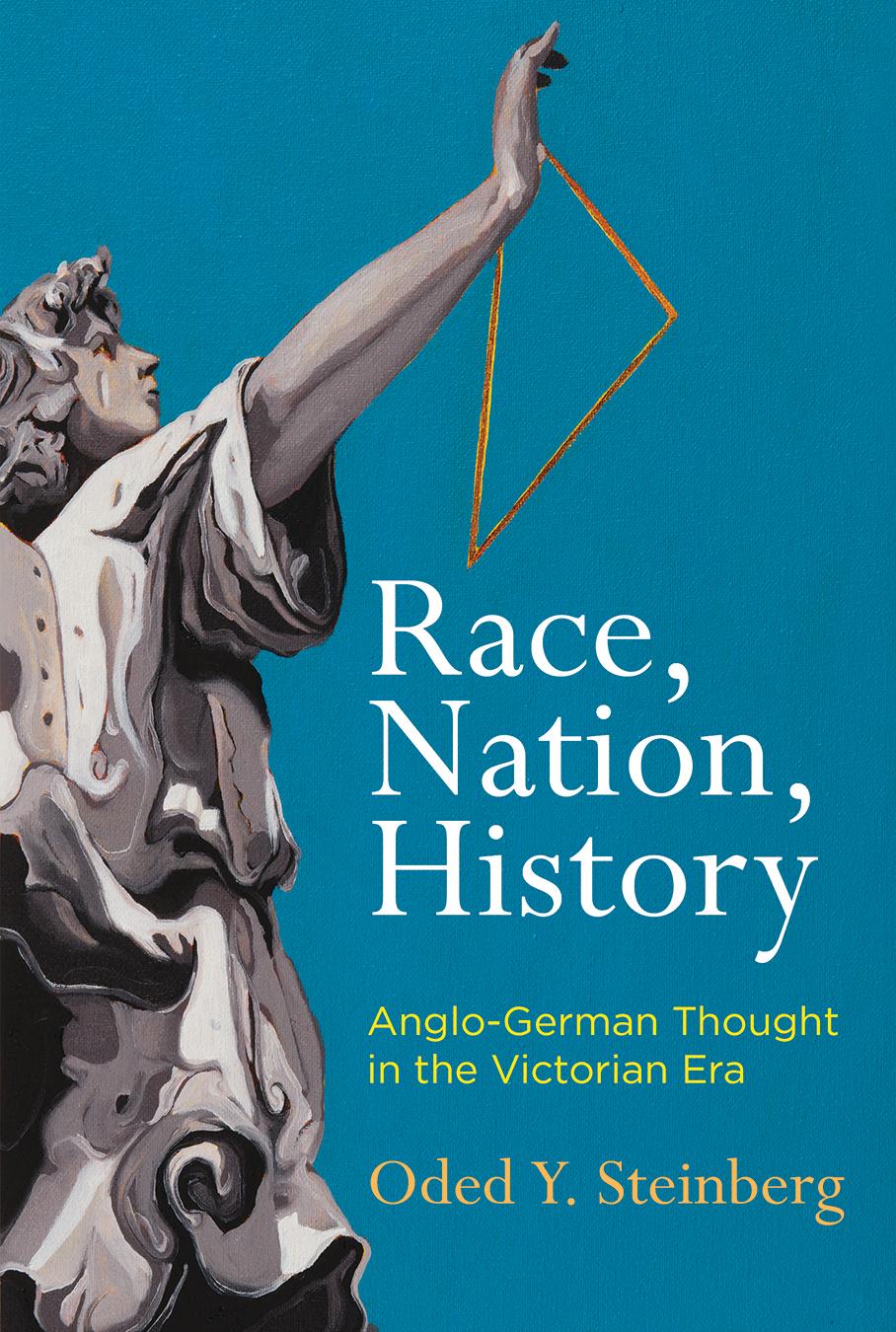
In Race, Nation, History, Oded Y. Steinberg examines the way a series of nineteenth-century scholars in England and Germany first constructed and then questioned the periodization of history into ancient, medieval, and modern eras, shaping the way we continue to think about the past and present of Western civilization at a fundamental level. Steinberg explores this topic by tracing the deep connections between the idea of epochal periodization and concepts of race and nation that were prevalent at the time—especially the role that Germanic or Teutonic tribes were assumed to play in the unfolding of Western history.
Steinberg shows how English scholars such as Thomas Arnold, Williams Stubbs, and John Richard Green; and German scholars such as Christian Karl Josias von Bunsen, Max Müller, and Reinhold Pauli built on the notion of a shared Teutonic kinship to establish a correlation between the division of time and the ascent or descent of races or nations. For example, although they viewed the Germanic tribes' conquest of the Roman Empire in A.D. 476 as a formative event that symbolized the transformation from antiquity to the Middle Ages, they did so by highlighting the injection of a new and dominant ethnoracial character into the decaying empire. But they also rejected the idea that the fifth century A.D. was the most decisive era in historical periodization, advocating instead for a historical continuity that emphasized the significance of the Germanic tribes' influence on the making of the nations of modern Europe. Concluding with character studies of E. A. Freeman, James Bryce, and J. B. Bury, Steinberg demonstrates the ways in which the innovative schemes devised by this community of Victorian historians for the division of historical time relied on the cornerstone of race.
Before Memmo my notes were scattered across PDFs. Now a workspace pulls everything into one place — I see exactly what's still left to study.
Memmo's summaries are gold before exams. I don't have to re-read 800 pages two weeks before — just the important parts.
The AI chat has saved me the night before an exam more than once. I just keep asking until I get it — no waiting on a study group to reply.
The quizzes hit exactly what I need to know. Memmo tracks what I get stuck on — so I only practice what's worth it.
Flashcards with spaced repetition are magic. Memmo knows when I'm about to forget something and brings it back.
The AI podcasts are my favorite. I listen on my way to school and get a recap without sitting at a computer.

Handbok i kvalitativa metoder
281 kr

Hållbar utveckling: en introduktion för ingenjörer och andra problemlösare
334 kr

Brymans Samhällsvetenskapliga metoder
390 kr

Projektledning
491 kr

Den orättvisa hälsan: om socioekonomiska skillnader i hälsa och livslängd
326 kr

Vetenskapsteori för nybörjare
196 kr

Organizational Leadership
429 kr

På väg mot läraryrket
172 kr

Det sociala livet i skolan: Socialpsykologiska perspektiv
253 kr

Betygsättningens didaktik
151 kr

Personality
402 kr

Studying Leadership
404 kr

Managing Innovation
477 kr

Introduktion till samhällsvetenskaplig metod
347 kr

The Psychology of Sex and Gender
698 kr

Evidens och kunskap för socialt arbete
207 kr

Introduction to Leadership
605 kr