
Before Memmo my notes were scattered across PDFs. Now a workspace pulls everything into one place — I see exactly what's still left to study.
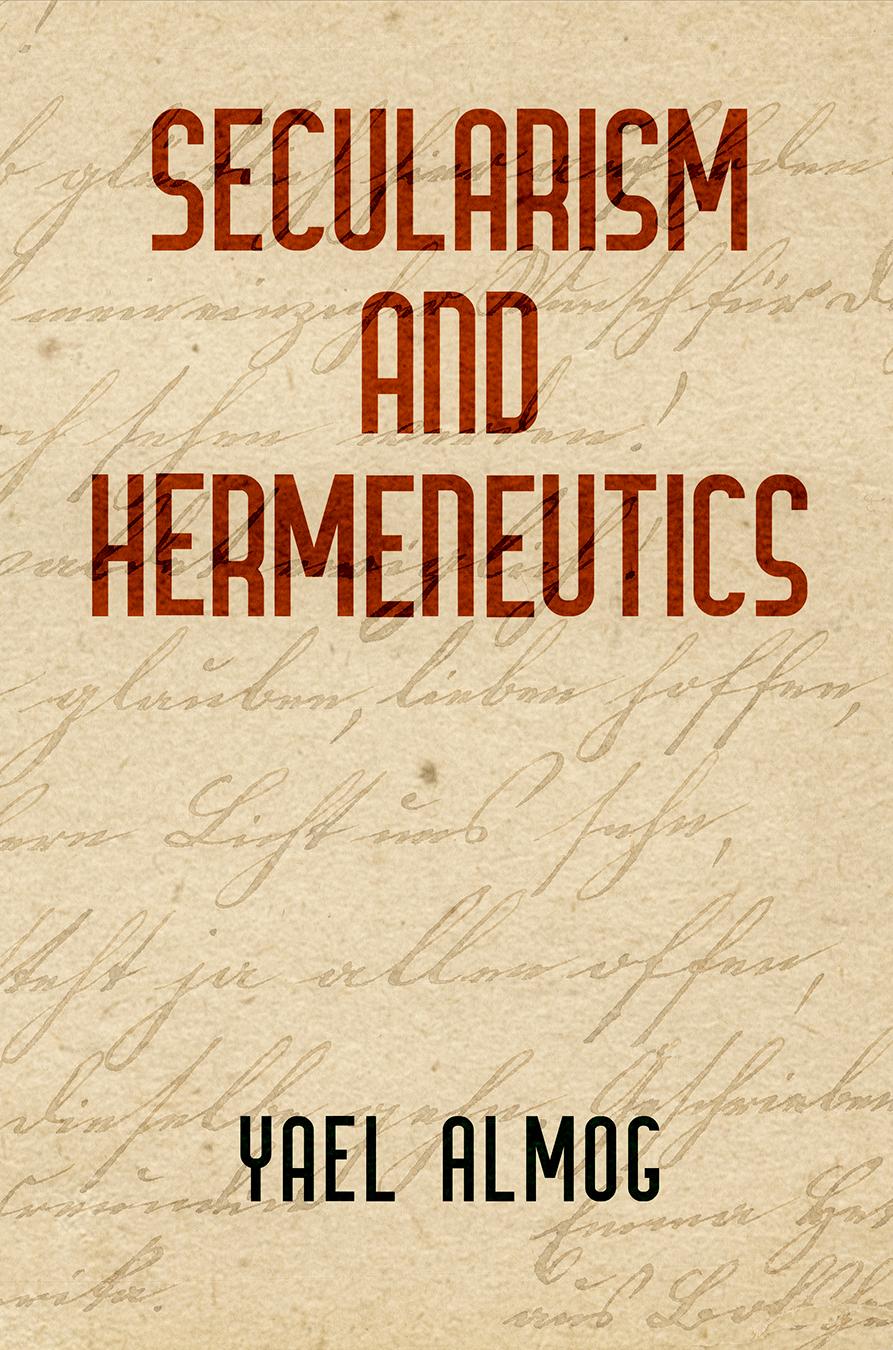
In the late Enlightenment, a new imperative began to inform theories of interpretation: all literary texts should be read in the same way that we read the Bible. However, this assumption concealed a problem—there was no coherent "we" who read the Bible in the same way. In Secularism and Hermeneutics, Yael Almog shows that several prominent thinkers of the era, including Johann Gottfried Herder, Moses Mendelssohn, Immanuel Kant, Georg Wilhelm Friedrich Hegel, and Friedrich Daniel Ernst Schleiermacher, constituted readers as an imaginary "we" around which they could form their theories and practices of interpretation. This conception of interpreters as a universal community, Almog argues, established biblical readers as a coherent collective.
In the first part of the book, Almog focuses on the 1760s through the 1780s and examines these writers' works on biblical Hebrew and their reliance on the conception of the Old Testament as a cultural, rather than religious, asset. She reveals how the detachment of textual hermeneutics from confessional affiliation was stimulated by debates on the integration of Jews in Enlightenment Germany. In order for the political community to cohere, she contends, certain religious practices were restricted to the private sphere while textual interpretation, which previously belonged to religious contexts, became the foundation of the public sphere. As interpretive practices were secularized and taken to be universal, they were meant to overcome religious difference. Turning to literature and the early nineteenth century in the second part of the book, Almog demonstrates the ways in which the new literary genres of realism and lyric poetry disrupted these interpretive reading practices. Literary techniques such as irony and intertextuality disturbed the notion of a stable, universal reader's position and highlighted interpretation as grounded in religious belonging.
Secularism and Hermeneutics reveals the tension between textual exegesis and confessional belonging and challenges the modern presumption that interpretation is indifferent to religious concerns.
Before Memmo my notes were scattered across PDFs. Now a workspace pulls everything into one place — I see exactly what's still left to study.
Memmo's summaries are gold before exams. I don't have to re-read 800 pages two weeks before — just the important parts.
The AI chat has saved me the night before an exam more than once. I just keep asking until I get it — no waiting on a study group to reply.
The quizzes hit exactly what I need to know. Memmo tracks what I get stuck on — so I only practice what's worth it.
Flashcards with spaced repetition are magic. Memmo knows when I'm about to forget something and brings it back.
The AI podcasts are my favorite. I listen on my way to school and get a recap without sitting at a computer.

Handbok i kvalitativa metoder
281 kr

Hållbar utveckling: en introduktion för ingenjörer och andra problemlösare
334 kr

Brymans Samhällsvetenskapliga metoder
390 kr

Projektledning
491 kr

Den orättvisa hälsan: om socioekonomiska skillnader i hälsa och livslängd
326 kr

Organizational Leadership
429 kr

Vetenskapsteori för nybörjare
196 kr

På väg mot läraryrket
172 kr

Det sociala livet i skolan: Socialpsykologiska perspektiv
253 kr

Betygsättningens didaktik
151 kr

Personality
402 kr

Studying Leadership
404 kr

Managing Innovation
477 kr

Introduktion till samhällsvetenskaplig metod
347 kr

The Psychology of Sex and Gender
698 kr

Evidens och kunskap för socialt arbete
207 kr

Introduction to Leadership
605 kr