
Before Memmo my notes were scattered across PDFs. Now a workspace pulls everything into one place — I see exactly what's still left to study.
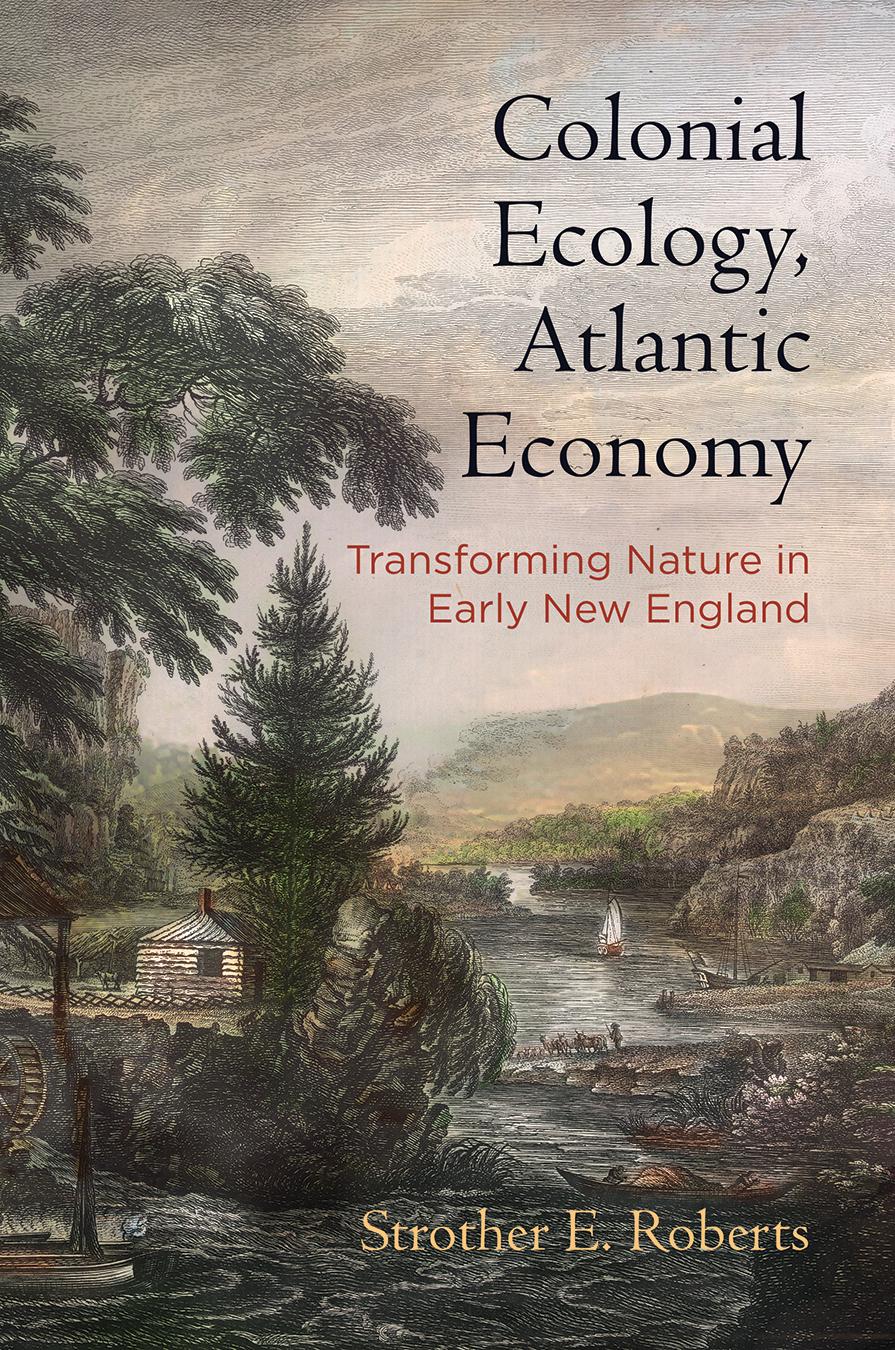
Focusing on the Connecticut River Valley—New England's longest river and largest watershed— Strother Roberts traces the local, regional, and transatlantic markets in colonial commodities that shaped an ecological transformation in one corner of the rapidly globalizing early modern world. Reaching deep into the interior, the Connecticut provided a watery commercial highway for the furs, grain, timber, livestock, and various other commodities that the region exported. Colonial Ecology, Atlantic Economy shows how the extraction of each commodity had an impact on the New England landscape, creating a new colonial ecology inextricably tied to the broader transatlantic economy beyond its shores.
This history refutes two common misconceptions: first, that globalization is a relatively new phenomenon and its power to reshape economies and natural environments has only fully been realized in the modern era and, second, that the Puritan founders of New England were self-sufficient ascetics who sequestered themselves from the corrupting influence of the wider world. Roberts argues, instead, that colonial New England was an integral part of Britain's expanding imperialist commercial economy.
Imperial planners envisioned New England as a region able to provide resources to other, more profitable parts of the empire, such as the sugar islands of the Caribbean. Settlers embraced trade as a means to afford the tools they needed to conquer the landscape and to acquire the same luxury commodities popular among the consumer class of Europe. New England's native nations, meanwhile, utilized their access to European trade goods and weapons to secure power and prestige in a region shaken by invading newcomers and the diseases that followed in their wake. These networks of extraction and exchange fundamentally transformed the natural environment of the region, creating a landscape that, by the turn of the nineteenth century, would have been unrecognizable to those living there two centuries earlier.
Before Memmo my notes were scattered across PDFs. Now a workspace pulls everything into one place — I see exactly what's still left to study.
Memmo's summaries are gold before exams. I don't have to re-read 800 pages two weeks before — just the important parts.
The AI chat has saved me the night before an exam more than once. I just keep asking until I get it — no waiting on a study group to reply.
The quizzes hit exactly what I need to know. Memmo tracks what I get stuck on — so I only practice what's worth it.
Flashcards with spaced repetition are magic. Memmo knows when I'm about to forget something and brings it back.
The AI podcasts are my favorite. I listen on my way to school and get a recap without sitting at a computer.

Handbok i kvalitativa metoder
281 kr

Hållbar utveckling: en introduktion för ingenjörer och andra problemlösare
334 kr

Brymans Samhällsvetenskapliga metoder
390 kr

Projektledning
491 kr

Den orättvisa hälsan: om socioekonomiska skillnader i hälsa och livslängd
326 kr

Vetenskapsteori för nybörjare
196 kr

Organizational Leadership
429 kr

På väg mot läraryrket
172 kr

Det sociala livet i skolan: Socialpsykologiska perspektiv
253 kr

Betygsättningens didaktik
151 kr

Personality
402 kr

Studying Leadership
404 kr

Managing Innovation
477 kr

Introduktion till samhällsvetenskaplig metod
347 kr

The Psychology of Sex and Gender
698 kr

Evidens och kunskap för socialt arbete
207 kr

Introduction to Leadership
605 kr