
Before Memmo my notes were scattered across PDFs. Now a workspace pulls everything into one place — I see exactly what's still left to study.
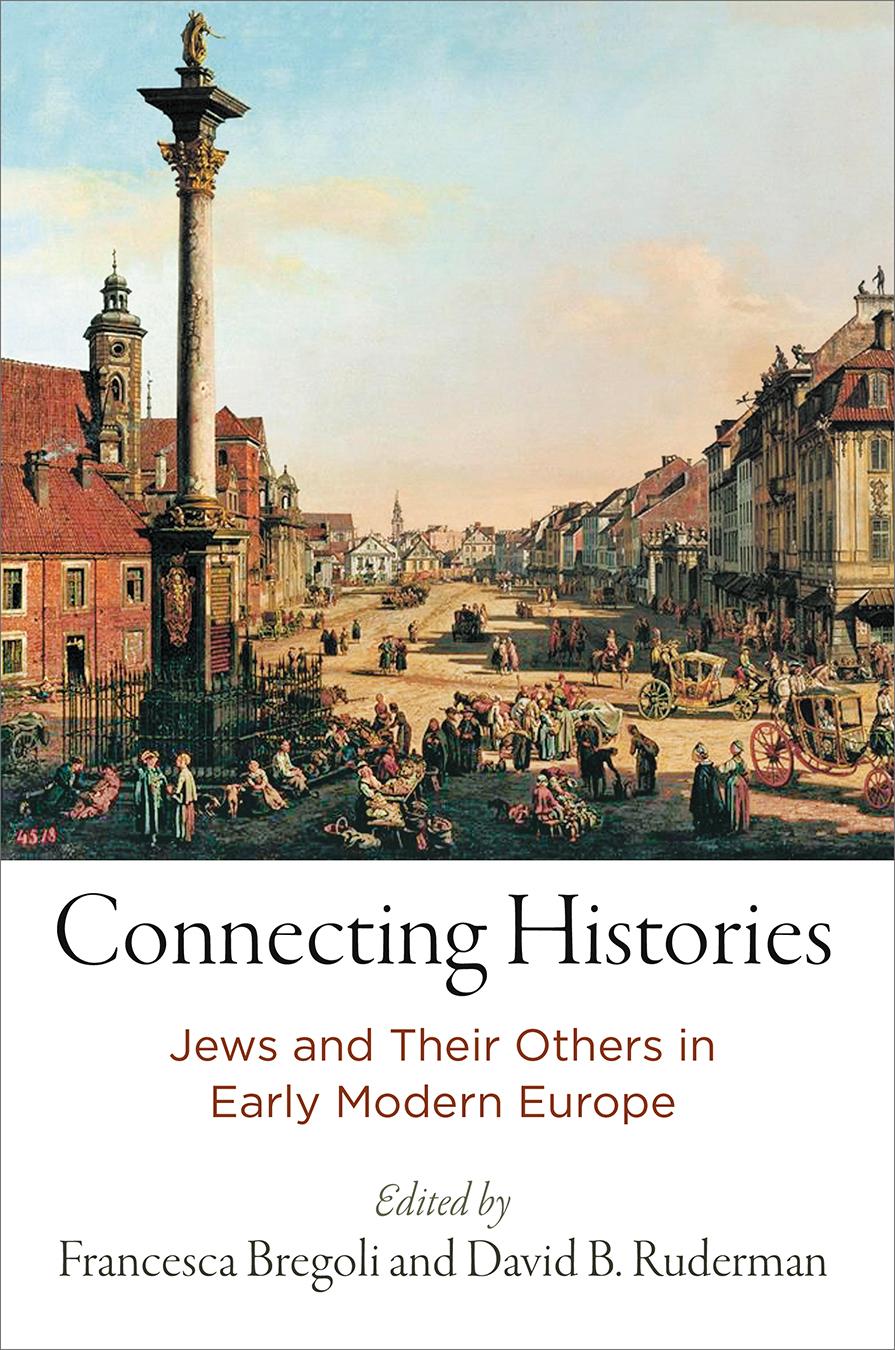
Whether forced by governmental decree, driven by persecution and economic distress, or seeking financial opportunity, the Jews of early modern Europe were extraordinarily mobile, experiencing both displacement and integration into new cultural, legal, and political settings. This, in turn, led to unprecedented modes of social mixing for Jews, especially for those living in urban areas, who frequently encountered Jews from different ethnic backgrounds and cultural orientations. Additionally, Jews formed social, economic, and intellectual bonds with mixed populations of Christians. While not necessarily effacing Jewish loyalties to local places, authorities, and customs, these connections and exposures to novel cultural settings created new allegiances as well as new challenges, resulting in constructive relations in some cases and provoking strife and controversy in others.
The essays collected by Francesca Bregoli and David B. Ruderman in Connecting Histories show that while it is not possible to speak of a single, cohesive transregional Jewish culture in the early modern period, Jews experienced pockets of supra-local connections between West and East—for example, between Italy and Poland, Poland and the Holy Land, and western and eastern Ashkenaz—as well as increased exchanges between high and low culture. Special attention is devoted to the impact of the printing press and the strategies of representation and self-representation through which Jews forged connections in a world where their status as a tolerated minority was ambiguous and in constant need of renegotiation.
Exploring the ways in which early modern Jews related to Jews from different backgrounds and to the non-Jews around them, Connecting Histories emphasizes not only the challenging nature and impact of these encounters but also the ambivalence experienced by Jews as they met their others.
Contributors: Michela Andreatta, Francesca Bregoli, Joseph Davis, Jesús de Prado Plumed, Andrea Gondos, Rachel L. Greenblatt, Gershon David Hundert, Fabrizio Lelli, Moshe Idel, Debra Kaplan, Lucia Raspe, David B. Ruderman, Pavel Sládek, Claude B. Stuczynski, Rebekka Voß.
Before Memmo my notes were scattered across PDFs. Now a workspace pulls everything into one place — I see exactly what's still left to study.
Memmo's summaries are gold before exams. I don't have to re-read 800 pages two weeks before — just the important parts.
The AI chat has saved me the night before an exam more than once. I just keep asking until I get it — no waiting on a study group to reply.
The quizzes hit exactly what I need to know. Memmo tracks what I get stuck on — so I only practice what's worth it.
Flashcards with spaced repetition are magic. Memmo knows when I'm about to forget something and brings it back.
The AI podcasts are my favorite. I listen on my way to school and get a recap without sitting at a computer.

Handbok i kvalitativa metoder
281 kr

Hållbar utveckling: en introduktion för ingenjörer och andra problemlösare
334 kr

Brymans Samhällsvetenskapliga metoder
390 kr

Projektledning
491 kr

Den orättvisa hälsan: om socioekonomiska skillnader i hälsa och livslängd
326 kr

Organizational Leadership
429 kr

Vetenskapsteori för nybörjare
196 kr

På väg mot läraryrket
172 kr

Det sociala livet i skolan: Socialpsykologiska perspektiv
253 kr

Betygsättningens didaktik
151 kr

Personality
402 kr

Studying Leadership
404 kr

Managing Innovation
477 kr

Introduktion till samhällsvetenskaplig metod
347 kr

The Psychology of Sex and Gender
698 kr

Evidens och kunskap för socialt arbete
207 kr

Introduction to Leadership
605 kr