
Before Memmo my notes were scattered across PDFs. Now a workspace pulls everything into one place — I see exactly what's still left to study.
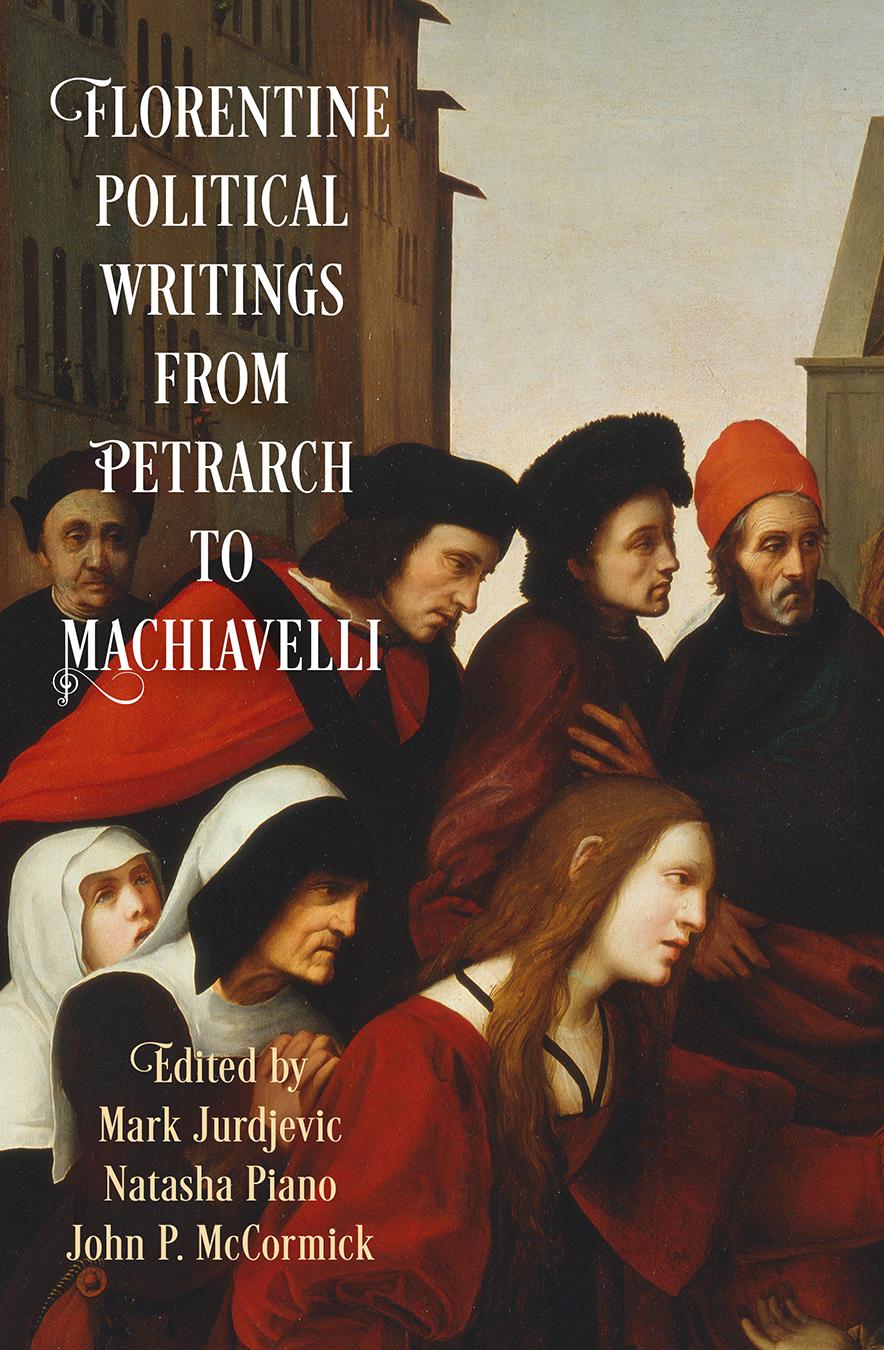
In the fifteenth-century republic of Florence, political power resided in the hands of middle-class merchants, a few wealthy families, and powerful craftsmen's guilds. The intensity of Florentine factionalism and the frequent alterations in its political institutions gave Renaissance thinkers ample opportunities to inquire into the nature of political legitimacy and the relationship between authority and its social context.
This volume provides a selection of texts that describes the language, conceptual vocabulary, and issues at stake in Florentine political culture at key moments in its development during the Renaissance. Rather than presenting Renaissance political thought as a static set of arguments, Florentine Political Writings from Petrarch to Machiavelli instead illustrates the degree to which political thought in the Italian City revolved around a common cluster of topics that were continually modified and revised—and the way those common topics could be made to serve radically divergent political purposes.
Editors Mark Jurdjevic, Natasha Piano, and John P. McCormick offer readers the opportunity to appreciate how Renaissance political thought, often expressed in the language of classical idealism, could be productively applied to pressing civic questions. The editors expand the scope of Florentine humanist political writing by explicitly connecting it with the sixteenth-century realist turn most influentially exemplified by Niccolò Machiavelli and Francesco Guicciardini. Presenting nineteen primary source documents, including lesser known texts by Machiavelli and Guicciardini, several of which are here translated into English for the first time, this useful compendium shows how the Renaissance political imagination could be deployed to think through methods of electoral technology, the balance of power between different social groups, and other practical matters of political stability.
Before Memmo my notes were scattered across PDFs. Now a workspace pulls everything into one place — I see exactly what's still left to study.
Memmo's summaries are gold before exams. I don't have to re-read 800 pages two weeks before — just the important parts.
The AI chat has saved me the night before an exam more than once. I just keep asking until I get it — no waiting on a study group to reply.
The quizzes hit exactly what I need to know. Memmo tracks what I get stuck on — so I only practice what's worth it.
Flashcards with spaced repetition are magic. Memmo knows when I'm about to forget something and brings it back.
The AI podcasts are my favorite. I listen on my way to school and get a recap without sitting at a computer.

Handbok i kvalitativa metoder
281 kr

Hållbar utveckling: en introduktion för ingenjörer och andra problemlösare
334 kr

Brymans Samhällsvetenskapliga metoder
390 kr

Projektledning
491 kr

Den orättvisa hälsan: om socioekonomiska skillnader i hälsa och livslängd
326 kr

Vetenskapsteori för nybörjare
196 kr

Organizational Leadership
429 kr

På väg mot läraryrket
172 kr

Det sociala livet i skolan: Socialpsykologiska perspektiv
253 kr

Betygsättningens didaktik
151 kr

Personality
402 kr

Studying Leadership
404 kr

Managing Innovation
477 kr

Introduktion till samhällsvetenskaplig metod
347 kr

The Psychology of Sex and Gender
698 kr

Evidens och kunskap för socialt arbete
207 kr

Introduction to Leadership
605 kr