
Before Memmo my notes were scattered across PDFs. Now a workspace pulls everything into one place — I see exactly what's still left to study.
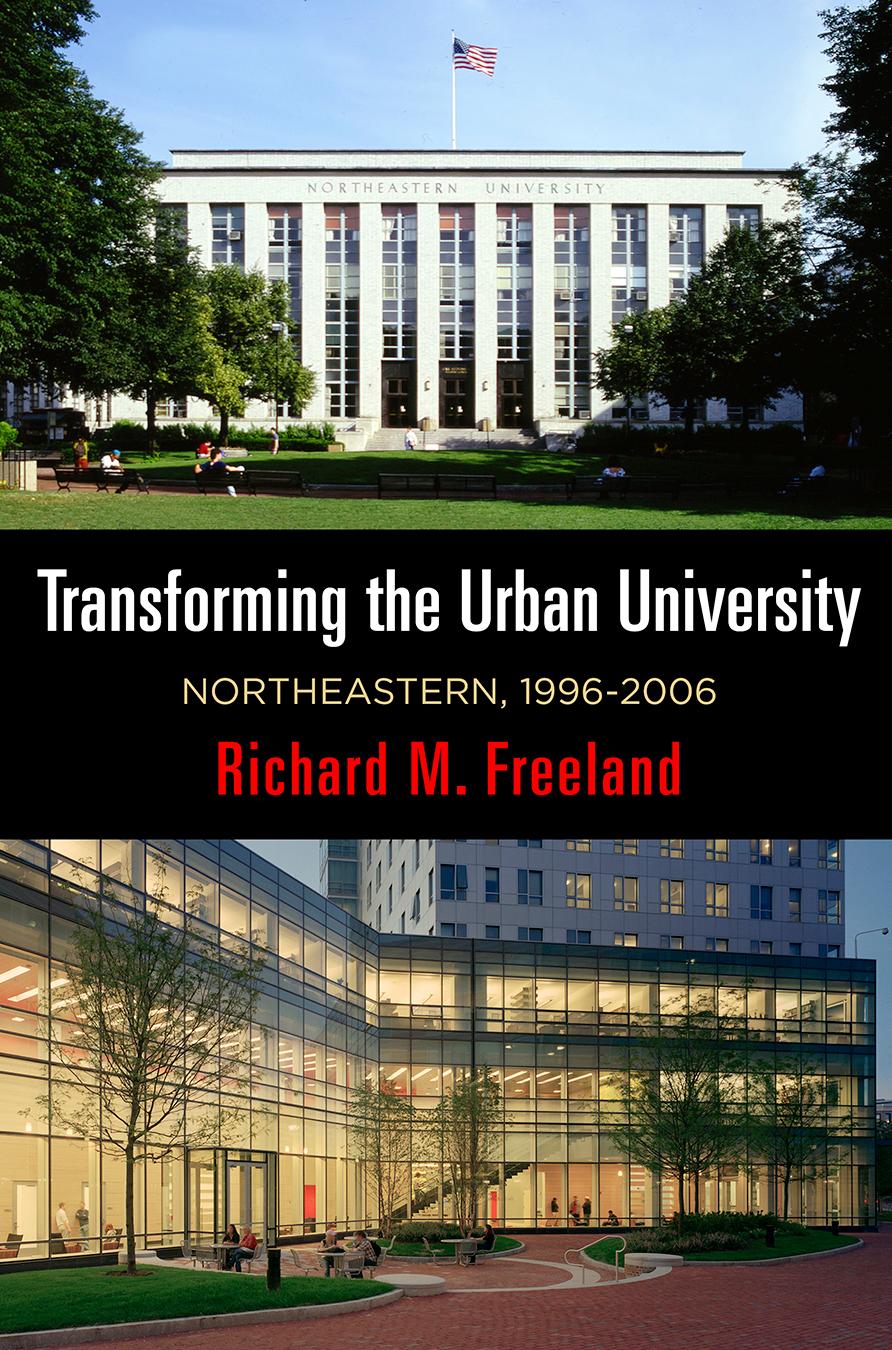
In Transforming the Urban University, Richard M. Freeland reviews how Northeastern University in Boston, historically an access-oriented, private urban university serving commuter students from modest backgrounds and characterized by limited academic ambitions and local reach, transformed itself into a selective, national, and residential research university. Having served as president during a critical decade in this transition, Freeland recounts the school's efforts to retain key features from Northeastern's urban history—an emphasis on undergraduate teaching and learning, a curriculum focused on preparing students for the workplace, its signature program of cooperative education, and its broad involvement in the life of the city—while at the same time raising admission standards, recruiting students on a regional and national basis, improving graduation rates, expanding opportunities for research and graduate education and dramatically improving its U.S. News ranking.
Freeland situates the Northeastern story within the evolving context of urban higher education as well as broader trends among American universities during the second half of the twentieth century. He documents the way Northeastern maintained its historic values while making innovative use of modern marketing techniques to meet the competitive conditions of the academic marketplace. He shows how Northeastern rejected the standard model of the modern research university and instead reinvented itself as a new kind of urban university: making excellence in the undergraduate experience its top priority; stressing practice-oriented education and research; and emphasizing the academic benefits of its urban setting as well as the importance of contributing to the well-being of its host city. In chronicling Northeastern's recovery from what the school's trustees called a "near-death" experience, Freeland challenges the conventional narrative of what a university must do to achieve top-tier national status.
Before Memmo my notes were scattered across PDFs. Now a workspace pulls everything into one place — I see exactly what's still left to study.
Memmo's summaries are gold before exams. I don't have to re-read 800 pages two weeks before — just the important parts.
The AI chat has saved me the night before an exam more than once. I just keep asking until I get it — no waiting on a study group to reply.
The quizzes hit exactly what I need to know. Memmo tracks what I get stuck on — so I only practice what's worth it.
Flashcards with spaced repetition are magic. Memmo knows when I'm about to forget something and brings it back.
The AI podcasts are my favorite. I listen on my way to school and get a recap without sitting at a computer.

Handbok i kvalitativa metoder
281 kr

Hållbar utveckling: en introduktion för ingenjörer och andra problemlösare
334 kr

Brymans Samhällsvetenskapliga metoder
390 kr

Projektledning
491 kr

Den orättvisa hälsan: om socioekonomiska skillnader i hälsa och livslängd
326 kr

Organizational Leadership
429 kr

Vetenskapsteori för nybörjare
196 kr

På väg mot läraryrket
172 kr

Det sociala livet i skolan: Socialpsykologiska perspektiv
253 kr

Betygsättningens didaktik
151 kr

Personality
402 kr

Studying Leadership
404 kr

Managing Innovation
477 kr

Introduktion till samhällsvetenskaplig metod
347 kr

The Psychology of Sex and Gender
698 kr

Evidens och kunskap för socialt arbete
207 kr

Introduction to Leadership
605 kr