
Before Memmo my notes were scattered across PDFs. Now a workspace pulls everything into one place — I see exactly what's still left to study.
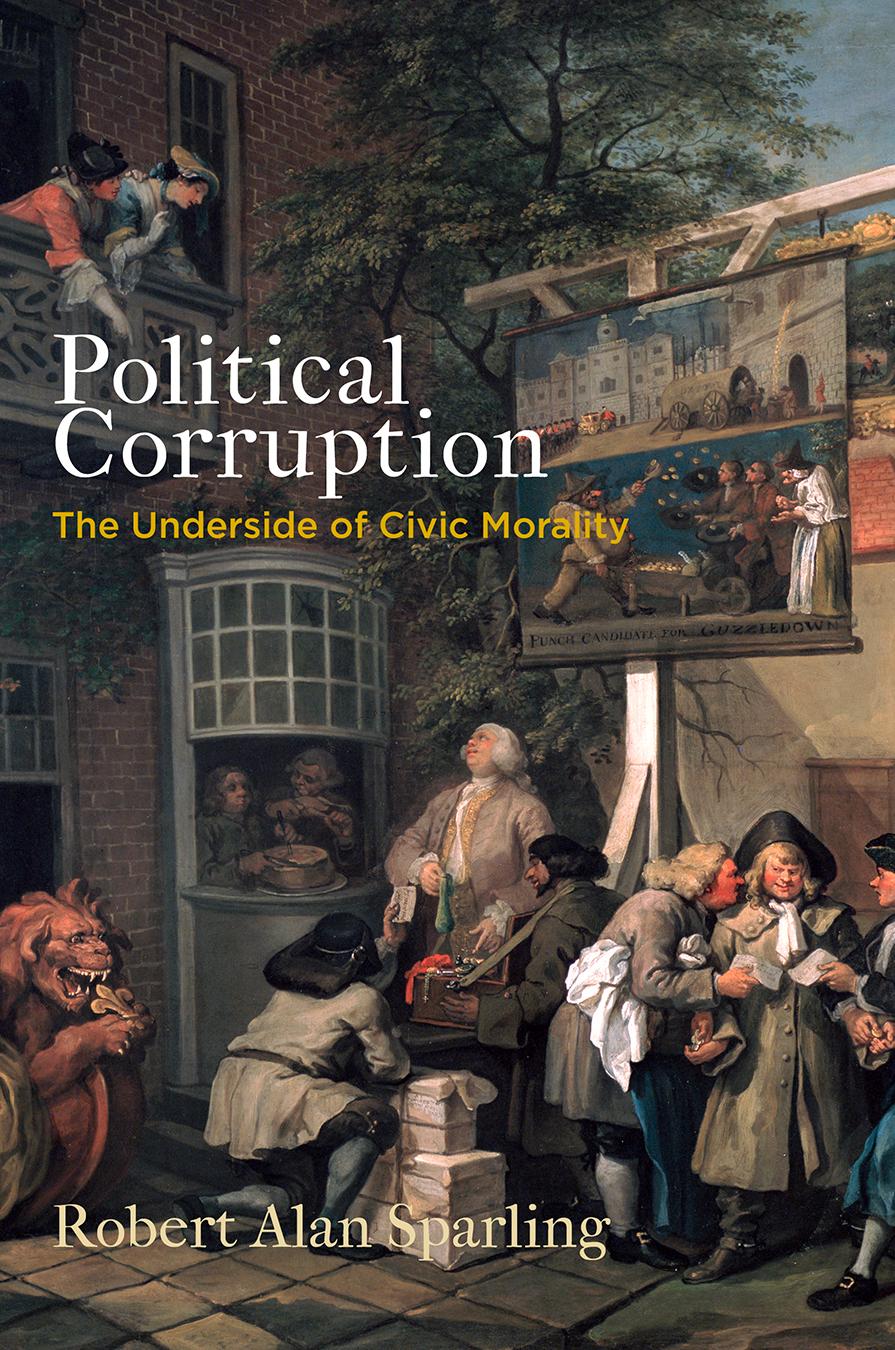
The notion of corruption as a problem for politics spans many centuries and political, social, and cultural contexts. But it is incredibly difficult to define what we mean when we describe a regime or actor as corrupt: while corruption suggests a falling away from purity, health, or integrity, it flourishes today in an environment that is often inarticulate about its moral ideals and wary of perfectionist discourse. Providing a historical perspective on the idea, Robert Alan Sparling explores diverse visions of corruption that have been elucidated by thinkers across the modern philosophical tradition.
In a series of chronologically ordered philosophical portraits, Political Corruption considers the different ways in which a metaphor of impurity, disease, and dissolution was deployed by political philosophers from the Renaissance to the early twentieth century. Focusing specifically on the thought of Erasmus, Étienne de La Boétie, Machiavelli, Montesquieu, Bolingbroke, Robespierre, Kant, and Weber, Sparling situates these thinkers in their historical contexts and argues that each of them offers a distinctive vision of corruption that has continuing relevance in contemporary political debates. He contrasts immoderate purists with impure moderates and reveals corruption to be a language of reaction and revolution. The book explores themes such as the nature of civic trust and distrust; the relationship of transparency to accountability; the integrity of leaders and the character of uncorrupted citizens; the division between public and private; the nature of dependency; and the relationship between regime and civic disposition.
Political Corruption examines how philosophers have conceived of public office and its abuse and how they have sought to insulate the public sphere from anticivic inclinations and interests. Sparling argues that speaking coherently about political corruption in our present moment requires a robust account of the good regime and of the character of its citizens and officeholders.
Before Memmo my notes were scattered across PDFs. Now a workspace pulls everything into one place — I see exactly what's still left to study.
Memmo's summaries are gold before exams. I don't have to re-read 800 pages two weeks before — just the important parts.
The AI chat has saved me the night before an exam more than once. I just keep asking until I get it — no waiting on a study group to reply.
The quizzes hit exactly what I need to know. Memmo tracks what I get stuck on — so I only practice what's worth it.
Flashcards with spaced repetition are magic. Memmo knows when I'm about to forget something and brings it back.
The AI podcasts are my favorite. I listen on my way to school and get a recap without sitting at a computer.

Handbok i kvalitativa metoder
281 kr

Hållbar utveckling: en introduktion för ingenjörer och andra problemlösare
334 kr

Brymans Samhällsvetenskapliga metoder
390 kr

Projektledning
491 kr

Den orättvisa hälsan: om socioekonomiska skillnader i hälsa och livslängd
326 kr

Vetenskapsteori för nybörjare
196 kr

Organizational Leadership
429 kr

På väg mot läraryrket
172 kr

Det sociala livet i skolan: Socialpsykologiska perspektiv
253 kr

Betygsättningens didaktik
151 kr

Personality
402 kr

Studying Leadership
404 kr

Managing Innovation
477 kr

Introduktion till samhällsvetenskaplig metod
347 kr

The Psychology of Sex and Gender
698 kr

Evidens och kunskap för socialt arbete
207 kr

Introduction to Leadership
605 kr