
Before Memmo my notes were scattered across PDFs. Now a workspace pulls everything into one place — I see exactly what's still left to study.
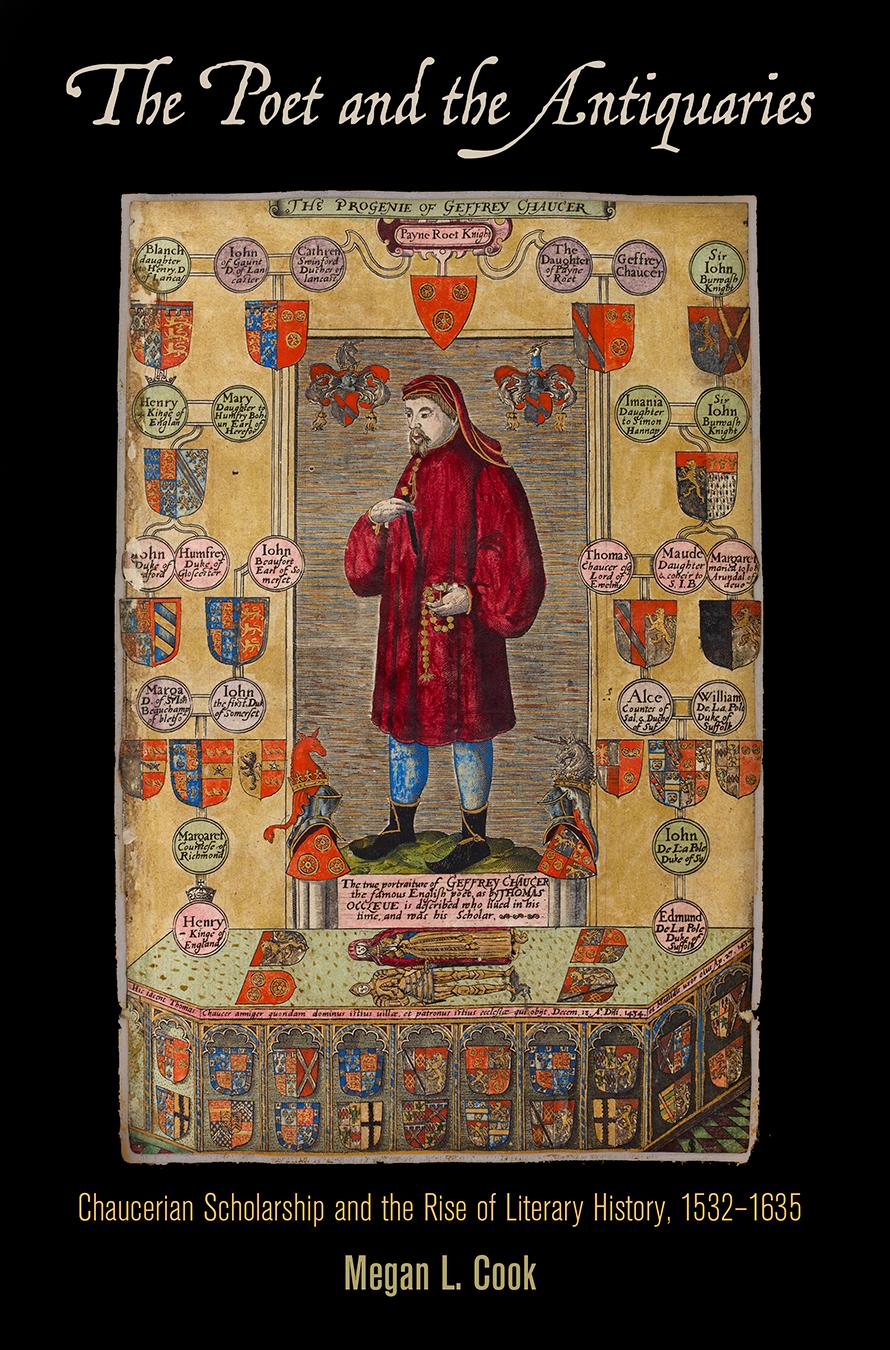
Between 1532 and 1602, the works of Geoffrey Chaucer were published in no less than six folio editions. These were, in fact, the largest books of poetry produced in sixteenth-century England, and they significantly shaped the perceptions of Chaucer that would hold sway for centuries to come. But it is the stories behind these editions that are the focus of Megan L. Cook's interest in The Poet and the Antiquaries. She explores how antiquarians—historians, lexicographers, religious polemicists, and other readers with a professional, but not necessarily literary, interest in the English past—played an indispensable role in making Chaucer a figure of lasting literary and cultural importance.
After establishing the antiquarian involvement in the publication of the folio editions, Cook offers a series of case studies that discuss Chaucer and his works in relation to specific sixteenth-century discourses about the past. She turns to early accounts of Chaucer's biography to show how important they were in constructing the poet as a figure whose life and works could be known, understood, and valued by later readers. She considers the claims made about Chaucer's religious views, especially the assertions that he was a proto-Protestant, and the effects they had on shaping his canon. Looking at early modern views on Chaucerian language, she illustrates how complicated the relations between past and present forms of English were thought to be. Finally, she demonstrates the ways in which antiquarian readers applied knowledge from other areas of scholarship to their reading of Middle English texts.
Linking Chaucer's exceptional standing in the poetic canon with his role as a symbol of linguistic and national identity, The Poet and the Antiquaries demonstrates how and why Chaucer became not only the first English author to become a subject of historical inquiry but also a crucial figure for conceptualizing the medieval in early modern England.
Before Memmo my notes were scattered across PDFs. Now a workspace pulls everything into one place — I see exactly what's still left to study.
Memmo's summaries are gold before exams. I don't have to re-read 800 pages two weeks before — just the important parts.
The AI chat has saved me the night before an exam more than once. I just keep asking until I get it — no waiting on a study group to reply.
The quizzes hit exactly what I need to know. Memmo tracks what I get stuck on — so I only practice what's worth it.
Flashcards with spaced repetition are magic. Memmo knows when I'm about to forget something and brings it back.
The AI podcasts are my favorite. I listen on my way to school and get a recap without sitting at a computer.

Handbok i kvalitativa metoder
281 kr

Hållbar utveckling: en introduktion för ingenjörer och andra problemlösare
334 kr

Brymans Samhällsvetenskapliga metoder
390 kr

Projektledning
491 kr

Den orättvisa hälsan: om socioekonomiska skillnader i hälsa och livslängd
326 kr

Vetenskapsteori för nybörjare
196 kr

Organizational Leadership
429 kr

På väg mot läraryrket
172 kr

Det sociala livet i skolan: Socialpsykologiska perspektiv
253 kr

Betygsättningens didaktik
151 kr

Personality
402 kr

Studying Leadership
404 kr

Managing Innovation
477 kr

Introduktion till samhällsvetenskaplig metod
347 kr

The Psychology of Sex and Gender
698 kr

Evidens och kunskap för socialt arbete
207 kr

Introduction to Leadership
605 kr