
Before Memmo my notes were scattered across PDFs. Now a workspace pulls everything into one place — I see exactly what's still left to study.
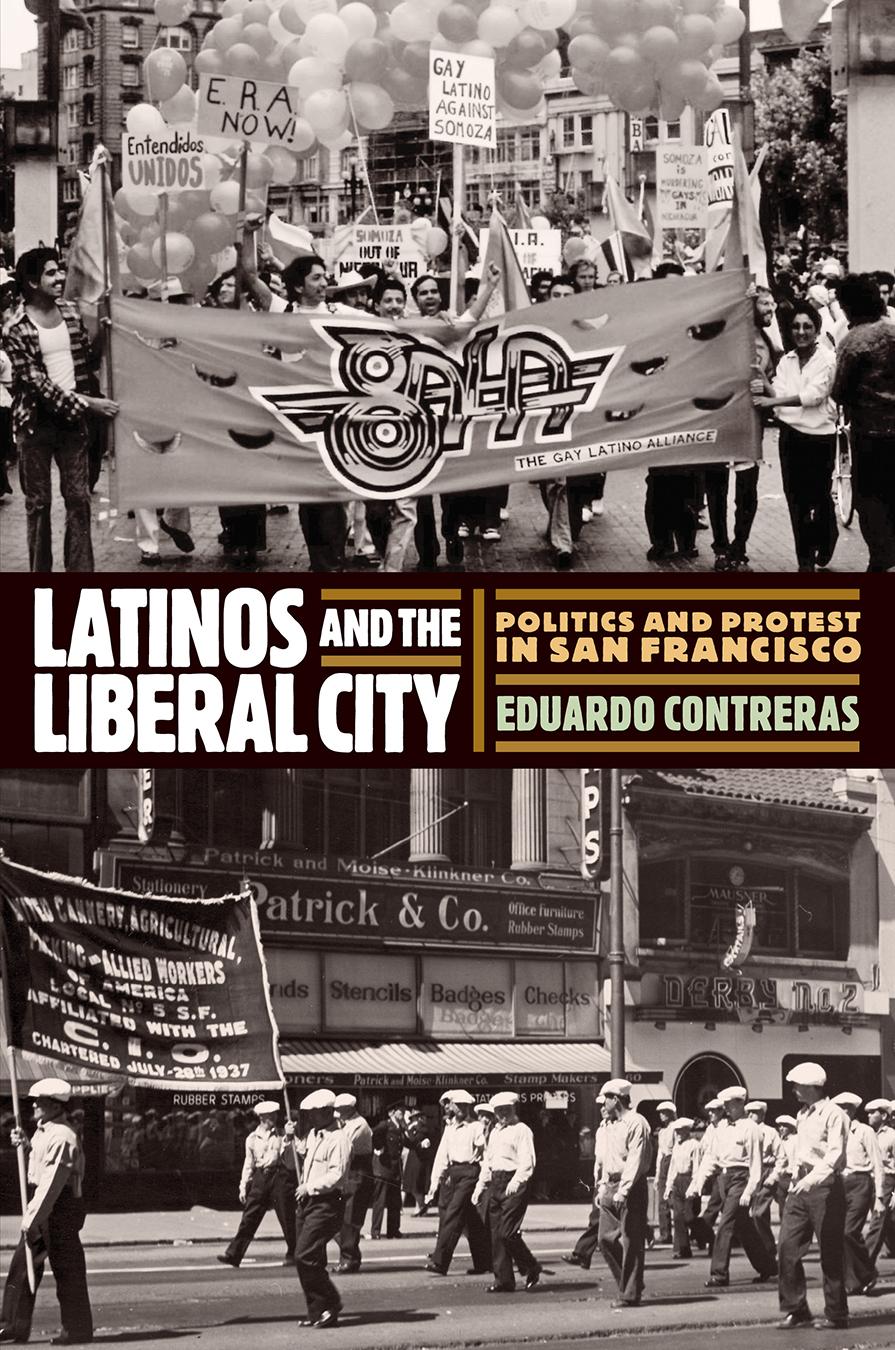
The "Latino vote" has become a mantra in political media, as journalists, pundits, and social scientists regularly weigh in on Latinos' loyalty to the Democratic Party and the significance of their electoral participation. But how and why did Latinos' liberal orientation take hold? What has this political inclination meant—and how has it unfolded—over time?
In Latinos and the Liberal City, Eduardo Contreras addresses these questions, offering a bold, textured, and inclusive interpretation of the nature and character of Latino politics in America's shifting social and cultural landscape. Contreras argues that Latinos' political life and aspirations have been marked by diversity and contestation yet consistently influenced by the ideologies of liberalism and latinidad: while the principles of activist government, social reform, freedom, and progress sustained liberalism, latinidad came to rest on promoting unity and commonality among Latinos.
Contreras centers this compelling narrative on San Francisco—America's liberal city par excellence—examining the role of its Latino communities in local politics from the 1930s to the 1970s. By the early twentieth century, San Francisco's residents of Latin American ancestry traced their heritage to nations including Mexico, Puerto Rico, Nicaragua, El Salvador, Chile, and Peru. These communities formed part of the New Deal coalition, defended workers' rights with gusto, and joined the crusade for racial equality decades before the 1960s. In the mid- to late postwar era, Latinos expanded claims for recognition and inclusion while participating in movements and campaigns for socioeconomic advancement, female autonomy, gay liberation, and rent control. Latinos and the Liberal City makes clear that the local public sphere nurtured Latinos' political subjectivities and that their politicization contributed to the vibrancy of San Francisco's political culture.
Before Memmo my notes were scattered across PDFs. Now a workspace pulls everything into one place — I see exactly what's still left to study.
Memmo's summaries are gold before exams. I don't have to re-read 800 pages two weeks before — just the important parts.
The AI chat has saved me the night before an exam more than once. I just keep asking until I get it — no waiting on a study group to reply.
The quizzes hit exactly what I need to know. Memmo tracks what I get stuck on — so I only practice what's worth it.
Flashcards with spaced repetition are magic. Memmo knows when I'm about to forget something and brings it back.
The AI podcasts are my favorite. I listen on my way to school and get a recap without sitting at a computer.

Handbok i kvalitativa metoder
281 kr

Hållbar utveckling: en introduktion för ingenjörer och andra problemlösare
334 kr

Brymans Samhällsvetenskapliga metoder
390 kr

Projektledning
491 kr

Den orättvisa hälsan: om socioekonomiska skillnader i hälsa och livslängd
326 kr

Vetenskapsteori för nybörjare
196 kr

Organizational Leadership
429 kr

På väg mot läraryrket
172 kr

Det sociala livet i skolan: Socialpsykologiska perspektiv
253 kr

Betygsättningens didaktik
151 kr

Personality
402 kr

Studying Leadership
404 kr

Managing Innovation
477 kr

Introduktion till samhällsvetenskaplig metod
347 kr

The Psychology of Sex and Gender
698 kr

Evidens och kunskap för socialt arbete
207 kr

Introduction to Leadership
605 kr