
Before Memmo my notes were scattered across PDFs. Now a workspace pulls everything into one place — I see exactly what's still left to study.
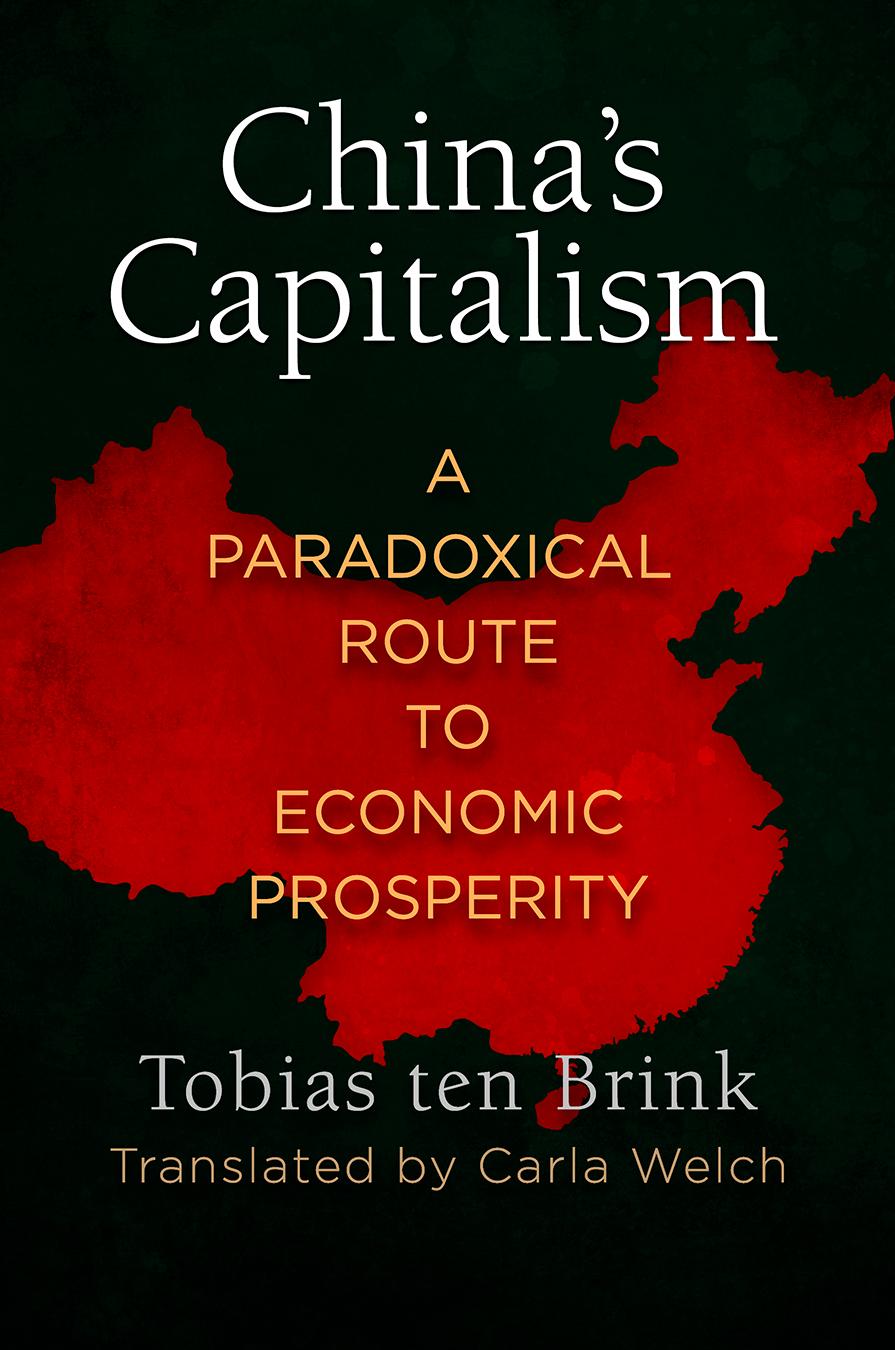
Since 1978, the end of the Mao era, economic growth in China has outperformed every previous economic expansion in modern history. While the largest Western economies continue to struggle with the effects of the deepest recession since World War II, the People's Republic of China still enjoys growth rates that are massive in comparison. In the country's smog-choked cities, a chaotic climate of buying and selling prevails. Tireless expansion and inventiveness join forces with an attitude of national euphoria in which anything seems possible. No longer merely the "workshop of the world," China is poised to become a global engine for innovation.
In China's Capitalism, Tobias ten Brink considers the history of the socioeconomic order that has emerged in the People's Republic. With empirical evidence and a theoretical foundation based in comparative and international political economy, ten Brink analyzes the main characteristics of China's socioeconomic system over time, identifies the key dynamics shaping this system's structure, and discusses current trends in further capitalist development. He argues that hegemonic state-business alliances mostly at the local level, relative homogeneity of party-state elites, the maintenance of a low-wage regime, and unanticipated coincidences between domestic and global processes are the driving forces behind China's rise. He also surveys the limits to the state's influence over economic and social developments such as industrial overcapacity and social conflict.
Ten Brink's framework reveals how combinations of three heterogeneous actors—party-state institutions, firms, and workers—led to China's distinctive form of capitalism. Presenting a coherent and historically nuanced portrait, China's Capitalism is essential reading for anyone interested in the socioeconomic order of the People's Republic and the significant challenges facing its continuing development.
Before Memmo my notes were scattered across PDFs. Now a workspace pulls everything into one place — I see exactly what's still left to study.
Memmo's summaries are gold before exams. I don't have to re-read 800 pages two weeks before — just the important parts.
The AI chat has saved me the night before an exam more than once. I just keep asking until I get it — no waiting on a study group to reply.
The quizzes hit exactly what I need to know. Memmo tracks what I get stuck on — so I only practice what's worth it.
Flashcards with spaced repetition are magic. Memmo knows when I'm about to forget something and brings it back.
The AI podcasts are my favorite. I listen on my way to school and get a recap without sitting at a computer.

Handbok i kvalitativa metoder
281 kr

Hållbar utveckling: en introduktion för ingenjörer och andra problemlösare
334 kr

Brymans Samhällsvetenskapliga metoder
390 kr

Projektledning
491 kr

Den orättvisa hälsan: om socioekonomiska skillnader i hälsa och livslängd
326 kr

Vetenskapsteori för nybörjare
196 kr

Organizational Leadership
429 kr

På väg mot läraryrket
172 kr

Det sociala livet i skolan: Socialpsykologiska perspektiv
253 kr

Betygsättningens didaktik
151 kr

Personality
402 kr

Studying Leadership
404 kr

Managing Innovation
477 kr

Introduktion till samhällsvetenskaplig metod
347 kr

The Psychology of Sex and Gender
698 kr

Evidens och kunskap för socialt arbete
207 kr

Introduction to Leadership
605 kr