
Before Memmo my notes were scattered across PDFs. Now a workspace pulls everything into one place — I see exactly what's still left to study.
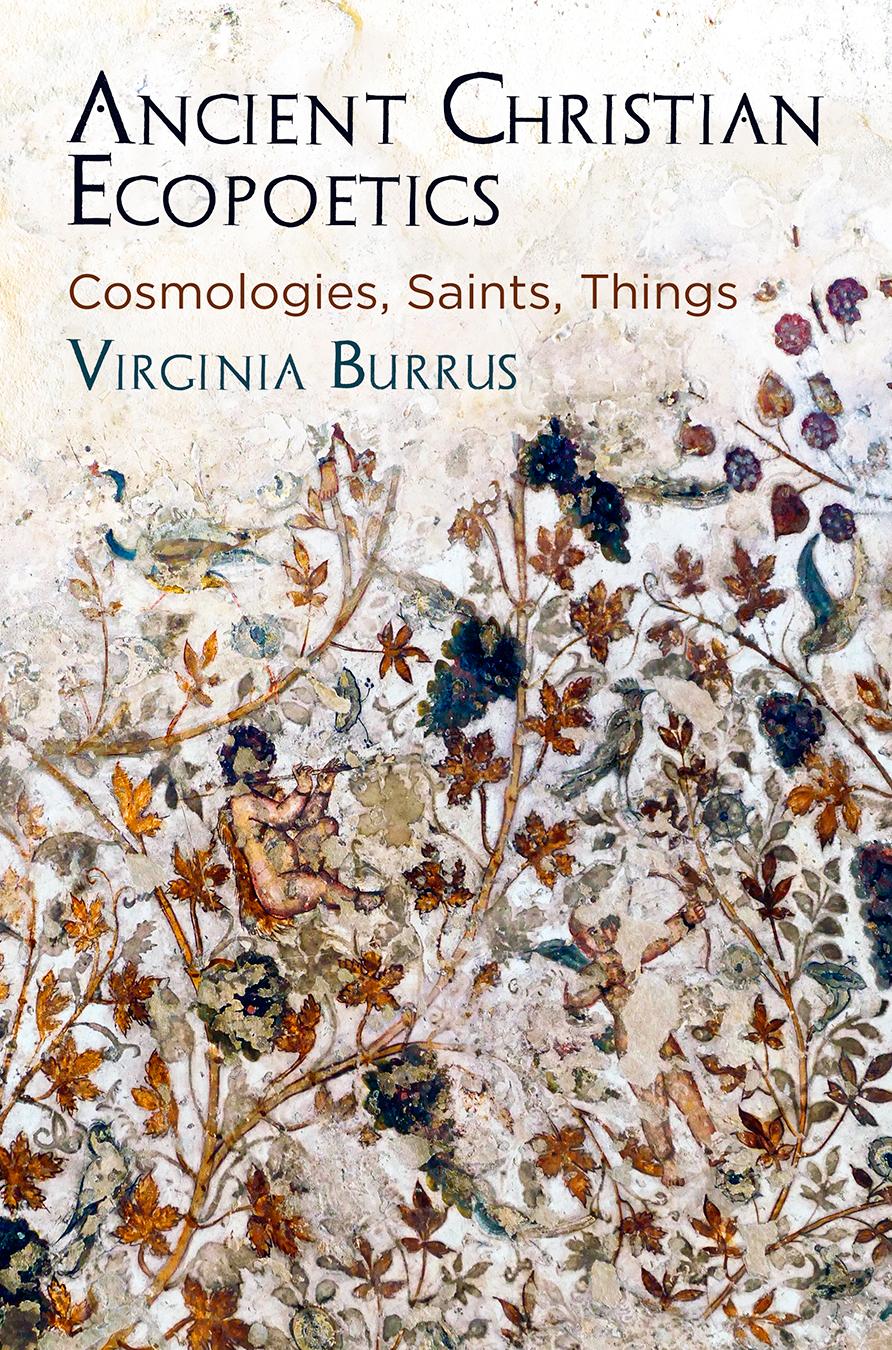
In our age of ecological crisis, what insights—if any—can we expect to find by looking to our past? Perhaps, suggests Virginia Burrus, early Christianity might yield usable insights. Turning aside from the familiar specter of Christianity's human-centered theology of dominion, Burrus directs our attention to aspects of ancient Christian thought and practice that remain strange and alien. Drawn to excess and transgression, in search of transformation, early Christians creatively reimagined the universe and the human, cultivating relationships with a wide range of other beings—animal, vegetable, and mineral; angelic and demonic; divine and earthly; large and small.
In Ancient Christian Ecopoetics, Burrus facilitates a provocative encounter between early Christian theology and contemporary ecological thought. In the first section, she explores how the mysterious figure of khora, drawn from Plato's Timaeus, haunts Christian and Jewish accounts of a creation envisioned as varyingly monstrous, unstable, and unknowable. In the second section, she explores how hagiographical literature queers notions of nature and places the very category of the human into question, in part by foregrounding the saint's animality, in part by writing the saint into the landscape. The third section considers material objects, as small as portable relics and icons, as large as church and monastery complexes. Ancient Christians considered all of these animate beings, simultaneously powerful and vulnerable, protective and in need of protection, lovable and loving. Viewed through the shifting lenses of an ancient ecopoetics, Burrus demonstrates how humans both loomed large and shrank to invisibility, absorbed in the rapture of a strange and animate ecology.
Before Memmo my notes were scattered across PDFs. Now a workspace pulls everything into one place — I see exactly what's still left to study.
Memmo's summaries are gold before exams. I don't have to re-read 800 pages two weeks before — just the important parts.
The AI chat has saved me the night before an exam more than once. I just keep asking until I get it — no waiting on a study group to reply.
The quizzes hit exactly what I need to know. Memmo tracks what I get stuck on — so I only practice what's worth it.
Flashcards with spaced repetition are magic. Memmo knows when I'm about to forget something and brings it back.
The AI podcasts are my favorite. I listen on my way to school and get a recap without sitting at a computer.

Handbok i kvalitativa metoder
281 kr

Hållbar utveckling: en introduktion för ingenjörer och andra problemlösare
334 kr

Brymans Samhällsvetenskapliga metoder
390 kr

Projektledning
491 kr

Den orättvisa hälsan: om socioekonomiska skillnader i hälsa och livslängd
326 kr

Vetenskapsteori för nybörjare
196 kr

Organizational Leadership
429 kr

På väg mot läraryrket
172 kr

Det sociala livet i skolan: Socialpsykologiska perspektiv
253 kr

Betygsättningens didaktik
151 kr

Personality
402 kr

Studying Leadership
404 kr

Managing Innovation
477 kr

Introduktion till samhällsvetenskaplig metod
347 kr

The Psychology of Sex and Gender
698 kr

Evidens och kunskap för socialt arbete
207 kr

Introduction to Leadership
605 kr