
Before Memmo my notes were scattered across PDFs. Now a workspace pulls everything into one place — I see exactly what's still left to study.
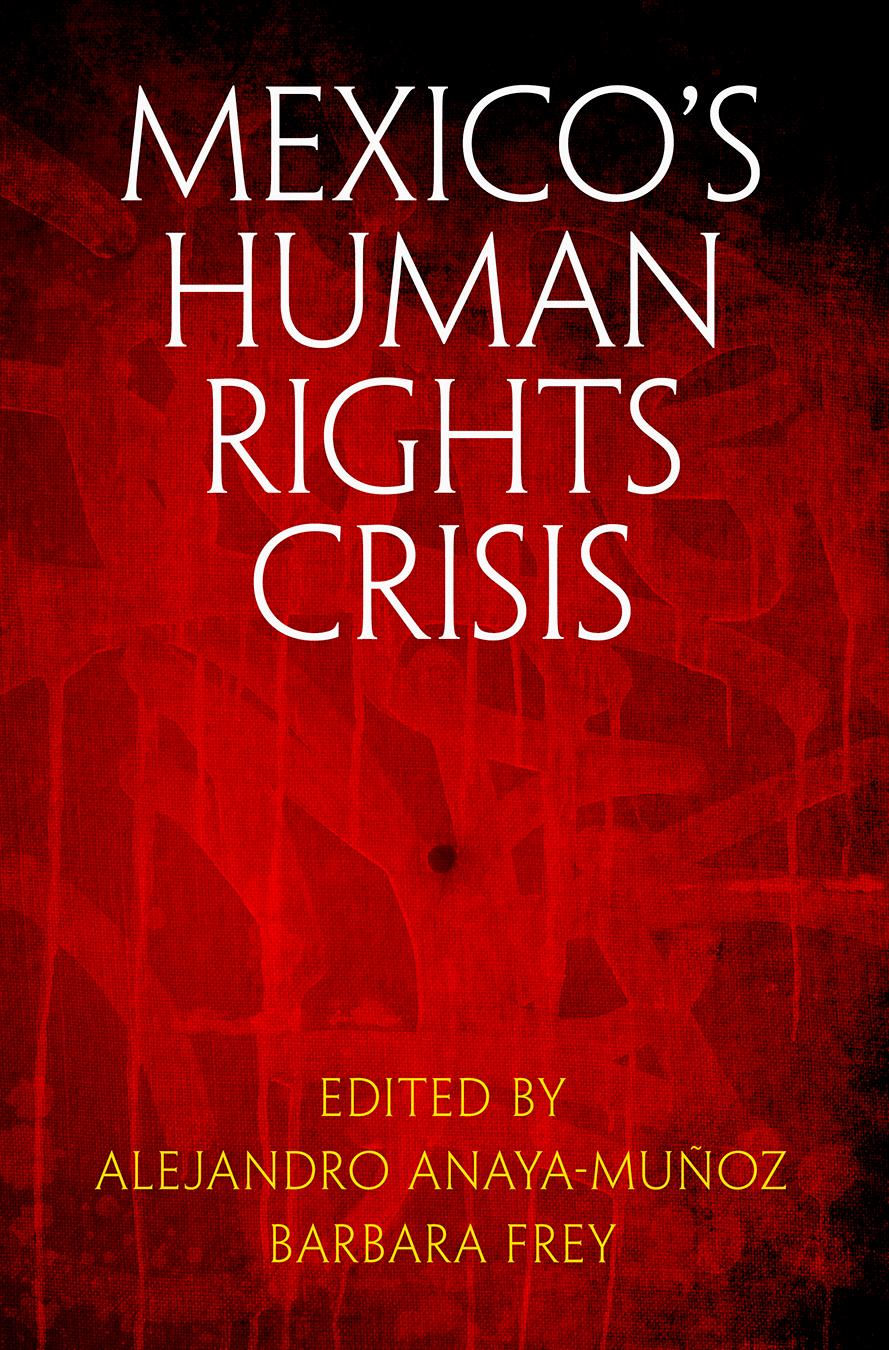
Lawless elements are ascendant in Mexico, as evidenced by the operations of criminal cartels engaged in human and drug trafficking, often with the active support or acquiescence of government actors. The sharp increase in the number of victims of homicide, disappearances and torture over the past decade is unparalleled in the country's recent history. According to editors Alejandro Anaya-Muñoz and Barbara Frey, the "war on drugs" launched in 2006 by President Felipe Calderón and the corrupting influence criminal organizations have on public institutions have empowered both state and nonstate actors to operate with impunity. Impunity, they argue, is the root cause that has enabled a human-rights crisis to flourish, creating a climate of generalized violence that is carried out, condoned, or ignored by the state and precluding any hope for justice.
Mexico's Human Rights Crisis offers a broad survey of the current human rights issues that plague Mexico. Essays focus on the human rights consequences that flow directly from the ongoing "war on drugs" in the country, including violence aimed specifically at women, and the impunity that characterizes the government's activities. Contributors address the violation of the human rights of migrants, in both Mexico and the United States, and cover the domestic and transnational elements and processes that shape the current human rights crisis, from the state of Mexico's democracy to the influence of rulings by the Inter-American Court of Human Rights on the decisions of Mexico's National Supreme Court of Justice. Given the scope, the contemporaneity, and the gravity of Mexico's human rights crisis, the recommendations made in the book by the editors and contributors to curb the violence could not be more urgent.
Contributors: Alejandro Anaya-Muñoz, Karina Ansolabehere, Ariadna Estévez, Barbara Frey, Janice Gallagher, Rodrigo Gutiérrez Rivas, Susan Gzesh, Sandra Hincapié, Catalina Pérez Correa, Laura Rubio Díaz-Leal, Natalia Saltalamacchia, Carlos Silva Forné, Regina Tamés, Javier Treviño-Rangel, Daniel Vázquez, Benjamin James Waddell.
Before Memmo my notes were scattered across PDFs. Now a workspace pulls everything into one place — I see exactly what's still left to study.
Memmo's summaries are gold before exams. I don't have to re-read 800 pages two weeks before — just the important parts.
The AI chat has saved me the night before an exam more than once. I just keep asking until I get it — no waiting on a study group to reply.
The quizzes hit exactly what I need to know. Memmo tracks what I get stuck on — so I only practice what's worth it.
Flashcards with spaced repetition are magic. Memmo knows when I'm about to forget something and brings it back.
The AI podcasts are my favorite. I listen on my way to school and get a recap without sitting at a computer.

Handbok i kvalitativa metoder
281 kr

Hållbar utveckling: en introduktion för ingenjörer och andra problemlösare
334 kr

Brymans Samhällsvetenskapliga metoder
390 kr

Projektledning
491 kr

Den orättvisa hälsan: om socioekonomiska skillnader i hälsa och livslängd
326 kr

Vetenskapsteori för nybörjare
196 kr

Organizational Leadership
429 kr

På väg mot läraryrket
172 kr

Det sociala livet i skolan: Socialpsykologiska perspektiv
253 kr

Betygsättningens didaktik
151 kr

Personality
402 kr

Studying Leadership
404 kr

Managing Innovation
477 kr

Introduktion till samhällsvetenskaplig metod
347 kr

The Psychology of Sex and Gender
698 kr

Evidens och kunskap för socialt arbete
207 kr

Introduction to Leadership
605 kr