
Before Memmo my notes were scattered across PDFs. Now a workspace pulls everything into one place — I see exactly what's still left to study.
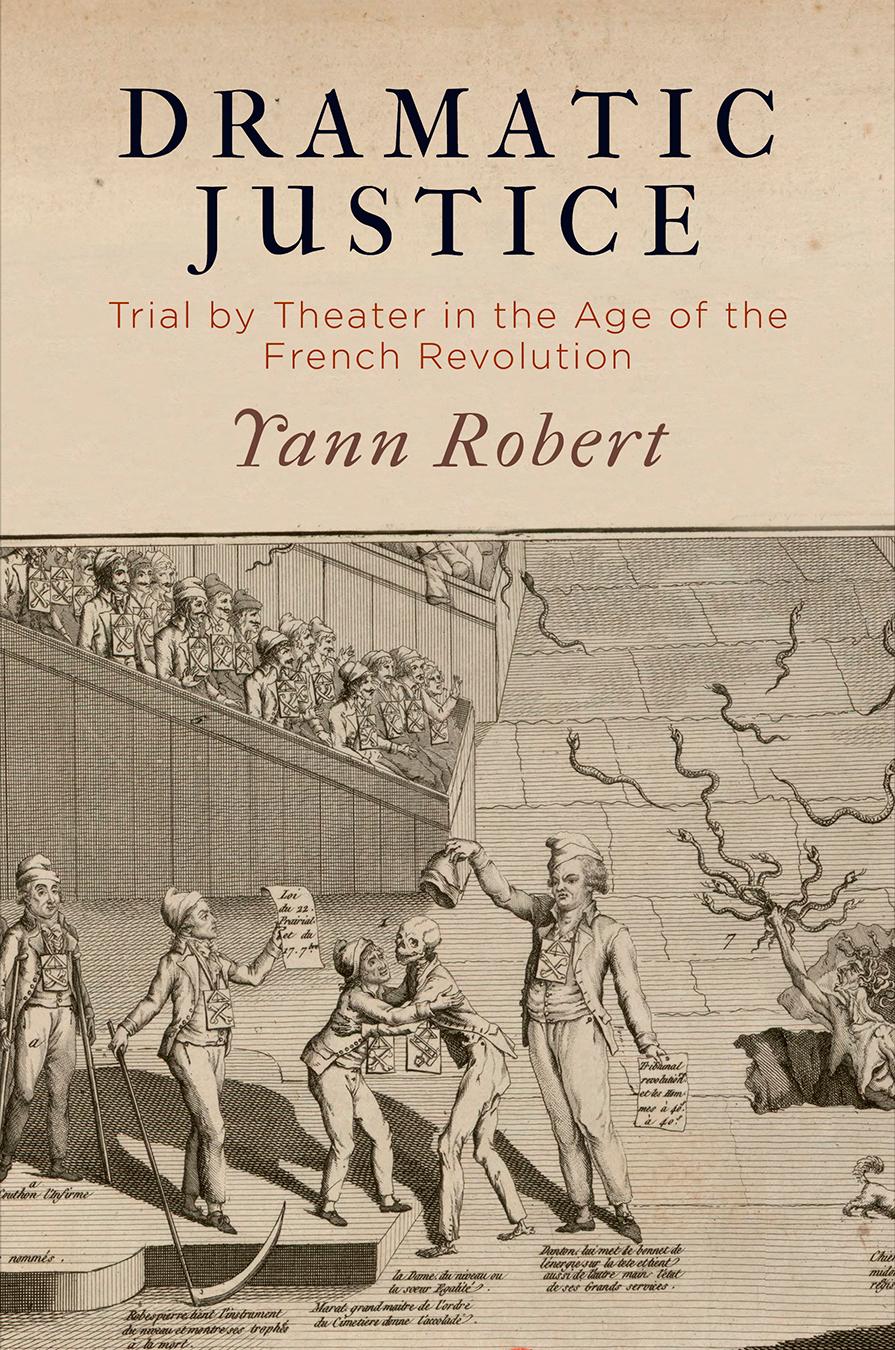
For most of the seventeenth and eighteenth centuries, classical dogma and royal censorship worked together to prevent French plays from commenting on, or even worse, reenacting current political and judicial affairs. Criminal trials, meanwhile, were designed to be as untheatrical as possible, excluding from the courtroom live debates, trained orators, and spectators. According to Yann Robert, circumstances changed between 1750 and 1800 as parallel evolutions in theater and justice brought them closer together, causing lasting transformations in both.
Robert contends that the gradual merging of theatrical and legal modes in eighteenth-century France has been largely overlooked because it challenges two widely accepted narratives: first, that French theater drifted toward entertainment and illusionism during this period and, second, that the French justice system abandoned any performative foundation it previously had in favor of a textual one. In Dramatic Justice, he demonstrates that the inverse of each was true. Robert traces the rise of a "judicial theater" in which plays denounced criminals by name, even forcing them, in some cases, to perform their transgressions anew before a jeering public. Likewise, he shows how legal reformers intentionally modeled trial proceedings on dramatic representations and went so far as to recommend that judges mimic the sentimental judgment of spectators and that lawyers seek private lessons from actors. This conflation of theatrical and legal performances provoked debates and anxieties in the eighteenth century that, according to Robert, continue to resonate with present concerns over lawsuit culture and judicial entertainment.
Dramatic Justice offers an alternate history of French theater and judicial practice, one that advances new explanations for several pivotal moments in the French Revolution, including the trial of Louis XVI and the Terror, by showing the extent to which they were shaped by the period's conflicted relationship to theatrical justice.
Before Memmo my notes were scattered across PDFs. Now a workspace pulls everything into one place — I see exactly what's still left to study.
Memmo's summaries are gold before exams. I don't have to re-read 800 pages two weeks before — just the important parts.
The AI chat has saved me the night before an exam more than once. I just keep asking until I get it — no waiting on a study group to reply.
The quizzes hit exactly what I need to know. Memmo tracks what I get stuck on — so I only practice what's worth it.
Flashcards with spaced repetition are magic. Memmo knows when I'm about to forget something and brings it back.
The AI podcasts are my favorite. I listen on my way to school and get a recap without sitting at a computer.

Handbok i kvalitativa metoder
281 kr

Hållbar utveckling: en introduktion för ingenjörer och andra problemlösare
334 kr

Brymans Samhällsvetenskapliga metoder
390 kr

Projektledning
491 kr

Den orättvisa hälsan: om socioekonomiska skillnader i hälsa och livslängd
326 kr

Vetenskapsteori för nybörjare
196 kr

Organizational Leadership
429 kr

På väg mot läraryrket
172 kr

Det sociala livet i skolan: Socialpsykologiska perspektiv
253 kr

Betygsättningens didaktik
151 kr

Personality
402 kr

Studying Leadership
404 kr

Managing Innovation
477 kr

Introduktion till samhällsvetenskaplig metod
347 kr

The Psychology of Sex and Gender
698 kr

Evidens och kunskap för socialt arbete
207 kr

Introduction to Leadership
605 kr