
Before Memmo my notes were scattered across PDFs. Now a workspace pulls everything into one place — I see exactly what's still left to study.
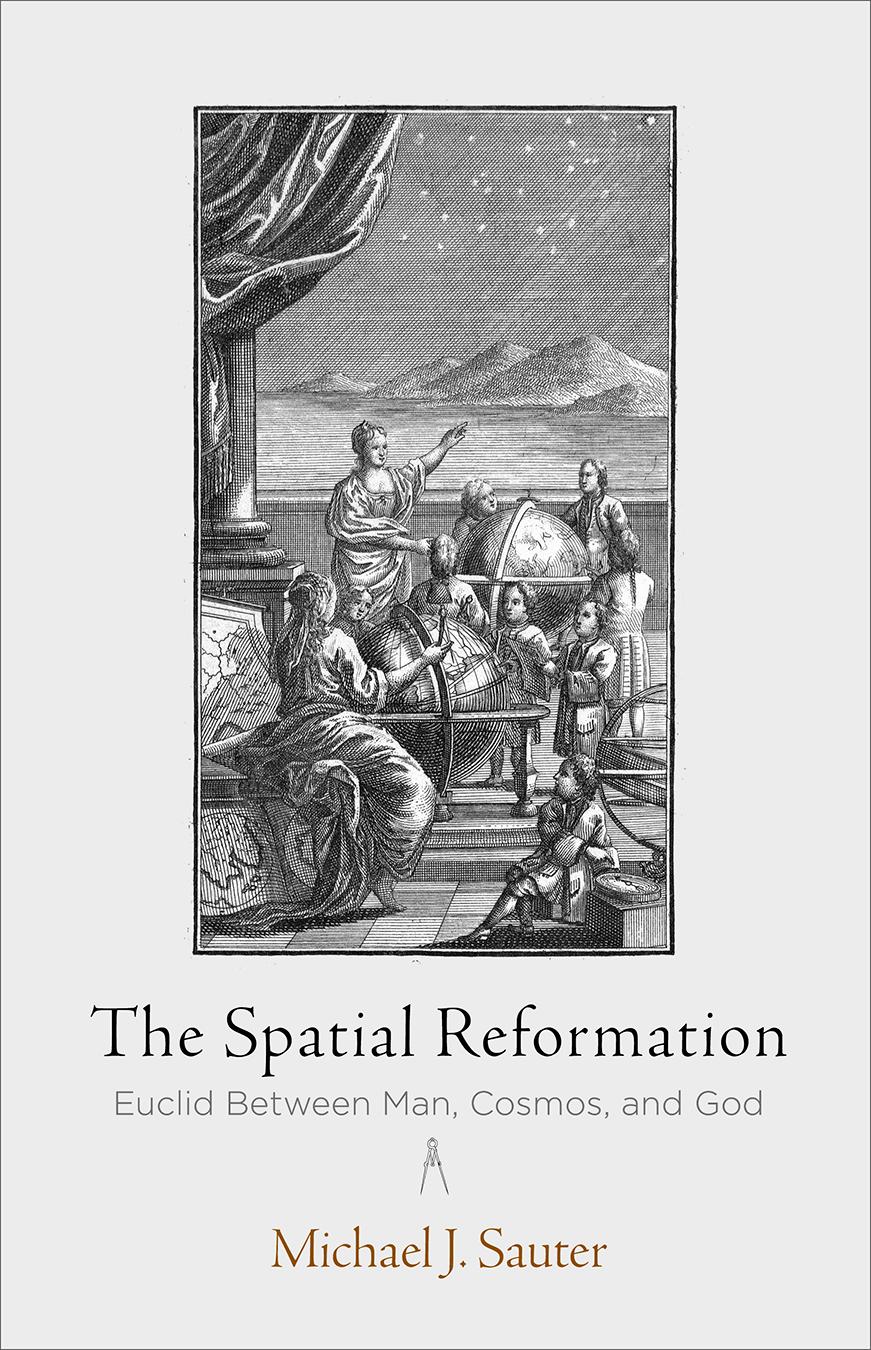
In The Spatial Reformation, Michael J. Sauter offers a sweeping history of the way Europeans conceived of three-dimensional space, including the relationship between Earth and the heavens, between 1350 and 1850. He argues that this "spatial reformation" provoked a reorganization of knowledge in the West that was arguably as important as the religious Reformation. Notably, it had its own sacred text, which proved as central and was as ubiquitously embraced: Euclid's Elements. Aside from the Bible, no other work was so frequently reproduced in the early modern era. According to Sauter, its penetration and suffusion throughout European thought and experience call for a deliberate reconsideration not only of what constitutes the intellectual foundation of the early modern era but also of its temporal range.
The Spatial Reformation contends that space is a human construct: that is, it is a concept that arises from the human imagination and gets expressed physically in texts and material objects. Sauter begins his examination by demonstrating how Euclidean geometry, when it was applied fully to the cosmos, estranged God from man, enabling the breakthrough to heliocentrism and, by extension, the discovery of the New World. Subsequent chapters provide detailed analyses of the construction of celestial and terrestrial globes, Albrecht Dürer's engraving Melencolia, the secularization of the natural history of the earth and man, and Hobbes's rejection of Euclid's sense of space and its effect on his political theory. Sauter's exploration culminates in the formation of a new anthropology in the eighteenth century that situated humanity in reference to spaces and places that human eyes had not actually seen. The Spatial Reformation illustrates how these disparate advancements can be viewed as resulting expressly from early modernity's embrace of Euclidean geometry.
Before Memmo my notes were scattered across PDFs. Now a workspace pulls everything into one place — I see exactly what's still left to study.
Memmo's summaries are gold before exams. I don't have to re-read 800 pages two weeks before — just the important parts.
The AI chat has saved me the night before an exam more than once. I just keep asking until I get it — no waiting on a study group to reply.
The quizzes hit exactly what I need to know. Memmo tracks what I get stuck on — so I only practice what's worth it.
Flashcards with spaced repetition are magic. Memmo knows when I'm about to forget something and brings it back.
The AI podcasts are my favorite. I listen on my way to school and get a recap without sitting at a computer.

Handbok i kvalitativa metoder
281 kr

Hållbar utveckling: en introduktion för ingenjörer och andra problemlösare
334 kr

Brymans Samhällsvetenskapliga metoder
390 kr

Projektledning
491 kr

Den orättvisa hälsan: om socioekonomiska skillnader i hälsa och livslängd
326 kr

Organizational Leadership
429 kr

Vetenskapsteori för nybörjare
196 kr

På väg mot läraryrket
172 kr

Det sociala livet i skolan: Socialpsykologiska perspektiv
253 kr

Betygsättningens didaktik
151 kr

Personality
402 kr

Studying Leadership
404 kr

Managing Innovation
477 kr

Introduktion till samhällsvetenskaplig metod
347 kr

The Psychology of Sex and Gender
698 kr

Evidens och kunskap för socialt arbete
207 kr

Introduction to Leadership
605 kr