
Before Memmo my notes were scattered across PDFs. Now a workspace pulls everything into one place — I see exactly what's still left to study.
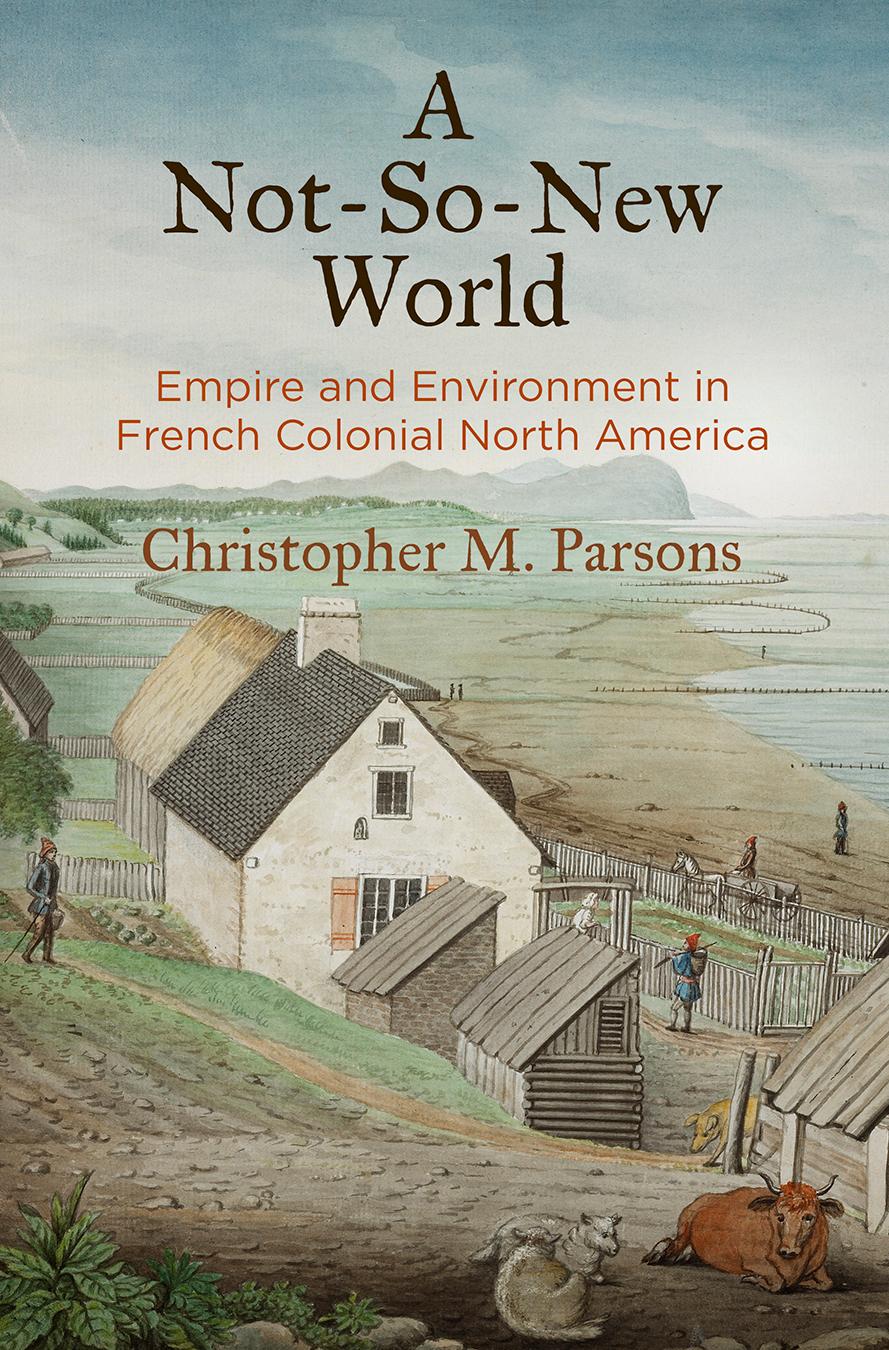
When Samuel de Champlain founded the colony of Quebec in 1608, he established elaborate gardens where he sowed French seeds he had brought with him and experimented with indigenous plants that he found in nearby fields and forests. Following Champlain's example, fellow colonists nurtured similar gardens through the Saint Lawrence Valley and Great Lakes region. In A Not-So-New World, Christopher Parsons observes how it was that French colonists began to learn about Native environments and claimed a mandate to cultivate vegetation that did not differ all that much from that which they had left behind.
As Parsons relates, colonists soon discovered that there were limits to what they could accomplish in their gardens. The strangeness of New France became woefully apparent, for example, when colonists found that they could not make French wine out of American grapes. They attributed the differences they discovered to Native American neglect and believed that the French colonial project would rehabilitate and restore the plant life in the region. However, the more colonists experimented with indigenous species and communicated their findings to the wider French Atlantic world, the more foreign New France appeared to French naturalists and even to the colonists themselves.
Parsons demonstrates how the French experience of attempting to improve American environments supported not only the acquisition and incorporation of Native American knowledge but also the development of an emerging botanical science that focused on naming new species. Exploring the moment in which settlers, missionaries, merchants, and administrators believed in their ability to shape the environment to better resemble the country they left behind, A Not-So-New World reveals that French colonial ambitions were fueled by a vision of an ecologically sustainable empire.
Before Memmo my notes were scattered across PDFs. Now a workspace pulls everything into one place — I see exactly what's still left to study.
Memmo's summaries are gold before exams. I don't have to re-read 800 pages two weeks before — just the important parts.
The AI chat has saved me the night before an exam more than once. I just keep asking until I get it — no waiting on a study group to reply.
The quizzes hit exactly what I need to know. Memmo tracks what I get stuck on — so I only practice what's worth it.
Flashcards with spaced repetition are magic. Memmo knows when I'm about to forget something and brings it back.
The AI podcasts are my favorite. I listen on my way to school and get a recap without sitting at a computer.

Handbok i kvalitativa metoder
281 kr

Hållbar utveckling: en introduktion för ingenjörer och andra problemlösare
334 kr

Brymans Samhällsvetenskapliga metoder
390 kr

Projektledning
491 kr

Den orättvisa hälsan: om socioekonomiska skillnader i hälsa och livslängd
326 kr

Organizational Leadership
429 kr

Vetenskapsteori för nybörjare
196 kr

På väg mot läraryrket
172 kr

Det sociala livet i skolan: Socialpsykologiska perspektiv
253 kr

Betygsättningens didaktik
151 kr

Personality
402 kr

Studying Leadership
404 kr

Managing Innovation
477 kr

Introduktion till samhällsvetenskaplig metod
347 kr

The Psychology of Sex and Gender
698 kr

Evidens och kunskap för socialt arbete
207 kr

Introduction to Leadership
605 kr