
Before Memmo my notes were scattered across PDFs. Now a workspace pulls everything into one place — I see exactly what's still left to study.
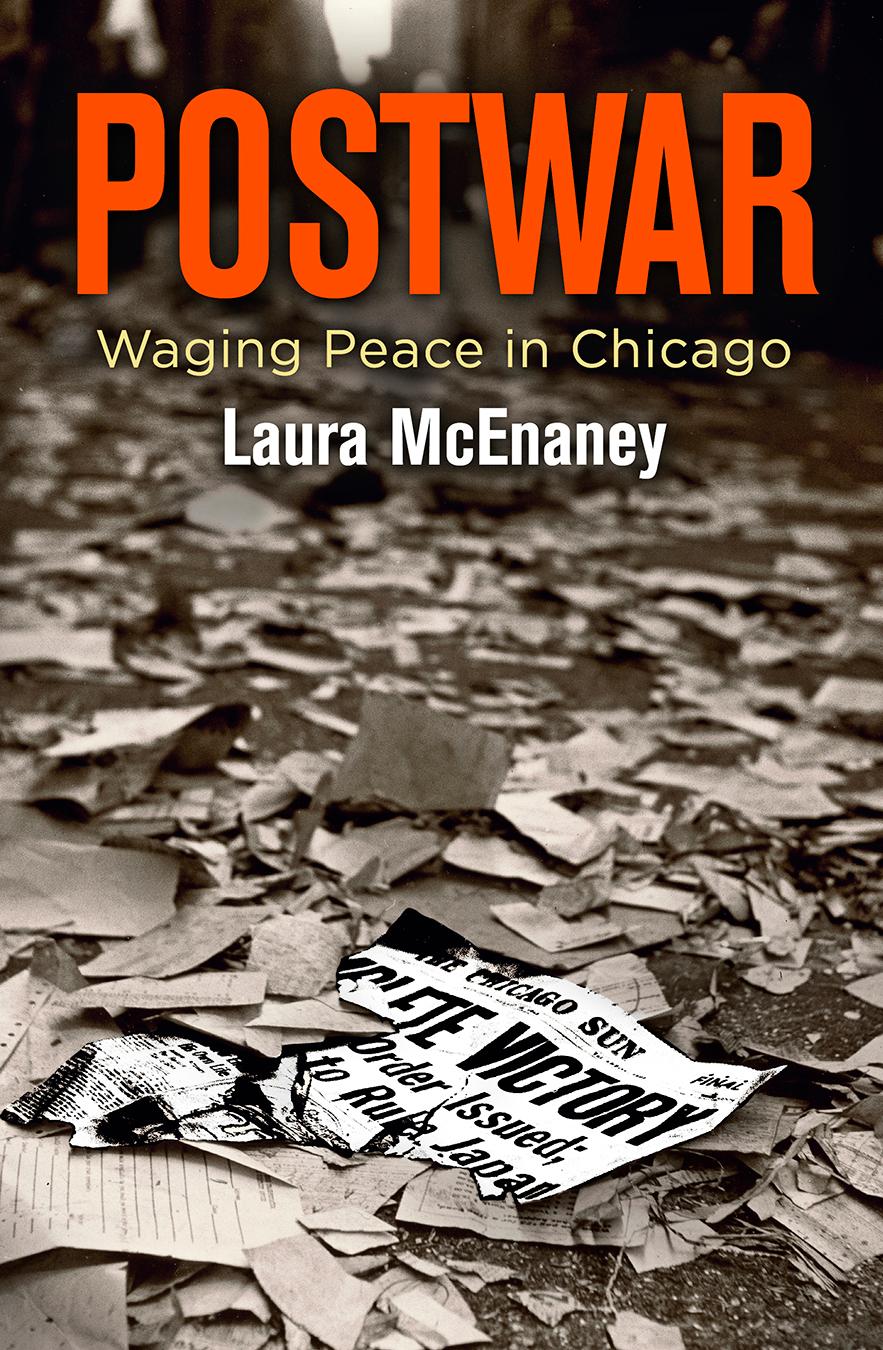
When World War II ended, Americans celebrated a military victory abroad, but the meaning of peace at home was yet to be defined. From roughly 1943 onward, building a postwar society became the new national project, and every interest group involved in the war effort—from business leaders to working-class renters—held different visions for the war's aftermath. In Postwar, Laura McEnaney plumbs the depths of this period to explore exactly what peace meant to a broad swath of civilians, including apartment dwellers, single women and housewives, newly freed Japanese American internees, African American migrants, and returning veterans. In her fine-grained social history of postwar Chicago, McEnaney puts ordinary working-class people at the center of her investigation.
What she finds is a working-class war liberalism—a conviction that the wartime state had taken things from people, and that the postwar era was about reclaiming those things with the state's help. McEnaney examines vernacular understandings of the state, exploring how people perceived and experienced government in their lives. For Chicago's working-class residents, the state was not clearly delineated. The local offices of federal agencies, along with organizations such as the Travelers Aid Society and other neighborhood welfare groups, all became what she calls the state in the neighborhood, an extension of government to serve an urban working class recovering from war. Just as they had made war, the urban working class had to make peace, and their requests for help, large and small, constituted early dialogues about the role of the state during peacetime.
Postwar examines peace as its own complex historical process, a passage from conflict to postconflict that contained human struggles and policy dilemmas that would shape later decades as fatefully as had the war.
Before Memmo my notes were scattered across PDFs. Now a workspace pulls everything into one place — I see exactly what's still left to study.
Memmo's summaries are gold before exams. I don't have to re-read 800 pages two weeks before — just the important parts.
The AI chat has saved me the night before an exam more than once. I just keep asking until I get it — no waiting on a study group to reply.
The quizzes hit exactly what I need to know. Memmo tracks what I get stuck on — so I only practice what's worth it.
Flashcards with spaced repetition are magic. Memmo knows when I'm about to forget something and brings it back.
The AI podcasts are my favorite. I listen on my way to school and get a recap without sitting at a computer.

Handbok i kvalitativa metoder
281 kr

Hållbar utveckling: en introduktion för ingenjörer och andra problemlösare
334 kr

Brymans Samhällsvetenskapliga metoder
390 kr

Projektledning
491 kr

Den orättvisa hälsan: om socioekonomiska skillnader i hälsa och livslängd
326 kr

Organizational Leadership
429 kr

Vetenskapsteori för nybörjare
196 kr

På väg mot läraryrket
172 kr

Det sociala livet i skolan: Socialpsykologiska perspektiv
253 kr

Betygsättningens didaktik
151 kr

Personality
402 kr

Studying Leadership
404 kr

Managing Innovation
477 kr

Introduktion till samhällsvetenskaplig metod
347 kr

The Psychology of Sex and Gender
698 kr

Evidens och kunskap för socialt arbete
207 kr

Introduction to Leadership
605 kr