
Before Memmo my notes were scattered across PDFs. Now a workspace pulls everything into one place — I see exactly what's still left to study.
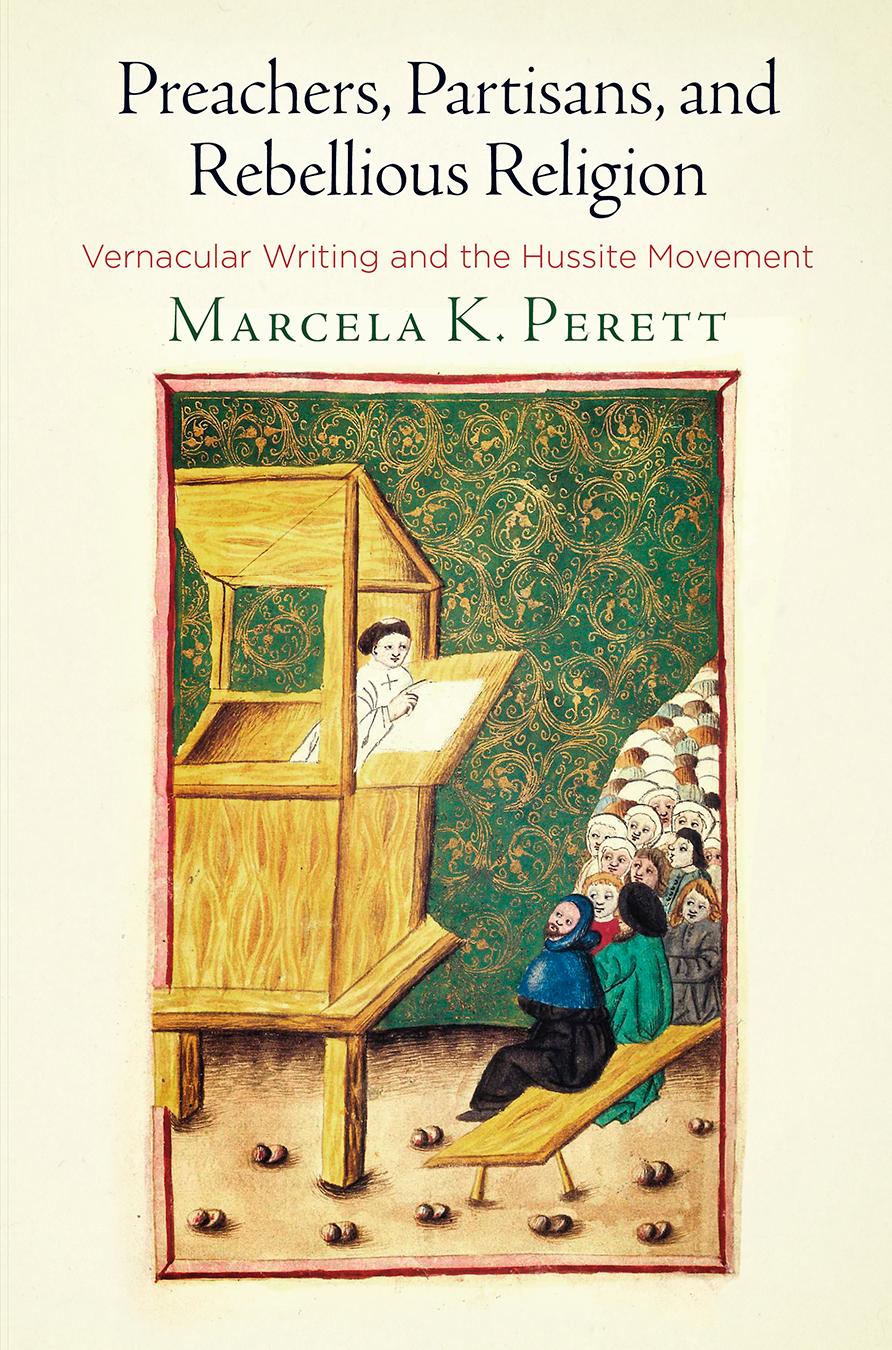
In early fifteenth-century Prague, disagreements about religion came to be shouted in the streets and taught to the laity in the vernacular, giving rise to a new kind of public engagement that would persist into the early modern era and beyond. The reforming followers of Jan Hus brought theological learning to the people through a variety of genres, including songs, poems, tractates, letters, manifestos, and sermons. At the same time, university masters provided the laity with an education that enabled them to discuss contentious issues and arrive at their own conclusions, emphasizing that they held the freedom to make up their own minds about important theological issues. This marketplace of competing religious ideas in the vernacular emerged in Bohemia a full hundred years before the Reformation.
In Preachers, Partisans, and Rebellious Religion, Marcela K. Perett examines the early phases of the so-called Hussite revolution, between 1412, when Jan Hus first radicalized his followers, and 1436, the year of the agreement at the Council of Basel granting papal permission for the ritual practice of the Utraquist, or moderate Hussite, faction to continue. These were years during which the leaders of competing reform movements needed to garner the laity's support and employed the vernacular for that purpose, translating and simplifying basic theological arguments about the Bible, the church's ritual practice, and authority in the church. Perett illustrates that the vernacular discourse, even if it revolved around the same topics, was nothing like the Latin debates on the issues, often appealing to emotion rather than doctrinal positions. In the end, as Preachers, Partisans, and Rebellious Religion demonstrates, the process of vernacularization increased rather than decreased religious factionalism and radicalism as agreement about theological issues became impossible.
Before Memmo my notes were scattered across PDFs. Now a workspace pulls everything into one place — I see exactly what's still left to study.
Memmo's summaries are gold before exams. I don't have to re-read 800 pages two weeks before — just the important parts.
The AI chat has saved me the night before an exam more than once. I just keep asking until I get it — no waiting on a study group to reply.
The quizzes hit exactly what I need to know. Memmo tracks what I get stuck on — so I only practice what's worth it.
Flashcards with spaced repetition are magic. Memmo knows when I'm about to forget something and brings it back.
The AI podcasts are my favorite. I listen on my way to school and get a recap without sitting at a computer.

Handbok i kvalitativa metoder
281 kr

Hållbar utveckling: en introduktion för ingenjörer och andra problemlösare
334 kr

Brymans Samhällsvetenskapliga metoder
390 kr

Projektledning
491 kr

Den orättvisa hälsan: om socioekonomiska skillnader i hälsa och livslängd
326 kr

Vetenskapsteori för nybörjare
196 kr

Organizational Leadership
429 kr

På väg mot läraryrket
172 kr

Det sociala livet i skolan: Socialpsykologiska perspektiv
253 kr

Betygsättningens didaktik
151 kr

Personality
402 kr

Studying Leadership
404 kr

Managing Innovation
477 kr

Introduktion till samhällsvetenskaplig metod
347 kr

The Psychology of Sex and Gender
698 kr

Evidens och kunskap för socialt arbete
207 kr

Introduction to Leadership
605 kr