
Before Memmo my notes were scattered across PDFs. Now a workspace pulls everything into one place — I see exactly what's still left to study.
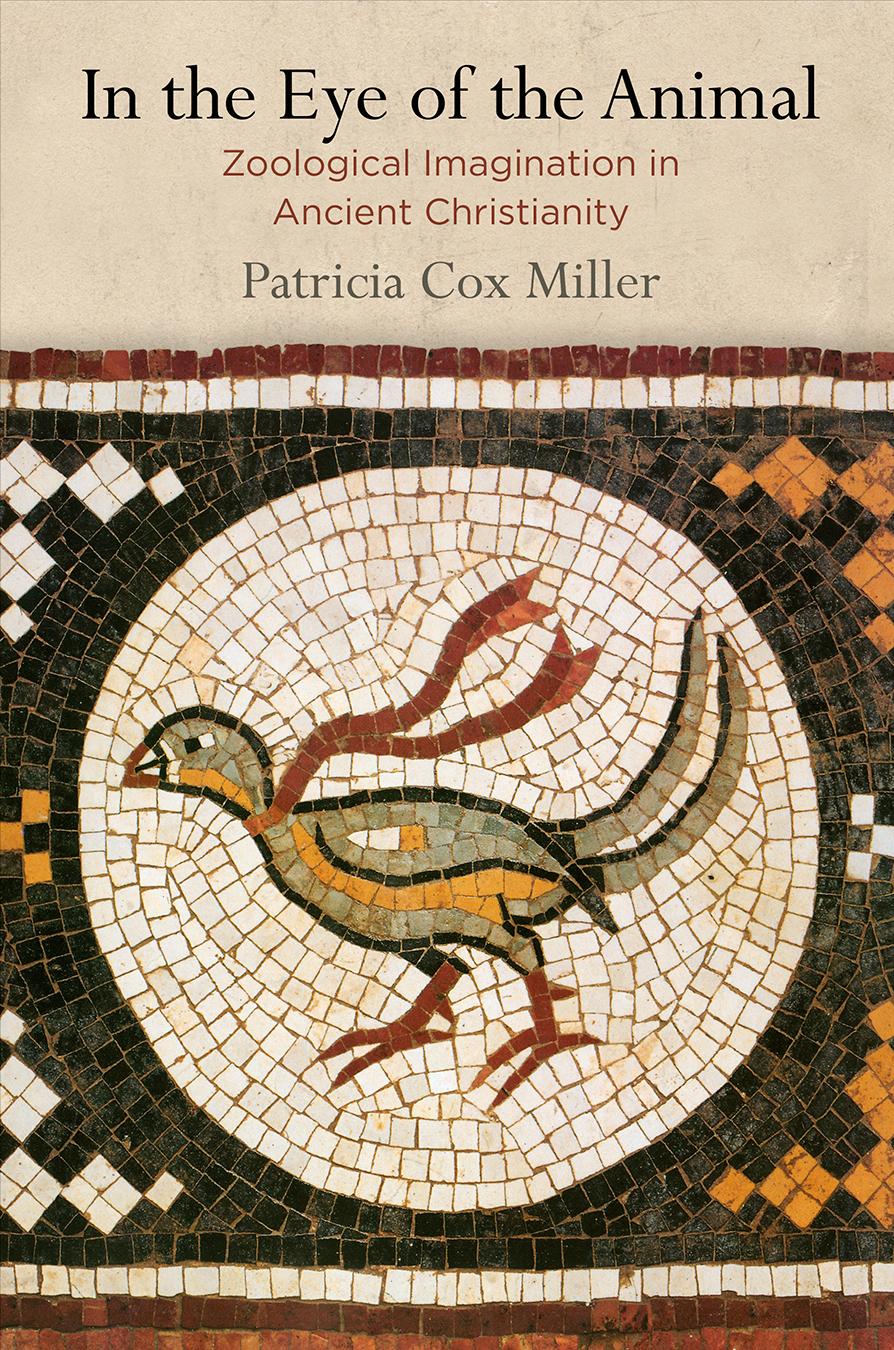
Early Christian theology posited a strict division between animals and humans. Nevertheless, animal figures abound in early Christian literature and art—from Augustine's renowned "wonder at the agility of the mosquito on the wing," to vivid exegeses of the six days of creation detailed in Genesis—and when they appear, the distinctions between human and animal are often dissolved. How, asks Patricia Cox Miller, does one account for the stunning zoological imagination found in a wide variety of genres of ancient Christian texts?
In the Eye of the Animal complicates the role of animals in early Christian thought by showing how textual and artistic images and interpretive procedures actually celebrated a continuum of human and animal life. Synthesizing early Christian studies, contemporary philosophy, animal studies, ethology, and modern poetry, Miller identifies two contradictory strands in early Christian thinking about animals. The dominant thread viewed the body and soul of the human being as dominical, or the crowning achievement of creation; animals, with their defective souls, related to humans only as reminders of the brutish physical form. However, the second strand relied upon the idea of a continuum of animal life, which enabled comparisons between animals and humans. This second tendency, explains Miller, arises particularly in early Christian literature in which ascetic identity, the body, and ethics intersect. She explores the tension between these modes by tracing the image of the animal in early Christian literature, from the ethical animal behavior on display in Basil of Caesarea's Hexaemeron and the anonymous Physiologus, to the role of animals in articulating erotic desire, and from the idyllic intimacy of monks and animals in literature of desert ascetism to early Christian art that envisions paradise through human-animal symbiosis.
Before Memmo my notes were scattered across PDFs. Now a workspace pulls everything into one place — I see exactly what's still left to study.
Memmo's summaries are gold before exams. I don't have to re-read 800 pages two weeks before — just the important parts.
The AI chat has saved me the night before an exam more than once. I just keep asking until I get it — no waiting on a study group to reply.
The quizzes hit exactly what I need to know. Memmo tracks what I get stuck on — so I only practice what's worth it.
Flashcards with spaced repetition are magic. Memmo knows when I'm about to forget something and brings it back.
The AI podcasts are my favorite. I listen on my way to school and get a recap without sitting at a computer.

Handbok i kvalitativa metoder
281 kr

Hållbar utveckling: en introduktion för ingenjörer och andra problemlösare
334 kr

Brymans Samhällsvetenskapliga metoder
390 kr

Projektledning
491 kr

Den orättvisa hälsan: om socioekonomiska skillnader i hälsa och livslängd
326 kr

Vetenskapsteori för nybörjare
196 kr

Organizational Leadership
429 kr

På väg mot läraryrket
172 kr

Det sociala livet i skolan: Socialpsykologiska perspektiv
253 kr

Betygsättningens didaktik
151 kr

Personality
402 kr

Studying Leadership
404 kr

Managing Innovation
477 kr

Introduktion till samhällsvetenskaplig metod
347 kr

The Psychology of Sex and Gender
698 kr

Evidens och kunskap för socialt arbete
207 kr

Introduction to Leadership
605 kr