
Before Memmo my notes were scattered across PDFs. Now a workspace pulls everything into one place — I see exactly what's still left to study.
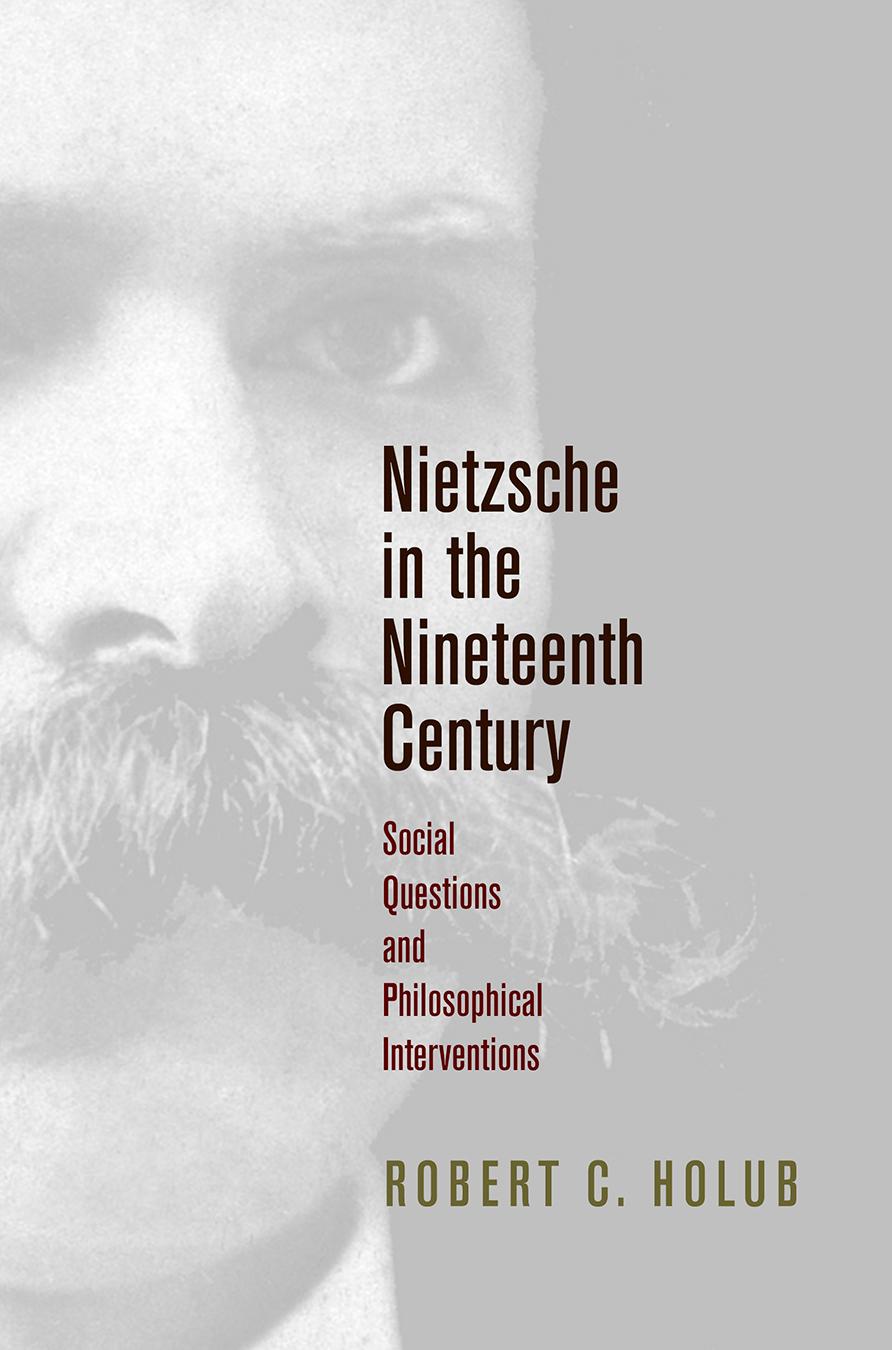
Friedrich Nietzsche is often depicted in popular and scholarly discourse as a lonely philosopher dealing with abstract concerns unconnected to the intellectual debates of his time and place. Robert C. Holub counters this narrative, arguing that Nietzsche was very well attuned to the events and issues of his era and responded to them frequently in his writings. Organized around nine important questions circulating in Europe at the time in the realms of politics, society, and science, Nietzsche in the Nineteenth Century presents a thorough investigation of Nietzsche's familiarity with contemporary life, his contact with and comments on these various questions, and the sources from which he gathered his knowledge.
Holub begins his analysis with Nietzsche's views on education, nationhood, and the working-class movement, turns to questions of women and women's emancipation, colonialism, and Jews and Judaism, and looks at Nietzsche's dealings with evolutionary biology, cosmological theories, and the new "science" of eugenics. He shows how Nietzsche, although infrequently read during his lifetime, formulated his thought in an ongoing dialogue with the concerns of his contemporaries, and how his philosophy can be conceived as a contribution to the debates taking place in the nineteenth century. Throughout his examination, Holub finds that, against conventional wisdom, Nietzsche was only indirectly in conversation with the modern philosophical tradition from Descartes through German idealism, and that the books and individuals central to his development were more obscure writers, most of whom have long since been forgotten.
This book thus sheds light on Nietzsche's thought as enmeshed in a web of nineteenth-century discourses and offers new insights into his interactive method of engaging with the philosophical universe of his time.
Before Memmo my notes were scattered across PDFs. Now a workspace pulls everything into one place — I see exactly what's still left to study.
Memmo's summaries are gold before exams. I don't have to re-read 800 pages two weeks before — just the important parts.
The AI chat has saved me the night before an exam more than once. I just keep asking until I get it — no waiting on a study group to reply.
The quizzes hit exactly what I need to know. Memmo tracks what I get stuck on — so I only practice what's worth it.
Flashcards with spaced repetition are magic. Memmo knows when I'm about to forget something and brings it back.
The AI podcasts are my favorite. I listen on my way to school and get a recap without sitting at a computer.

Handbok i kvalitativa metoder
281 kr

Hållbar utveckling: en introduktion för ingenjörer och andra problemlösare
334 kr

Brymans Samhällsvetenskapliga metoder
390 kr

Projektledning
491 kr

Den orättvisa hälsan: om socioekonomiska skillnader i hälsa och livslängd
326 kr

Organizational Leadership
429 kr

Vetenskapsteori för nybörjare
196 kr

På väg mot läraryrket
172 kr

Det sociala livet i skolan: Socialpsykologiska perspektiv
253 kr

Betygsättningens didaktik
151 kr

Personality
402 kr

Studying Leadership
404 kr

Managing Innovation
477 kr

Introduktion till samhällsvetenskaplig metod
347 kr

The Psychology of Sex and Gender
698 kr

Evidens och kunskap för socialt arbete
207 kr

Introduction to Leadership
605 kr