
Before Memmo my notes were scattered across PDFs. Now a workspace pulls everything into one place — I see exactly what's still left to study.
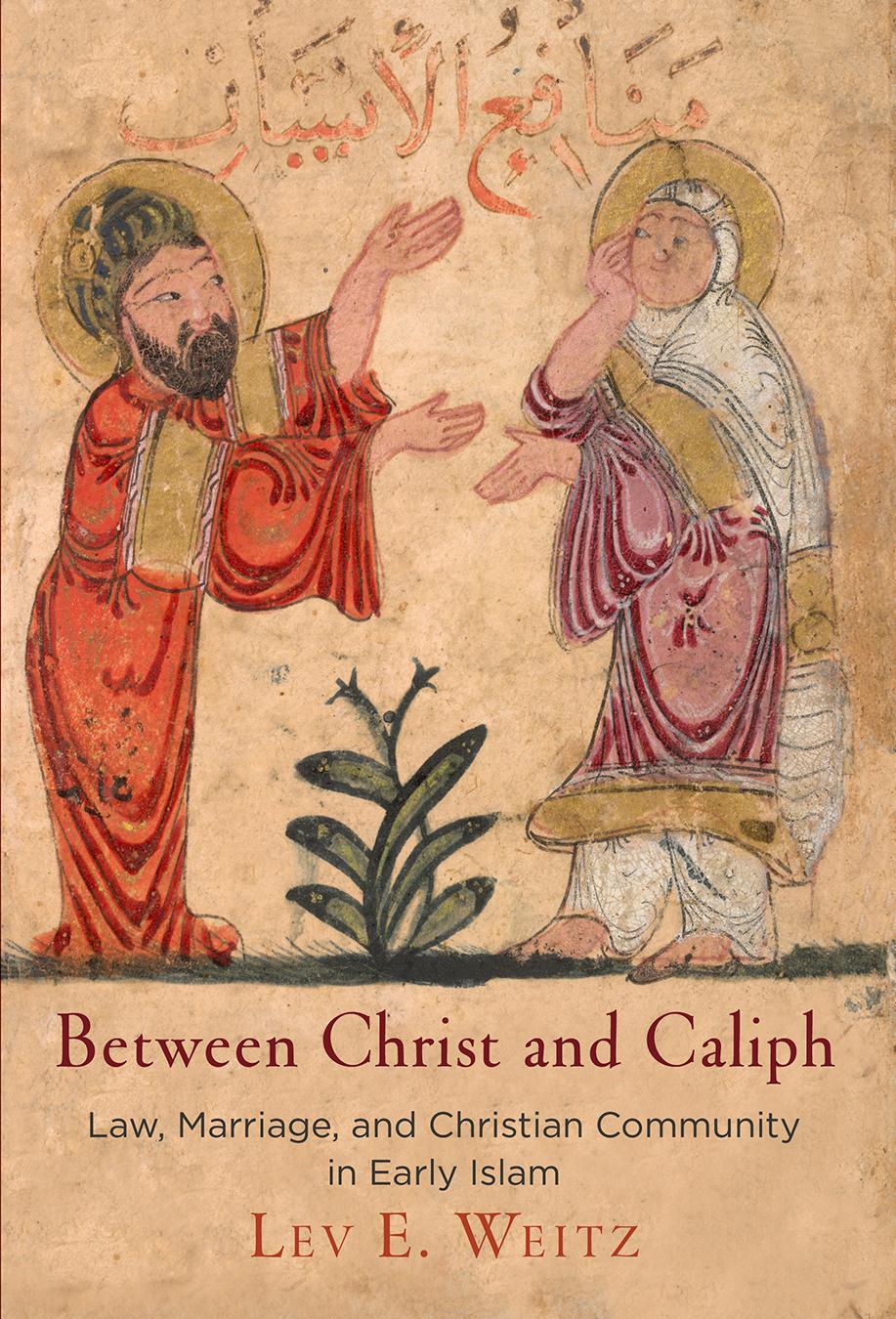
In the conventional historical narrative, the medieval Middle East was composed of autonomous religious traditions, each with distinct doctrines, rituals, and institutions. Outside the world of theology, however, and beyond the walls of the mosque or the church, the multireligious social order of the medieval Islamic empire was complex and dynamic. Peoples of different faiths—Sunnis, Shiites, Christians, Jews, and others—interacted with each other in city streets, marketplaces, and even shared households, all under the rule of the Islamic caliphate. Laypeople of different confessions marked their religious belonging through fluctuating, sometimes overlapping, social norms and practices.
In Between Christ and Caliph, Lev E. Weitz examines the multiconfessional society of early Islam through the lens of shifting marital practices of Syriac Christian communities. In response to the growth of Islamic law and governance in the seventh through tenth centuries, Syriac Christian bishops created new laws to regulate marriage, inheritance, and family life. The bishops banned polygamy, required that Christian marriages be blessed by priests, and restricted marriage between cousins, seeking ultimately to distinguish Christian social patterns from those of Muslims and Jews. Through meticulous research into rarely consulted Syriac and Arabic sources, Weitz traces the ways in which Syriac Christians strove to identify themselves as a community apart while still maintaining a place in the Islamic social order. By binding household life to religious identity, Syriac Christians developed the social distinctions between religious communities that came to define the medieval Islamic Middle East. Ultimately, Between Christ and Caliph argues that interreligious negotiations such as these lie at the heart of the history of the medieval Islamic empire.
Before Memmo my notes were scattered across PDFs. Now a workspace pulls everything into one place — I see exactly what's still left to study.
Memmo's summaries are gold before exams. I don't have to re-read 800 pages two weeks before — just the important parts.
The AI chat has saved me the night before an exam more than once. I just keep asking until I get it — no waiting on a study group to reply.
The quizzes hit exactly what I need to know. Memmo tracks what I get stuck on — so I only practice what's worth it.
Flashcards with spaced repetition are magic. Memmo knows when I'm about to forget something and brings it back.
The AI podcasts are my favorite. I listen on my way to school and get a recap without sitting at a computer.

Handbok i kvalitativa metoder
281 kr

Hållbar utveckling: en introduktion för ingenjörer och andra problemlösare
334 kr

Brymans Samhällsvetenskapliga metoder
390 kr

Projektledning
491 kr

Den orättvisa hälsan: om socioekonomiska skillnader i hälsa och livslängd
326 kr

Organizational Leadership
429 kr

Vetenskapsteori för nybörjare
196 kr

På väg mot läraryrket
172 kr

Det sociala livet i skolan: Socialpsykologiska perspektiv
253 kr

Betygsättningens didaktik
151 kr

Personality
402 kr

Studying Leadership
404 kr

Managing Innovation
477 kr

Introduktion till samhällsvetenskaplig metod
347 kr

The Psychology of Sex and Gender
698 kr

Evidens och kunskap för socialt arbete
207 kr

Introduction to Leadership
605 kr