
Before Memmo my notes were scattered across PDFs. Now a workspace pulls everything into one place — I see exactly what's still left to study.
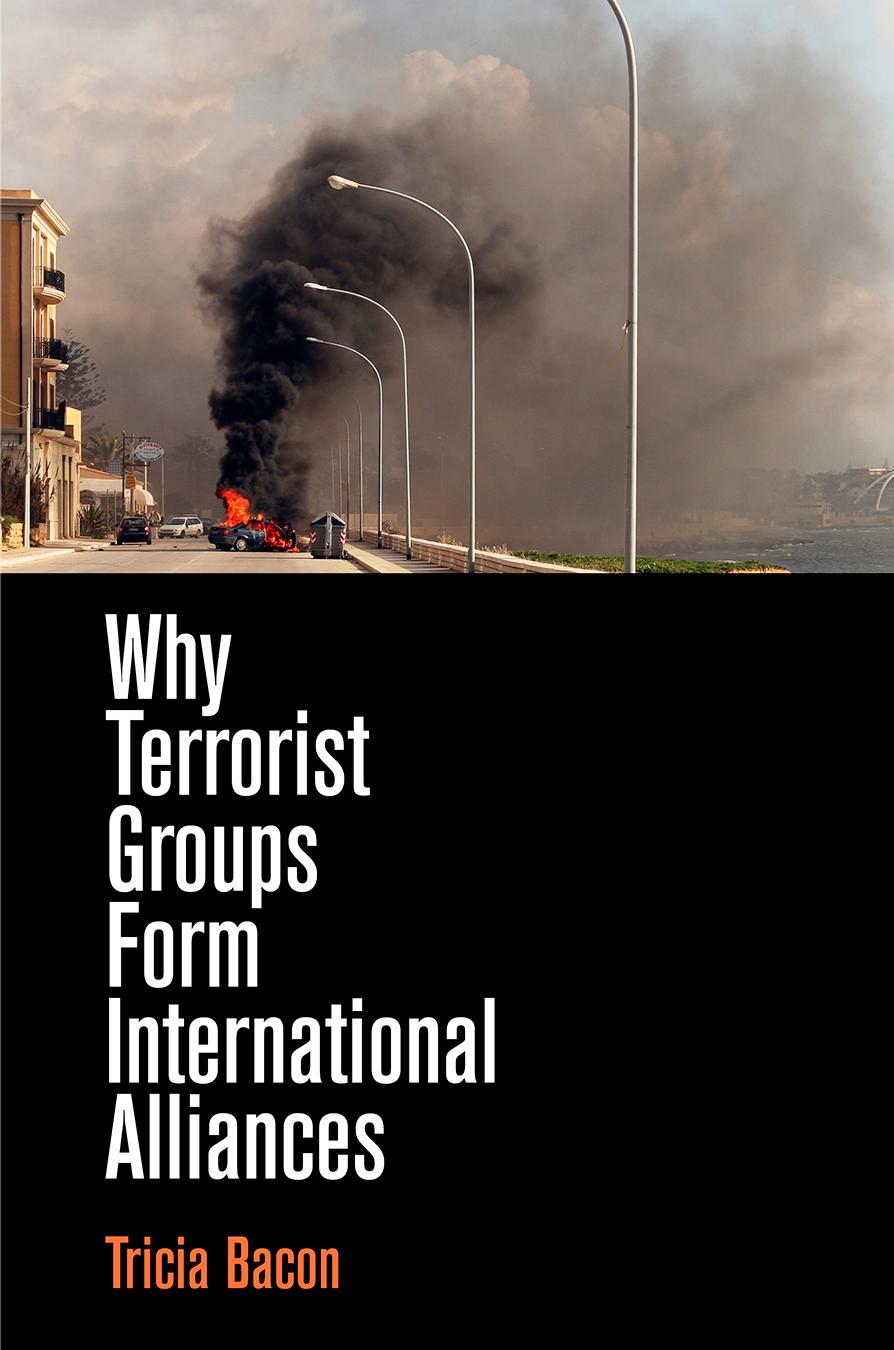
Terrorist groups with a shared enemy or ideology have ample reason to work together, even if they are primarily pursuing different causes. Although partnering with another terrorist organization has the potential to bolster operational effectiveness, efficiency, and prestige, international alliances may expose partners to infiltration, security breaches, or additional counterterrorism attention. Alliances between such organizations, which are suspicious and secretive by nature, must also overcome significant barriers to trust—the exposure to risk must be balanced by the promise of increased lethality, resiliency, and longevity.
In Why Terrorist Groups Form International Alliances, Tricia Bacon argues that although it may seem natural for terrorist groups to ally, groups actually face substantial hurdles when attempting to ally and, when alliances do form, they are not evenly distributed across pairs. Instead, she demonstrates that when terrorist groups seek allies to obtain new skills, knowledge, or capacities for resource acquisition and mobilization, only a few groups have the ability to provide needed training, safe haven, infrastructure, or cachet. Consequently, these select few emerge as preferable partners and become hubs around which other groups cluster. According to Bacon, shared enemies and common ideologies do not cause alliances to form but create affinity to bind partners and guide partner selection.
Bacon examines partnerships formed by the Popular Front for the Liberation of Palestine, Al-Qaida, and Egyptian jihadist groups, among others, in a series of case studies spanning the dawn of international terrorism in the 1960s to the present. Why Terrorist Groups Form International Alliances advances our understanding of the motivations of terrorist alliances and offers insights useful to counterterrorism efforts to disrupt these dangerous relationships.
Before Memmo my notes were scattered across PDFs. Now a workspace pulls everything into one place — I see exactly what's still left to study.
Memmo's summaries are gold before exams. I don't have to re-read 800 pages two weeks before — just the important parts.
The AI chat has saved me the night before an exam more than once. I just keep asking until I get it — no waiting on a study group to reply.
The quizzes hit exactly what I need to know. Memmo tracks what I get stuck on — so I only practice what's worth it.
Flashcards with spaced repetition are magic. Memmo knows when I'm about to forget something and brings it back.
The AI podcasts are my favorite. I listen on my way to school and get a recap without sitting at a computer.

Handbok i kvalitativa metoder
281 kr

Hållbar utveckling: en introduktion för ingenjörer och andra problemlösare
334 kr

Brymans Samhällsvetenskapliga metoder
390 kr

Projektledning
491 kr

Den orättvisa hälsan: om socioekonomiska skillnader i hälsa och livslängd
326 kr

Organizational Leadership
429 kr

Vetenskapsteori för nybörjare
196 kr

På väg mot läraryrket
172 kr

Det sociala livet i skolan: Socialpsykologiska perspektiv
253 kr

Betygsättningens didaktik
151 kr

Personality
402 kr

Studying Leadership
404 kr

Managing Innovation
477 kr

Introduktion till samhällsvetenskaplig metod
347 kr

The Psychology of Sex and Gender
698 kr

Evidens och kunskap för socialt arbete
207 kr

Introduction to Leadership
605 kr