
Before Memmo my notes were scattered across PDFs. Now a workspace pulls everything into one place — I see exactly what's still left to study.
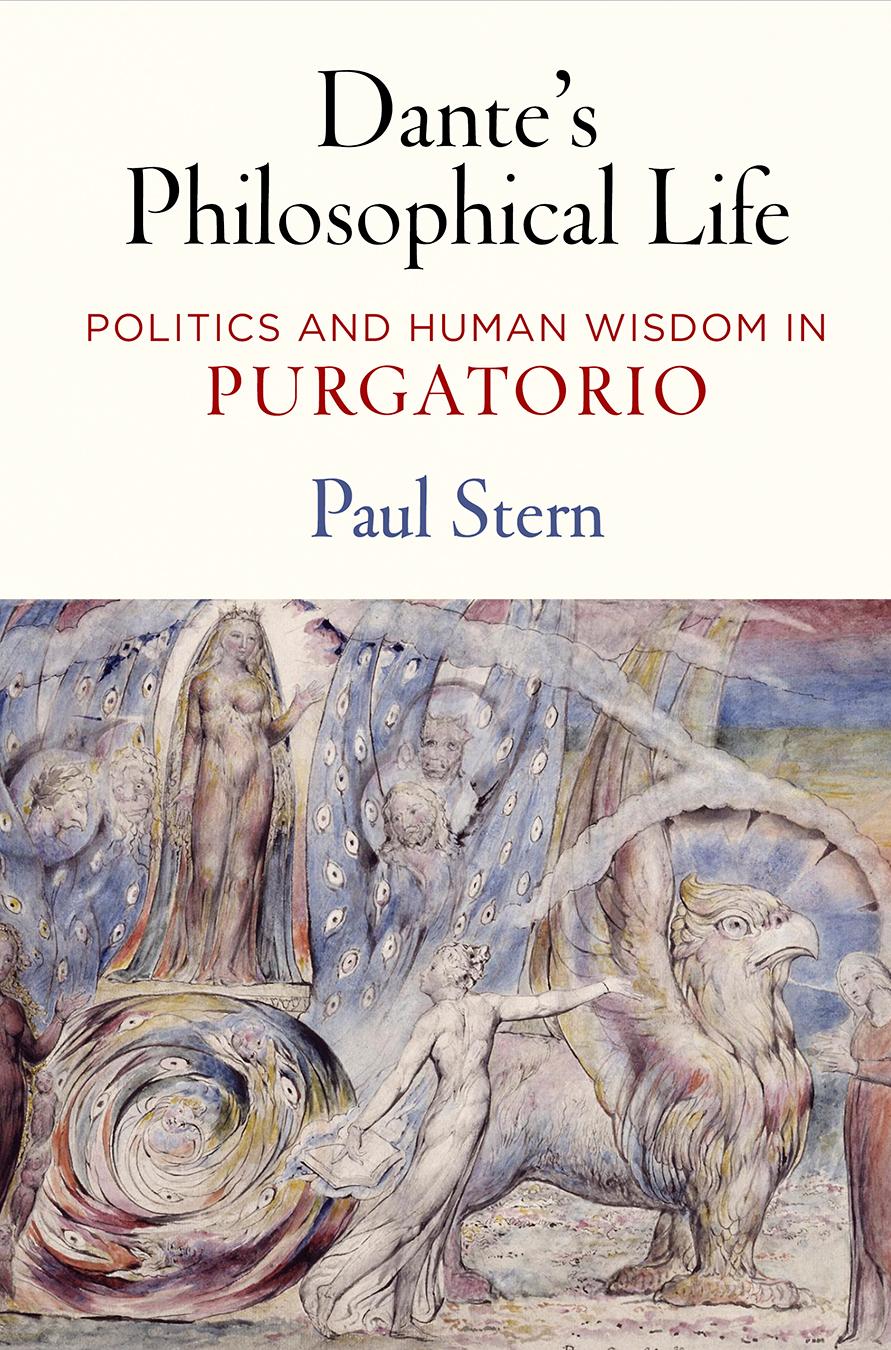
When political theorists teach the history of political philosophy, they typically skip from the ancient Greeks and Cicero to Augustine in the fifth century and Thomas Aquinas in the thirteenth, and then on to the origins of modernity with Machiavelli and beyond. Paul Stern aims to change this settled narrative and makes a powerful case for treating Dante Alighieri, arguably the greatest poet of medieval Christendom, as a political philosopher of the first rank.
In Dante's Philosophical Life, Stern argues that Purgatorio's depiction of the ascent to Earthly Paradise, that is, the summit of Mount Purgatory, was intended to give instruction on how to live the philosophic life, understood in its classical form as "love of wisdom." As an object of love, however, wisdom must be sought by the human soul, rather than possessed. But before the search can be undertaken, the soul needs to consider from where it begins: its nature and its good. In Stern's interpretation of Purgatorio, Dante's intense concern for political life follows from this need, for it is law that supplies the notions of good that shape the soul's understanding and it is law, especially its limits, that provides the most evident display of the soul's enduring hopes.
According to Stern, Dante places inquiry regarding human nature and its good at the heart of philosophic investigation, thereby rehabilitating the highest form of reasoned judgment or prudence. Philosophy thus understood is neither a body of doctrines easily situated in a Christian framework nor a set of intellectual tools best used for predetermined theological ends, but a way of life. Stern's claim that Dante was arguing for prudence against dogmatisms of every kind addresses a question of contemporary concern: whether reason can guide a life.
Before Memmo my notes were scattered across PDFs. Now a workspace pulls everything into one place — I see exactly what's still left to study.
Memmo's summaries are gold before exams. I don't have to re-read 800 pages two weeks before — just the important parts.
The AI chat has saved me the night before an exam more than once. I just keep asking until I get it — no waiting on a study group to reply.
The quizzes hit exactly what I need to know. Memmo tracks what I get stuck on — so I only practice what's worth it.
Flashcards with spaced repetition are magic. Memmo knows when I'm about to forget something and brings it back.
The AI podcasts are my favorite. I listen on my way to school and get a recap without sitting at a computer.

Handbok i kvalitativa metoder
281 kr

Hållbar utveckling: en introduktion för ingenjörer och andra problemlösare
334 kr

Brymans Samhällsvetenskapliga metoder
390 kr

Projektledning
491 kr

Den orättvisa hälsan: om socioekonomiska skillnader i hälsa och livslängd
326 kr

Vetenskapsteori för nybörjare
196 kr

Organizational Leadership
429 kr

På väg mot läraryrket
172 kr

Det sociala livet i skolan: Socialpsykologiska perspektiv
253 kr

Betygsättningens didaktik
151 kr

Personality
402 kr

Studying Leadership
404 kr

Managing Innovation
477 kr

Introduktion till samhällsvetenskaplig metod
347 kr

The Psychology of Sex and Gender
698 kr

Evidens och kunskap för socialt arbete
207 kr

Introduction to Leadership
605 kr