
Before Memmo my notes were scattered across PDFs. Now a workspace pulls everything into one place — I see exactly what's still left to study.
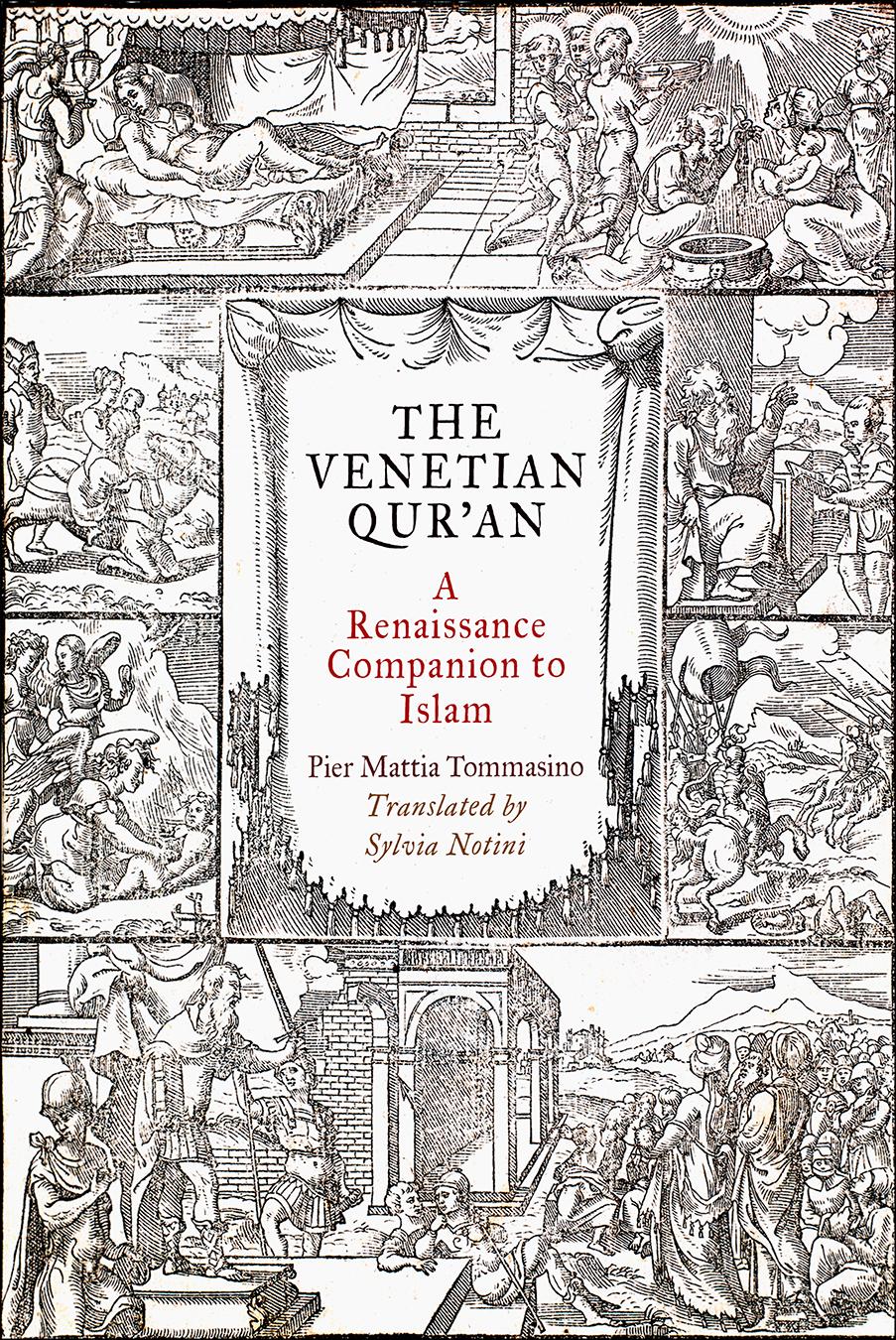
An anonymous book appeared in Venice in 1547 titled L'Alcorano di Macometto, and, according to the title page, it contained "the doctrine, life, customs, and laws [of Mohammed] . . . newly translated from Arabic into the Italian language." Were this true, L'Alcorano di Macometto would have been the first printed direct translation of the Qur'an in a European vernacular language. The truth, however, was otherwise. As soon became clear, the Qur'anic sections of the book—about half the volume—were in fact translations of a twelfth-century Latin translation that had appeared in print in Basel in 1543. The other half included commentary that balanced anti-Islamic rhetoric with new interpretations of Muhammad's life and political role in pre-Islamic Arabia. Despite having been discredited almost immediately, the Alcorano was affordable, accessible, and widely distributed.
In The Venetian Qur'an, Pier Mattia Tommasino uncovers the volume's mysterious origins, its previously unidentified author, and its broad, lasting influence. L'Alcorano di Macometto, Tommasino argues, served a dual purpose: it was a book for European refugees looking to relocate in the Ottoman Empire, as well as a general Renaissance reader's guide to Islamic history and stories. The book's translation and commentary were prepared by an unknown young scholar, Giovanni Battista Castrodardo, a complex and intellectually accomplished man, whose commentary in L'Alcorano di Macometto bridges Muhammad's biography and the text of the Qur'an with Machiavelli's The Prince and Dante's Divine Comedy. In the years following the publication of L'Alcorano di Macometto, the book was dismissed by Arabists and banned by the Catholic Church. It was also, however, translated into German, Hebrew, and Spanish and read by an extended lineage of missionaries, rabbis, renegades, and iconoclasts, including such figures as the miller Menocchio, Joseph Justus Scaliger, and Montesquieu. Through meticulous research and literary analysis, The Venetian Qur'an reveals the history and legacy of a fascinating historical and scholarly document.
Before Memmo my notes were scattered across PDFs. Now a workspace pulls everything into one place — I see exactly what's still left to study.
Memmo's summaries are gold before exams. I don't have to re-read 800 pages two weeks before — just the important parts.
The AI chat has saved me the night before an exam more than once. I just keep asking until I get it — no waiting on a study group to reply.
The quizzes hit exactly what I need to know. Memmo tracks what I get stuck on — so I only practice what's worth it.
Flashcards with spaced repetition are magic. Memmo knows when I'm about to forget something and brings it back.
The AI podcasts are my favorite. I listen on my way to school and get a recap without sitting at a computer.

Handbok i kvalitativa metoder
281 kr

Hållbar utveckling: en introduktion för ingenjörer och andra problemlösare
334 kr

Brymans Samhällsvetenskapliga metoder
390 kr

Projektledning
491 kr

Den orättvisa hälsan: om socioekonomiska skillnader i hälsa och livslängd
326 kr

Vetenskapsteori för nybörjare
196 kr

Organizational Leadership
429 kr

På väg mot läraryrket
172 kr

Det sociala livet i skolan: Socialpsykologiska perspektiv
253 kr

Betygsättningens didaktik
151 kr

Personality
402 kr

Studying Leadership
404 kr

Managing Innovation
477 kr

Introduktion till samhällsvetenskaplig metod
347 kr

The Psychology of Sex and Gender
698 kr

Evidens och kunskap för socialt arbete
207 kr

Introduction to Leadership
605 kr