
Before Memmo my notes were scattered across PDFs. Now a workspace pulls everything into one place — I see exactly what's still left to study.
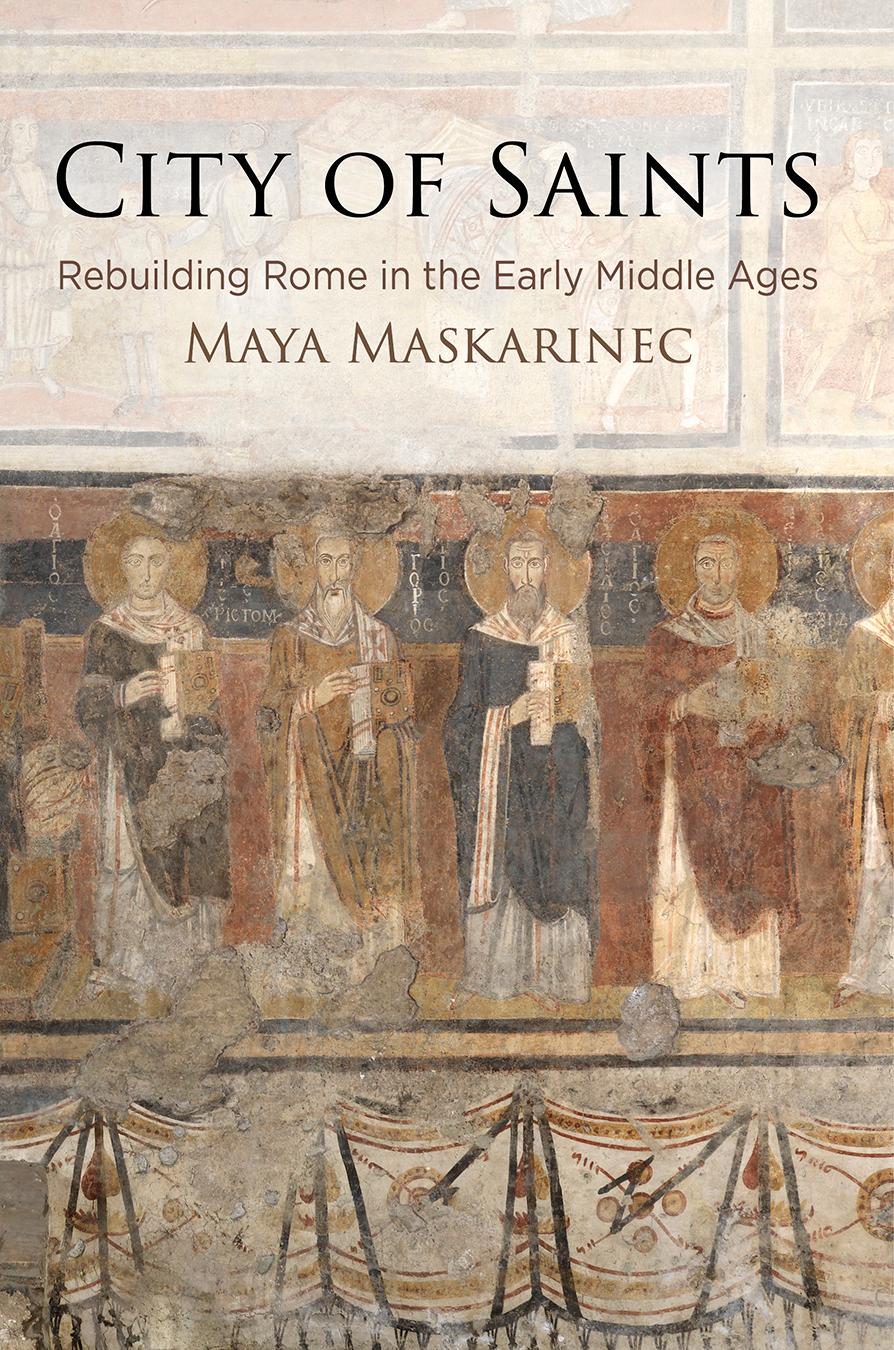
It was far from inevitable that Rome would emerge as the spiritual center of Western Christianity in the early Middle Ages. After the move of the Empire's capital to Constantinople in the fourth century and the Gothic Wars in the sixth century, Rome was gradually depleted physically, economically, and politically. How then, asks Maya Maskarinec, did this exhausted city, with limited Christian presence, transform over the course of the sixth through ninth centuries into a seemingly inexhaustible reservoir of sanctity?
Conventional narratives explain the rise of Christian Rome as resulting from an increasingly powerful papacy. In City of Saints, Maskarinec looks outward, to examine how Rome interacted with the wider Mediterranean world in the Byzantine period. During the early Middle Ages, the city imported dozens of saints and their legends, naturalized them, and physically layered their cults onto the city's imperial and sacred topography. Maskarinec documents Rome's spectacular physical transformation, drawing on church architecture, frescoes, mosaics, inscriptions, Greek and Latin hagiographical texts, and less-studied documents that attest to the commemoration of these foreign saints. These sources reveal a vibrant plurality of voices—Byzantine administrators, refugees, aristocrats, monks, pilgrims, and others—who shaped a distinctly Roman version of Christianity. City of Saints extends its analysis to the end of the ninth century, when the city's ties to the Byzantine world weakened. Rome's political and economic orbits moved toward the Carolingian world, where the saints' cults circulated, valorizing Rome's burgeoning claims as a microcosm of the "universal" Christian church.
Before Memmo my notes were scattered across PDFs. Now a workspace pulls everything into one place — I see exactly what's still left to study.
Memmo's summaries are gold before exams. I don't have to re-read 800 pages two weeks before — just the important parts.
The AI chat has saved me the night before an exam more than once. I just keep asking until I get it — no waiting on a study group to reply.
The quizzes hit exactly what I need to know. Memmo tracks what I get stuck on — so I only practice what's worth it.
Flashcards with spaced repetition are magic. Memmo knows when I'm about to forget something and brings it back.
The AI podcasts are my favorite. I listen on my way to school and get a recap without sitting at a computer.

Handbok i kvalitativa metoder
281 kr

Hållbar utveckling: en introduktion för ingenjörer och andra problemlösare
334 kr

Brymans Samhällsvetenskapliga metoder
390 kr

Projektledning
491 kr

Den orättvisa hälsan: om socioekonomiska skillnader i hälsa och livslängd
326 kr

Organizational Leadership
429 kr

Vetenskapsteori för nybörjare
196 kr

På väg mot läraryrket
172 kr

Det sociala livet i skolan: Socialpsykologiska perspektiv
253 kr

Betygsättningens didaktik
151 kr

Personality
402 kr

Studying Leadership
404 kr

Managing Innovation
477 kr

Introduktion till samhällsvetenskaplig metod
347 kr

The Psychology of Sex and Gender
698 kr

Evidens och kunskap för socialt arbete
207 kr

Introduction to Leadership
605 kr