
Before Memmo my notes were scattered across PDFs. Now a workspace pulls everything into one place — I see exactly what's still left to study.
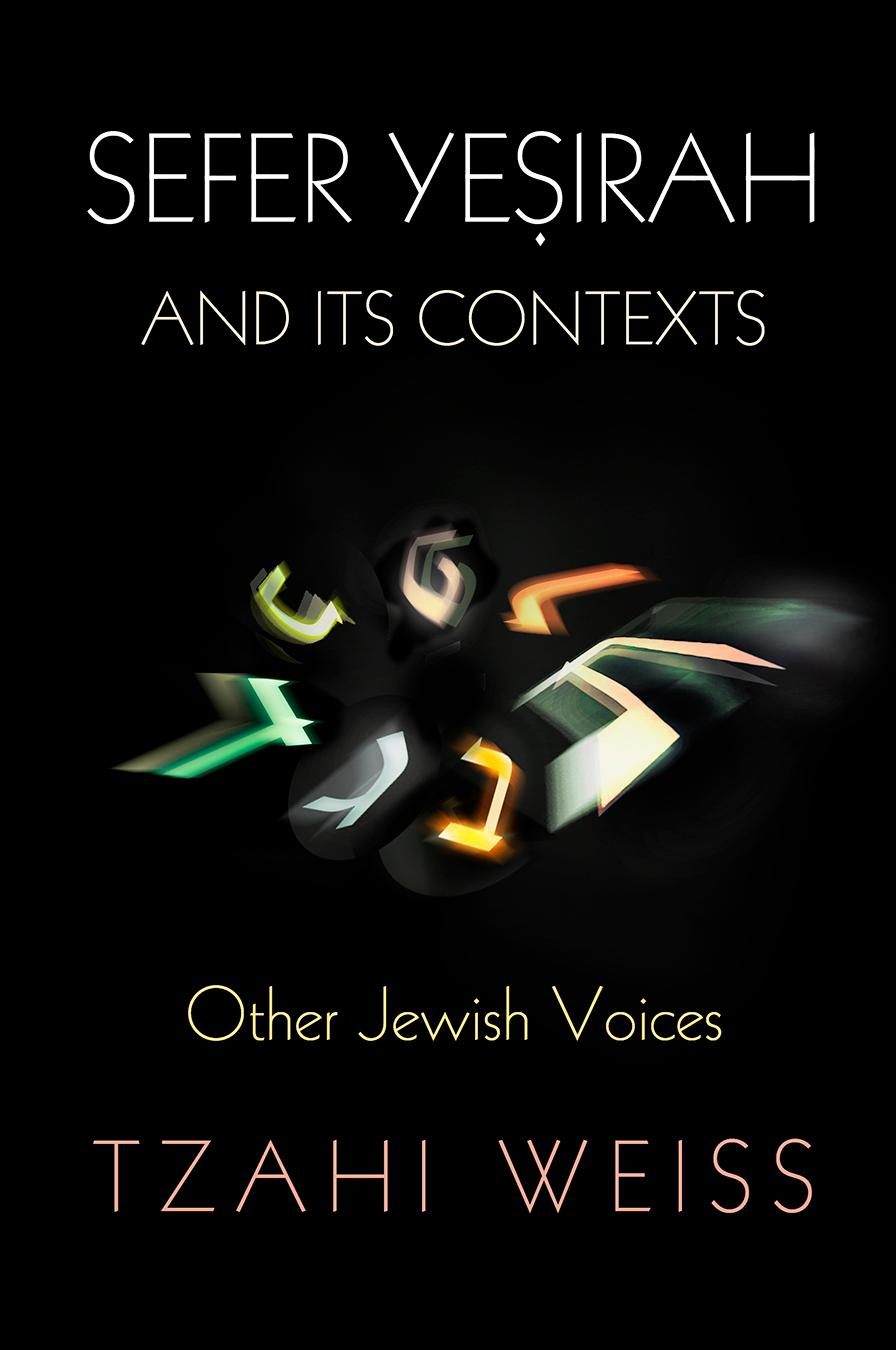
Sefer Yeṣirah, or "Book of Formation," is one of the most influential Jewish compositions of late antiquity. First attested to in the tenth century C.E. and attributed by some to the patriarch Abraham himself, Sefer Yeṣirah claims that the world was created by the powers of the decimal number system and the twenty-two letters of the Hebrew alphabet. This short, enigmatic treatise was considered canonical by Jewish philosophers and Kabbalists and has fascinated Western thinkers and writers as diverse as Leibnitz and Borges. Nonetheless, Sefer Yesirah is nearly impossible to contextualize, mainly owing to its unique style and the fact that it does not refer to, nor is it referenced by, any other source in late antiquity. After a century and a half of modern scholarship, the most fundamental questions regarding its origins remain contested: Who wrote Sefer Yeṣirah? Where and when was it written? What was its "original" version? What is the meaning of this treatise?
In "Sefer Yeṣirah" and Its Contexts, Tzahi Weiss explores anew the history of this enigmatic work. Through careful scrutiny of the text's evolution, he traces its origins to the seventh century C.E., to Jews who lived far from rabbinic circles and were familiar with the teachings of Syriac Christianity. In addition, he examines the reception of Sefer Yeṣirah by anonymous commentators and laypeople who, as early as the twelfth century C.E., regarded Sefer Yeṣirah as a mystical, mythical, or magical treatise, thus significantly differing from the common rabbinic view in that period of the text as a philosophical and scientific work. Examined against the backdrop of this newly sketched historical context, Sefer Yeṣirah provides a unique and surprising aperture to little-known Jewish intellectual traditions of late antiquity and the early Middle Ages which, despite their distance from the rabbinic canon, played a vital role in the development of medieval Jewish learning and culture.
Before Memmo my notes were scattered across PDFs. Now a workspace pulls everything into one place — I see exactly what's still left to study.
Memmo's summaries are gold before exams. I don't have to re-read 800 pages two weeks before — just the important parts.
The AI chat has saved me the night before an exam more than once. I just keep asking until I get it — no waiting on a study group to reply.
The quizzes hit exactly what I need to know. Memmo tracks what I get stuck on — so I only practice what's worth it.
Flashcards with spaced repetition are magic. Memmo knows when I'm about to forget something and brings it back.
The AI podcasts are my favorite. I listen on my way to school and get a recap without sitting at a computer.

Handbok i kvalitativa metoder
281 kr

Hållbar utveckling: en introduktion för ingenjörer och andra problemlösare
334 kr

Brymans Samhällsvetenskapliga metoder
390 kr

Projektledning
491 kr

Den orättvisa hälsan: om socioekonomiska skillnader i hälsa och livslängd
326 kr

Vetenskapsteori för nybörjare
196 kr

Organizational Leadership
429 kr

På väg mot läraryrket
172 kr

Det sociala livet i skolan: Socialpsykologiska perspektiv
253 kr

Betygsättningens didaktik
151 kr

Personality
402 kr

Studying Leadership
404 kr

Managing Innovation
477 kr

Introduktion till samhällsvetenskaplig metod
347 kr

The Psychology of Sex and Gender
698 kr

Evidens och kunskap för socialt arbete
207 kr

Introduction to Leadership
605 kr