
Before Memmo my notes were scattered across PDFs. Now a workspace pulls everything into one place — I see exactly what's still left to study.
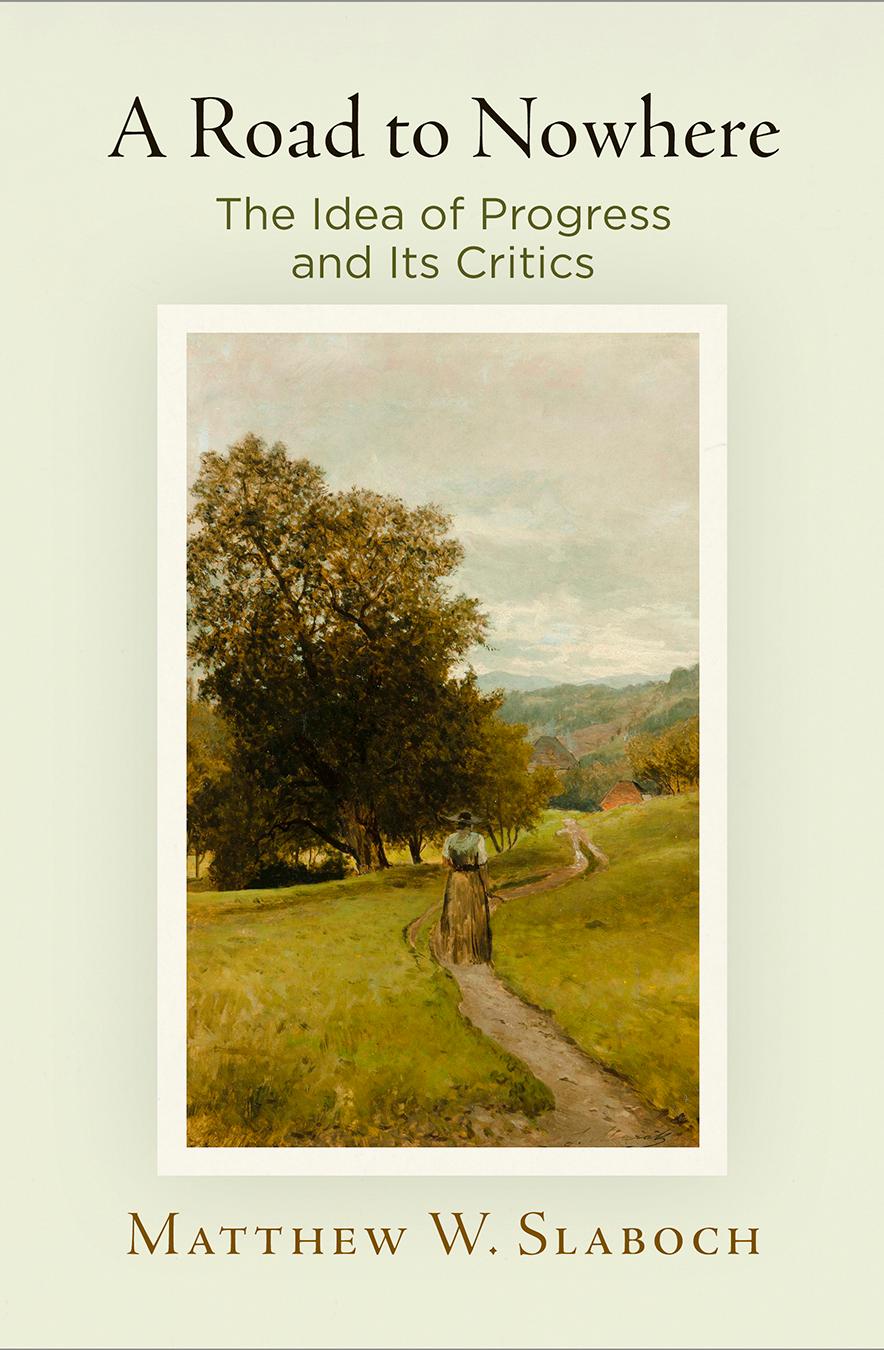
Since the Enlightenment, the idea of progress has spanned right- and left-wing politics, secular and spiritual philosophy, and most every school of art or culture. The belief that humans are capable of making lasting improvements—intellectual, scientific, material, moral, and cultural—continues to be a commonplace of our age. However, events of the preceding century, including but not limited to two world wars, conflicts in Korea and Vietnam, the spread of communism across Eastern Europe and parts of Asia, violent nationalism in the Balkans, and genocides in Cambodia and Rwanda, have called into question this faith in the continued advancement of humankind.
In A Road to Nowhere, Matthew W. Slaboch argues that political theorists should entertain the possibility that long-term, continued progress may be more fiction than reality. He examines the work of German philosophers Arthur Schopenhauer and Oswald Spengler, Russian novelists Leo Tolstoy and Aleksandr Solzhenitsyn, and American historians Henry Adams and Christopher Lasch—rare skeptics of the idea of progress who have much to engage political theory, a field dominated by historical optimists. Looking at the figures of Schopenhauer, Tolstoy, and Adams, Slaboch considers the ways in which they defined progress and their reasons for doubting that their cultures, or the world, were progressing. He compares Germany, Russia, and the United States to illustrate how these nineteenth-century critics of the idea of progress contributed to or helped forestall the emergence of forms of government that came to be associated with each country: fascism, communism, and democratic capitalism, respectively.
Turning to Spengler, Solzhenitsyn, and Lasch, Slaboch explores the contemporary relevance of the critique of progress and the arguments for and against political engagement in the face of uncertain improvement, one-way inevitable decline, or unending cycles of advancement and decay. A Road to Nowhere concludes that these notable naysayers were not mere defeatists and presents their varied prescriptions for individual and social action.
Before Memmo my notes were scattered across PDFs. Now a workspace pulls everything into one place — I see exactly what's still left to study.
Memmo's summaries are gold before exams. I don't have to re-read 800 pages two weeks before — just the important parts.
The AI chat has saved me the night before an exam more than once. I just keep asking until I get it — no waiting on a study group to reply.
The quizzes hit exactly what I need to know. Memmo tracks what I get stuck on — so I only practice what's worth it.
Flashcards with spaced repetition are magic. Memmo knows when I'm about to forget something and brings it back.
The AI podcasts are my favorite. I listen on my way to school and get a recap without sitting at a computer.

Handbok i kvalitativa metoder
281 kr

Hållbar utveckling: en introduktion för ingenjörer och andra problemlösare
334 kr

Brymans Samhällsvetenskapliga metoder
390 kr

Projektledning
491 kr

Den orättvisa hälsan: om socioekonomiska skillnader i hälsa och livslängd
326 kr

Organizational Leadership
429 kr

Vetenskapsteori för nybörjare
196 kr

På väg mot läraryrket
172 kr

Det sociala livet i skolan: Socialpsykologiska perspektiv
253 kr

Betygsättningens didaktik
151 kr

Personality
402 kr

Studying Leadership
404 kr

Managing Innovation
477 kr

Introduktion till samhällsvetenskaplig metod
347 kr

The Psychology of Sex and Gender
698 kr

Evidens och kunskap för socialt arbete
207 kr

Introduction to Leadership
605 kr