
Before Memmo my notes were scattered across PDFs. Now a workspace pulls everything into one place — I see exactly what's still left to study.
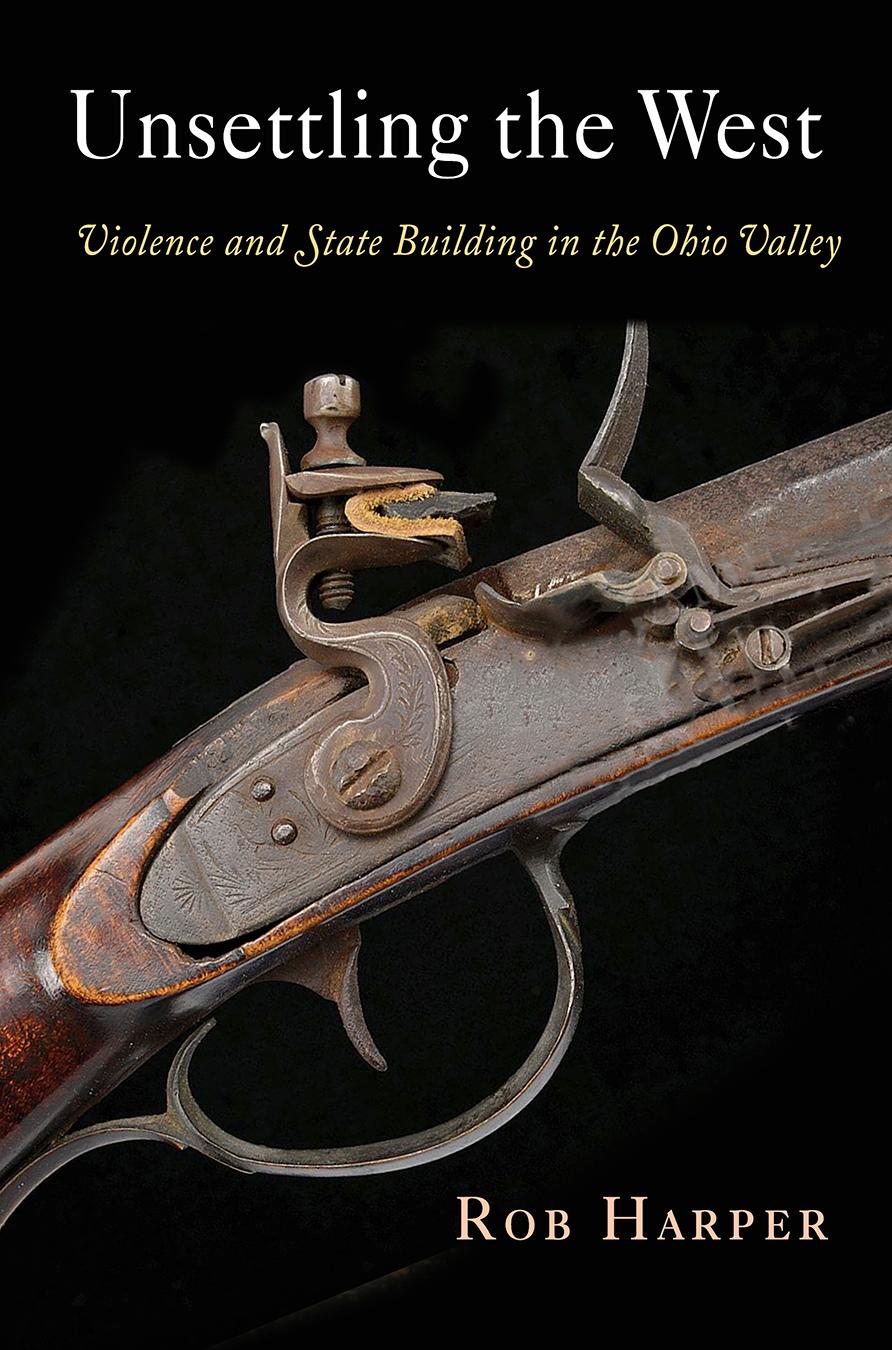
The revolutionary Ohio Valley is often depicted as a chaotic Hobbesian dystopia, in which Indians and colonists slaughtered each other at every turn. In Unsettling the West, Rob Harper overturns this familiar story. Rather than flailing in a morass, the peoples of the revolutionary Ohio Valley actively and persistently sought to establish a new political order that would affirm their land claims, protect them against attack, and promote trade. According to Harper, their efforts repeatedly failed less because of racial antipathy or inexorable competition for land than because of specific state policies that demanded Indian dispossession, encouraged rapid colonization, and mobilized men for war.
Unsettling the West demonstrates that government policies profoundly unsettled the Ohio Valley, even as effective authority remained elusive. Far from indifferent to states, both Indians and colonists sought government allies to aid them in both intra- and intercultural conflicts. Rather than spreading uncontrollably across the landscape, colonists occupied new areas when changing policies, often unintentionally, gave them added incentives to do so. Sporadic killings escalated into massacre and war only when militants gained access to government resources. Amid the resulting upheaval, Indians and colonists sought to preserve local autonomy by forging relationships with eastern governments. Ironically, these local pursuits of order ultimately bolstered state power.
Following scholars of European and Latin American history, Harper extends the study of mass violence beyond immediate motives to the structural and institutional factors that make large-scale killing possible. The Ohio Valley's transformation, he shows, echoed the experience of early modern and colonial state formation around the world. His attention to the relationships between violence, colonization, and state building connects the study of revolutionary America to a vibrant literature on settler colonialism.
Before Memmo my notes were scattered across PDFs. Now a workspace pulls everything into one place — I see exactly what's still left to study.
Memmo's summaries are gold before exams. I don't have to re-read 800 pages two weeks before — just the important parts.
The AI chat has saved me the night before an exam more than once. I just keep asking until I get it — no waiting on a study group to reply.
The quizzes hit exactly what I need to know. Memmo tracks what I get stuck on — so I only practice what's worth it.
Flashcards with spaced repetition are magic. Memmo knows when I'm about to forget something and brings it back.
The AI podcasts are my favorite. I listen on my way to school and get a recap without sitting at a computer.

Handbok i kvalitativa metoder
281 kr

Hållbar utveckling: en introduktion för ingenjörer och andra problemlösare
334 kr

Brymans Samhällsvetenskapliga metoder
390 kr

Projektledning
491 kr

Den orättvisa hälsan: om socioekonomiska skillnader i hälsa och livslängd
326 kr

Organizational Leadership
429 kr

Vetenskapsteori för nybörjare
196 kr

På väg mot läraryrket
172 kr

Det sociala livet i skolan: Socialpsykologiska perspektiv
253 kr

Betygsättningens didaktik
151 kr

Personality
402 kr

Studying Leadership
404 kr

Managing Innovation
477 kr

Introduktion till samhällsvetenskaplig metod
347 kr

The Psychology of Sex and Gender
698 kr

Evidens och kunskap för socialt arbete
207 kr

Introduction to Leadership
605 kr