
Before Memmo my notes were scattered across PDFs. Now a workspace pulls everything into one place — I see exactly what's still left to study.
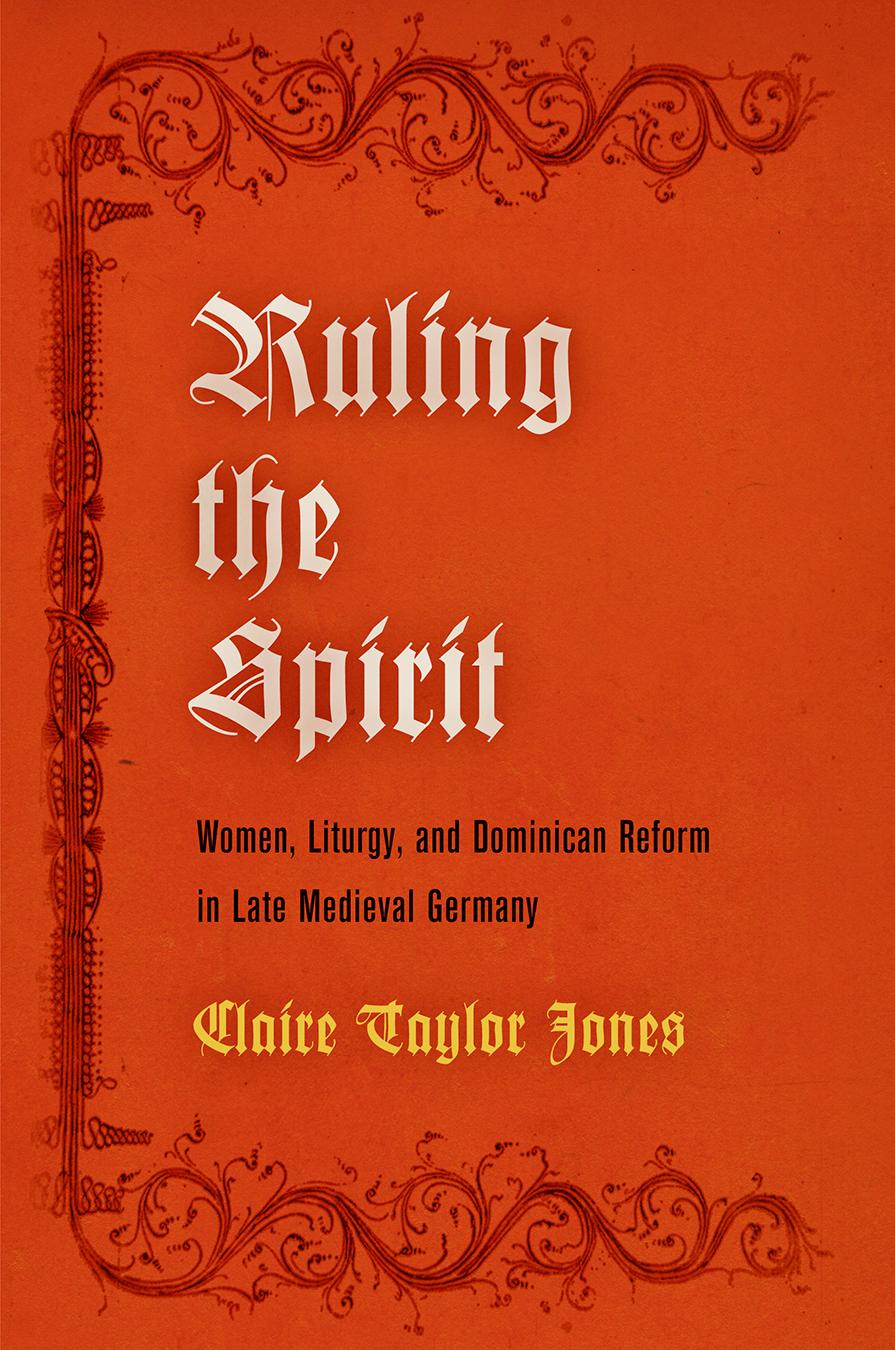
Histories of the German Dominican order have long presented a grand narrative of its origin, fall, and renewal: a Golden Age at the order's founding in the thirteenth century, a decline of Dominican learning and spirituality in the fourteenth, and a vibrant renewal of monastic devotion by Dominican "Observants" in the fifteenth. Dominican nuns are presumed to have moved through a parallel arc, losing their high level of literacy in Latin over the course of the fourteenth century. However, unlike the male Dominican friars, the nuns are thought never to have regained their Latinity, instead channeling their spiritual renewal into mystical experiences and vernacular devotional literature. In Ruling the Spirit, Claire Taylor Jones revises this conventional narrative by arguing for a continuous history of the nuns' liturgical piety. Dominican women did not lose their piety and literacy in the fifteenth century, as is commonly believed, but instead were urged to reframe their devotion around the observance of the Divine Office.
Jones grounds her research in the fifteenth-century liturgical library of St. Katherine's in Nuremberg, which was reformed to Observance in 1428 and grew to be one of the most significant convents in Germany, not least for its library. Many of the manuscripts owned by the convent are didactic texts, written by friars for Dominican sisters from the fourteenth through the fifteenth century. With remarkable continuity across genres and centuries, this literature urges the Dominican nuns to resume enclosure in their convents and the strict observance of the Divine Office, and posits ecstatic experience as an incentive for such devotion. Jones thus rereads the "sisterbooks," vernacular narratives of Dominican women, long interpreted as evidence of mystical hysteria, as encouragement for nuns to maintain obedience to liturgical practice. She concludes that Observant friars viewed the Divine Office as the means by which Observant women would define their communities, reform the terms of Observant devotion, and carry the order into the future.
Before Memmo my notes were scattered across PDFs. Now a workspace pulls everything into one place — I see exactly what's still left to study.
Memmo's summaries are gold before exams. I don't have to re-read 800 pages two weeks before — just the important parts.
The AI chat has saved me the night before an exam more than once. I just keep asking until I get it — no waiting on a study group to reply.
The quizzes hit exactly what I need to know. Memmo tracks what I get stuck on — so I only practice what's worth it.
Flashcards with spaced repetition are magic. Memmo knows when I'm about to forget something and brings it back.
The AI podcasts are my favorite. I listen on my way to school and get a recap without sitting at a computer.

Handbok i kvalitativa metoder
281 kr

Hållbar utveckling: en introduktion för ingenjörer och andra problemlösare
334 kr

Brymans Samhällsvetenskapliga metoder
390 kr

Projektledning
491 kr

Den orättvisa hälsan: om socioekonomiska skillnader i hälsa och livslängd
326 kr

Organizational Leadership
429 kr

Vetenskapsteori för nybörjare
196 kr

På väg mot läraryrket
172 kr

Det sociala livet i skolan: Socialpsykologiska perspektiv
253 kr

Betygsättningens didaktik
151 kr

Personality
402 kr

Studying Leadership
404 kr

Managing Innovation
477 kr

Introduktion till samhällsvetenskaplig metod
347 kr

The Psychology of Sex and Gender
698 kr

Evidens och kunskap för socialt arbete
207 kr

Introduction to Leadership
605 kr