
Before Memmo my notes were scattered across PDFs. Now a workspace pulls everything into one place — I see exactly what's still left to study.
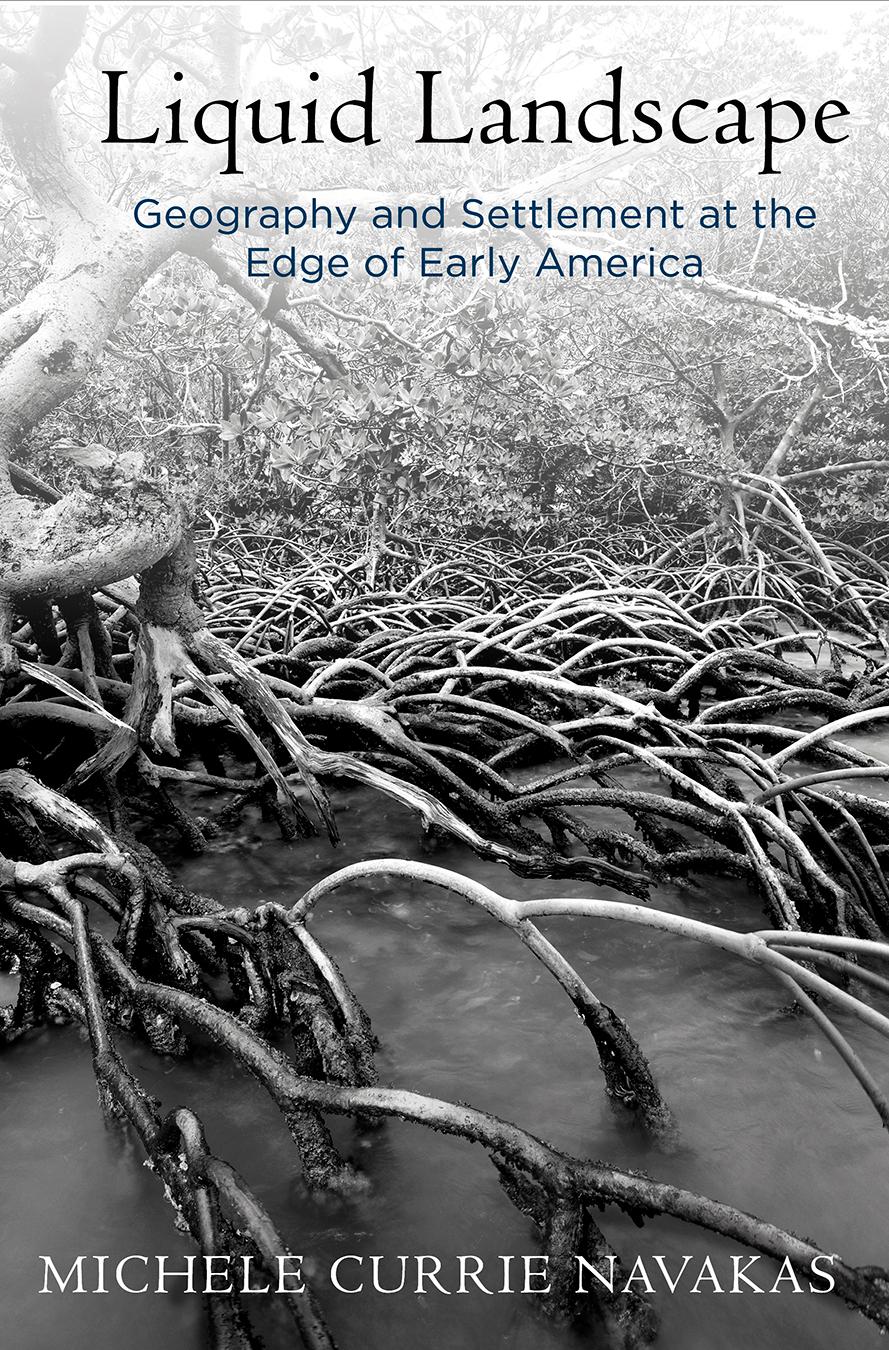
In Florida, land and water frequently change places with little warning, dissolving homes and communities along with the very concepts of boundaries themselves. While Florida's landscape of saturated swamps, shifting shorelines, coral reefs, and tiny keys initially impeded familiar strategies of early U.S. settlement, such as the establishment of fixed dwellings, sturdy fences, and cultivated fields, over the course of the eighteenth and nineteenth centuries, Americans learned to inhabit Florida's liquid landscape in unconventional but no less transformative ways.
In Liquid Landscape, Michele Currie Navakas analyzes the history of Florida's incorporation alongside the development of new ideas of personhood, possession, and political identity within American letters. From early American novels, travel accounts, and geography textbooks, to settlers' guides, maps, natural histories, and land surveys, early American culture turned repeatedly to Florida's shifting lands and waters, as well as to its itinerant enclaves of Native Americans, Spaniards, pirates, and runaway slaves.
This preoccupation with Floridian terrain and populations, argues Navakas, reveals a deep American concern with the challenges of settling a region so exceptional in topography, geography, and demography. Navakas reads a vast archive of popular, literary, and reference texts spanning Revolution to Reconstruction, including works by William Bartram, James Fenimore Cooper, and Harriet Beecher Stowe, to uncover an alternative history of American possession, one that did not descend exclusively, or even primarily, from the more familiar legal, political, and philosophical conceptions of American land as enduring, solid, and divisible. The shifting southern edge of early America produced a new language of settlement, belonging, territory, and sovereignty, and that language would ultimately transform how people all across the rapidly changing continent imagined the making of U.S. nation and empire.
Before Memmo my notes were scattered across PDFs. Now a workspace pulls everything into one place — I see exactly what's still left to study.
Memmo's summaries are gold before exams. I don't have to re-read 800 pages two weeks before — just the important parts.
The AI chat has saved me the night before an exam more than once. I just keep asking until I get it — no waiting on a study group to reply.
The quizzes hit exactly what I need to know. Memmo tracks what I get stuck on — so I only practice what's worth it.
Flashcards with spaced repetition are magic. Memmo knows when I'm about to forget something and brings it back.
The AI podcasts are my favorite. I listen on my way to school and get a recap without sitting at a computer.

Handbok i kvalitativa metoder
281 kr

Hållbar utveckling: en introduktion för ingenjörer och andra problemlösare
334 kr

Brymans Samhällsvetenskapliga metoder
390 kr

Projektledning
491 kr

Den orättvisa hälsan: om socioekonomiska skillnader i hälsa och livslängd
326 kr

Organizational Leadership
429 kr

Vetenskapsteori för nybörjare
196 kr

På väg mot läraryrket
172 kr

Det sociala livet i skolan: Socialpsykologiska perspektiv
253 kr

Betygsättningens didaktik
151 kr

Personality
402 kr

Studying Leadership
404 kr

Managing Innovation
477 kr

Introduktion till samhällsvetenskaplig metod
347 kr

The Psychology of Sex and Gender
698 kr

Evidens och kunskap för socialt arbete
207 kr

Introduction to Leadership
605 kr