
Before Memmo my notes were scattered across PDFs. Now a workspace pulls everything into one place — I see exactly what's still left to study.
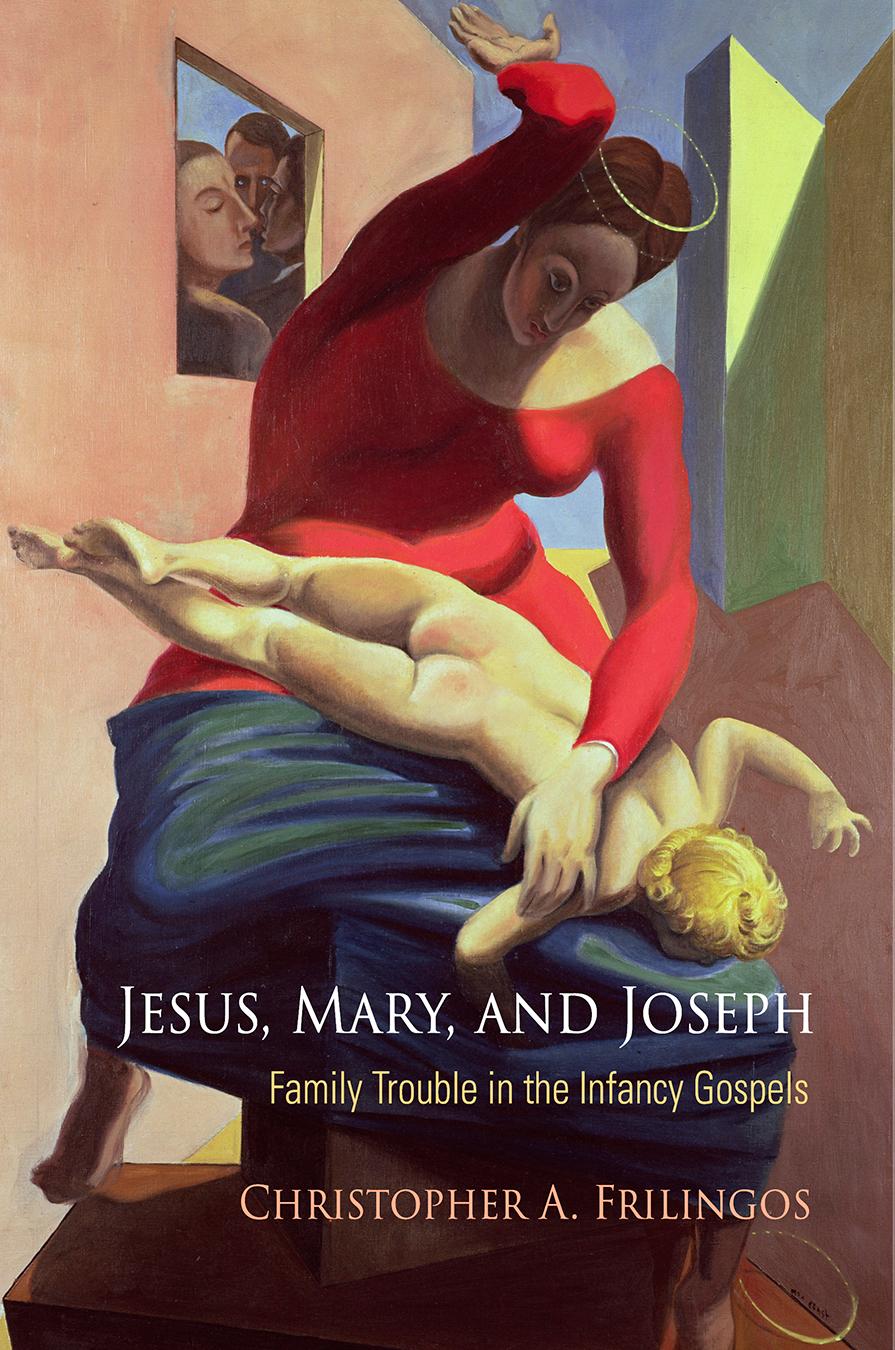
When Jesus was five he killed a boy, or so reports the Infancy Gospel of Thomas. A little boy had run into Jesus by accident, bumping him on the shoulder, and Jesus took offense: "Jesus was angry and said to him, 'You shall go no further on your way,' and instantly the boy fell down and died." A second story recounts how Jesus transformed mud into living birds, while yet another has Joseph telling Mary to keep Jesus in the house so that no one else gets hurt. What was life really like in the household of Joseph, Mary, and little Jesus? The canon of the New Testament provides few details, but ancient Christians, wanting to know more, would turn to the texts we know as the "Infancy Gospels."
The Infancy Gospel of Thomas is a collection of stories from the mid-second century C.E. describing events in the life of Jesus between the ages of five and twelve. The Proto-gospel of James, also dating from the second century, focuses on Mary and likewise includes episodes from her childhood. These gospels are often cast aside as marginal character sketches, designed to assure the faithful that signs of divine grace cropped up in the early years of both Mary and Jesus. Christopher A. Frilingos contends instead that the accounts are best viewed as meditations on family. Both gospels offer rich portrayals of household relationships at a time when ancient Christians were locked in a fierce debate about family—not only on the question of what a Christian family ought to look like but also on whether Christians should pursue family life at all.
Describing the conflicts of family life, the gospels present Jesus, Mary, and Joseph in moments of weakness and strength, reminding early Christians of the canyon separating human ignorance and divine knowledge. According to Frilingos, the depicted acts of love and courage performed in the face of great uncertainty taught early Christian readers the worth of human relationships.
Before Memmo my notes were scattered across PDFs. Now a workspace pulls everything into one place — I see exactly what's still left to study.
Memmo's summaries are gold before exams. I don't have to re-read 800 pages two weeks before — just the important parts.
The AI chat has saved me the night before an exam more than once. I just keep asking until I get it — no waiting on a study group to reply.
The quizzes hit exactly what I need to know. Memmo tracks what I get stuck on — so I only practice what's worth it.
Flashcards with spaced repetition are magic. Memmo knows when I'm about to forget something and brings it back.
The AI podcasts are my favorite. I listen on my way to school and get a recap without sitting at a computer.

Handbok i kvalitativa metoder
281 kr

Hållbar utveckling: en introduktion för ingenjörer och andra problemlösare
334 kr

Brymans Samhällsvetenskapliga metoder
390 kr

Projektledning
491 kr

Den orättvisa hälsan: om socioekonomiska skillnader i hälsa och livslängd
326 kr

Organizational Leadership
429 kr

Vetenskapsteori för nybörjare
196 kr

På väg mot läraryrket
172 kr

Det sociala livet i skolan: Socialpsykologiska perspektiv
253 kr

Betygsättningens didaktik
151 kr

Personality
402 kr

Studying Leadership
404 kr

Managing Innovation
477 kr

Introduktion till samhällsvetenskaplig metod
347 kr

The Psychology of Sex and Gender
698 kr

Evidens och kunskap för socialt arbete
207 kr

Introduction to Leadership
605 kr