
Before Memmo my notes were scattered across PDFs. Now a workspace pulls everything into one place — I see exactly what's still left to study.
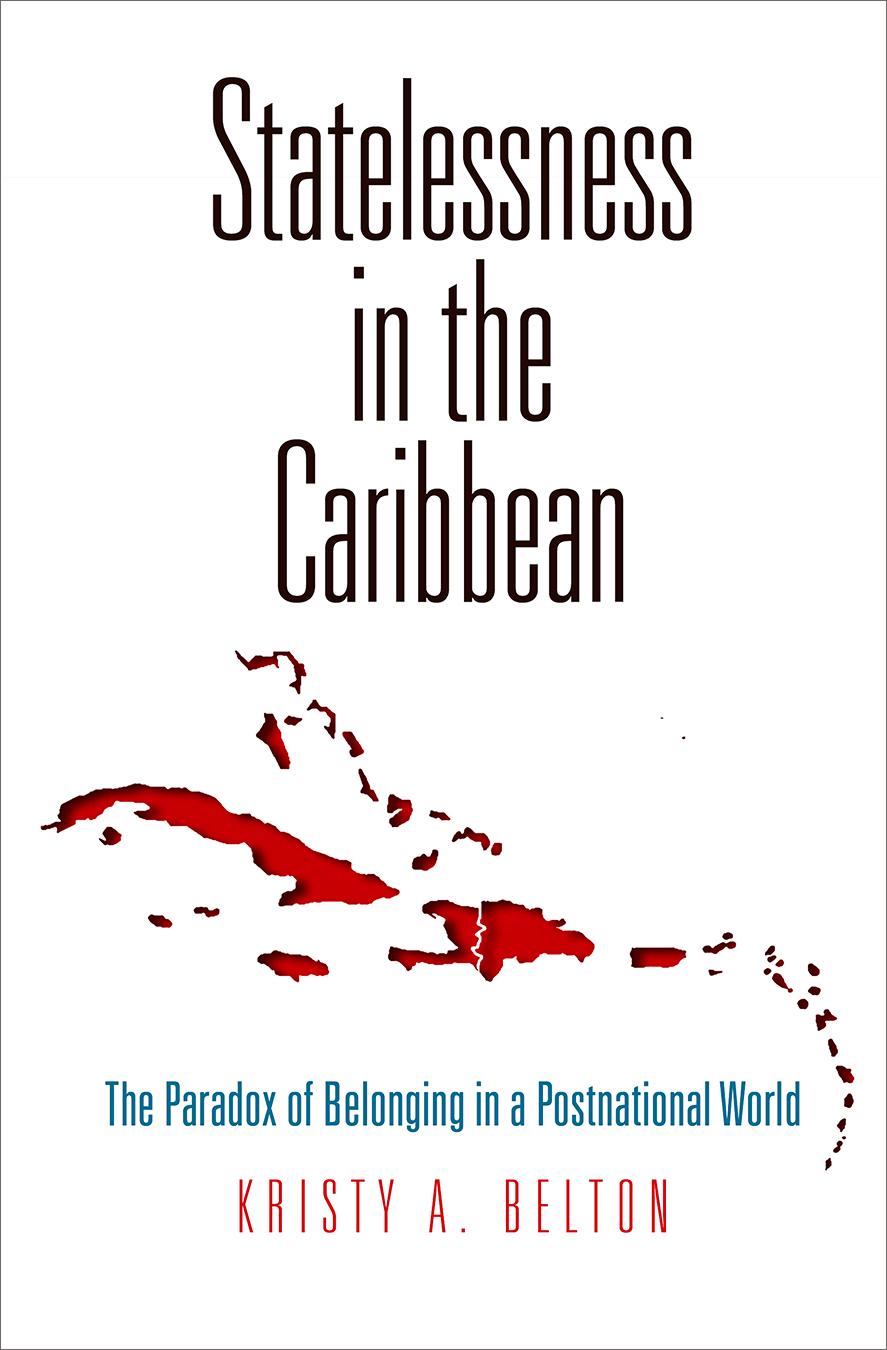
Without citizenship from any country, more than 10 million people worldwide are unable to enjoy the rights, freedoms, and protections that citizens of a state take for granted. They are stateless and formally belong nowhere. The stateless typically face insurmountable obstacles in their ability to be self-determining agents and are vulnerable to a variety of harms, including neglect and exploitation. Through an analysis of statelessness in the Caribbean, Kristy A. Belton argues for the reconceptualization of statelessness as a form of forced displacement.
Belton argues that the stateless—those who are displaced in place—suffer similarly to those who are forcibly displaced, but unlike the latter, they are born and reside within the country that denies or deprives them of citizenship. She explains how the peculiar form of displacement experienced by the stateless often occurs under nonconflict and noncrisis conditions and within democratic regimes, all of which serve to make such people's plight less visible and consequently heightens their vulnerability. Statelessness in the Caribbean addresses a number of current issues including belonging, migration and forced displacement, the treatment and inclusion of the ethnic and racial "other," the application of international human rights law and doctrine to local contexts, and the ability of individuals to be self-determining agents who create the conditions of their own making.
Belton concludes that statelessness needs to be addressed as a matter of global distributive justice. Citizenship is not only a necessary good for an individual in a world carved into states but is also a human right and a status that should not be determined by states alone. In order to resolve their predicament, the stateless must have the right to choose to belong to the communities of their birth.
Before Memmo my notes were scattered across PDFs. Now a workspace pulls everything into one place — I see exactly what's still left to study.
Memmo's summaries are gold before exams. I don't have to re-read 800 pages two weeks before — just the important parts.
The AI chat has saved me the night before an exam more than once. I just keep asking until I get it — no waiting on a study group to reply.
The quizzes hit exactly what I need to know. Memmo tracks what I get stuck on — so I only practice what's worth it.
Flashcards with spaced repetition are magic. Memmo knows when I'm about to forget something and brings it back.
The AI podcasts are my favorite. I listen on my way to school and get a recap without sitting at a computer.

Handbok i kvalitativa metoder
281 kr

Hållbar utveckling: en introduktion för ingenjörer och andra problemlösare
334 kr

Brymans Samhällsvetenskapliga metoder
390 kr

Projektledning
491 kr

Den orättvisa hälsan: om socioekonomiska skillnader i hälsa och livslängd
326 kr

Vetenskapsteori för nybörjare
196 kr

Organizational Leadership
429 kr

På väg mot läraryrket
172 kr

Det sociala livet i skolan: Socialpsykologiska perspektiv
253 kr

Betygsättningens didaktik
151 kr

Personality
402 kr

Studying Leadership
404 kr

Managing Innovation
477 kr

Introduktion till samhällsvetenskaplig metod
347 kr

The Psychology of Sex and Gender
698 kr

Evidens och kunskap för socialt arbete
207 kr

Introduction to Leadership
605 kr