
Before Memmo my notes were scattered across PDFs. Now a workspace pulls everything into one place — I see exactly what's still left to study.
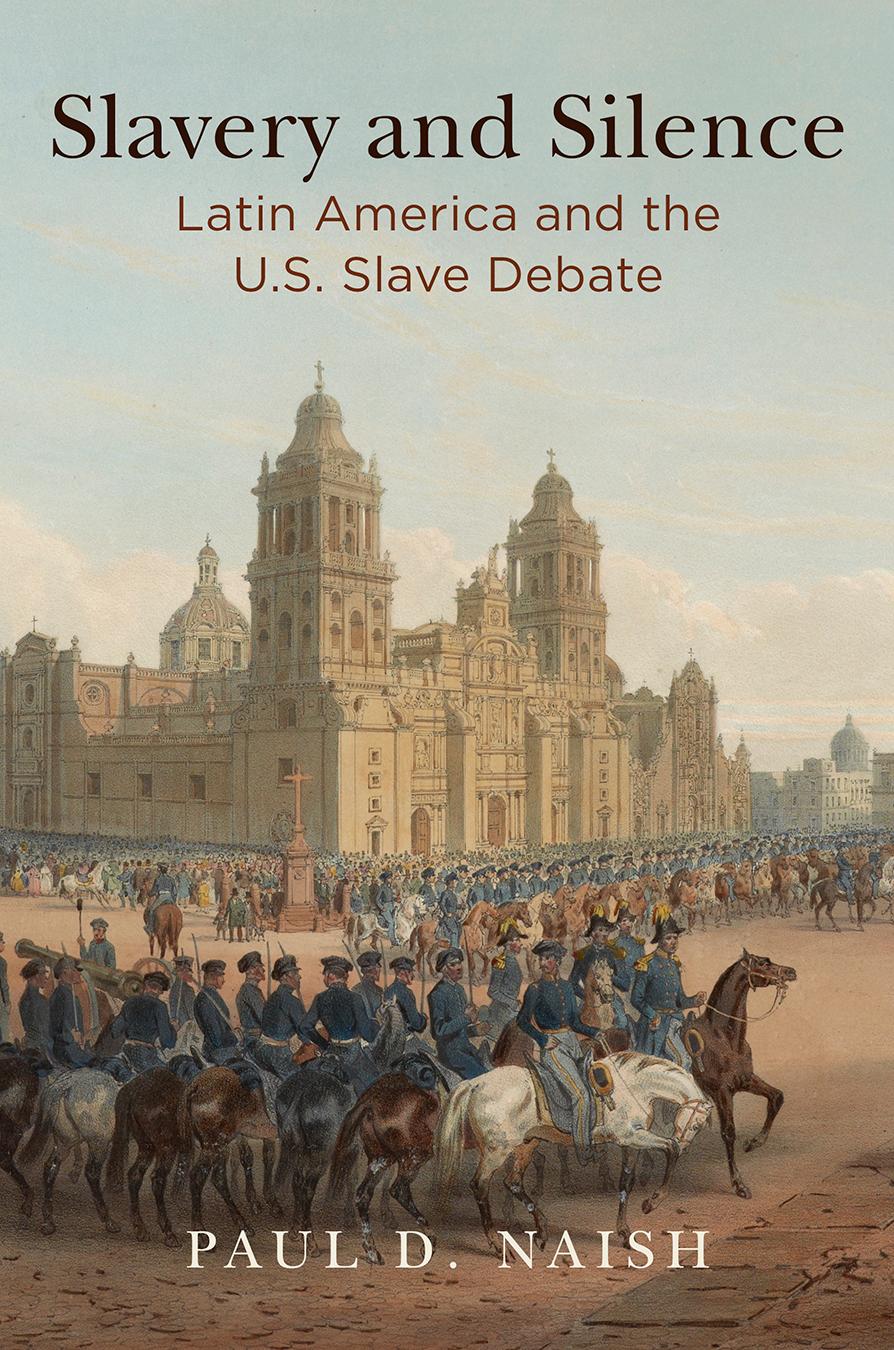
In the thirty-five years before the Civil War, it became increasingly difficult for Americans outside the world of politics to have frank and open discussions about the institution of slavery, as divisive sectionalism and heated ideological rhetoric circumscribed public debate. To talk about slavery was to explore—or deny—its obvious shortcomings, its inhumanity, its contradictions. To celebrate it required explaining away the nation's proclaimed belief in equality and its public promise of rights for all, while to condemn it was to insult people who might be related by ties of blood, friendship, or business, and perhaps even to threaten the very economy and political stability of the nation.
For this reason, Paul D. Naish argues, Americans displaced their most provocative criticisms and darkest fears about the institution onto Latin America. Naish bolsters this seemingly counterintuitive argument with a compelling focus on realms of public expression that have drawn sparse attention in previous scholarship on this era. In novels, diaries, correspondence, and scientific writings, he contends, the heat and bluster of the political arena was muted, and discussions of slavery staged in these venues often turned their attention south of the Rio Grande.
At once familiar and foreign, Cuba, Brazil, Haiti, and the independent republics of Spanish America provided rhetorical landscapes about which everyday citizens could speak, through both outright comparisons or implicit metaphors, what might otherwise be unsayable when talking about slavery at home. At a time of ominous sectional fracture, Americans of many persuasions—Northerners and Southerners, Whigs and Democrats, scholars secure in their libraries and settlers vulnerable on the Mexican frontier—found unity in their disparagement of Latin America. This displacement of anxiety helped create a superficial feeling of nationalism as the country careened toward disunity of the most violent, politically charged, and consequential sort.
Before Memmo my notes were scattered across PDFs. Now a workspace pulls everything into one place — I see exactly what's still left to study.
Memmo's summaries are gold before exams. I don't have to re-read 800 pages two weeks before — just the important parts.
The AI chat has saved me the night before an exam more than once. I just keep asking until I get it — no waiting on a study group to reply.
The quizzes hit exactly what I need to know. Memmo tracks what I get stuck on — so I only practice what's worth it.
Flashcards with spaced repetition are magic. Memmo knows when I'm about to forget something and brings it back.
The AI podcasts are my favorite. I listen on my way to school and get a recap without sitting at a computer.

Handbok i kvalitativa metoder
281 kr

Hållbar utveckling: en introduktion för ingenjörer och andra problemlösare
334 kr

Brymans Samhällsvetenskapliga metoder
390 kr

Projektledning
491 kr

Den orättvisa hälsan: om socioekonomiska skillnader i hälsa och livslängd
326 kr

Vetenskapsteori för nybörjare
196 kr

Organizational Leadership
429 kr

På väg mot läraryrket
172 kr

Det sociala livet i skolan: Socialpsykologiska perspektiv
253 kr

Betygsättningens didaktik
151 kr

Personality
402 kr

Studying Leadership
404 kr

Managing Innovation
477 kr

Introduktion till samhällsvetenskaplig metod
347 kr

The Psychology of Sex and Gender
698 kr

Evidens och kunskap för socialt arbete
207 kr

Introduction to Leadership
605 kr