
Before Memmo my notes were scattered across PDFs. Now a workspace pulls everything into one place — I see exactly what's still left to study.
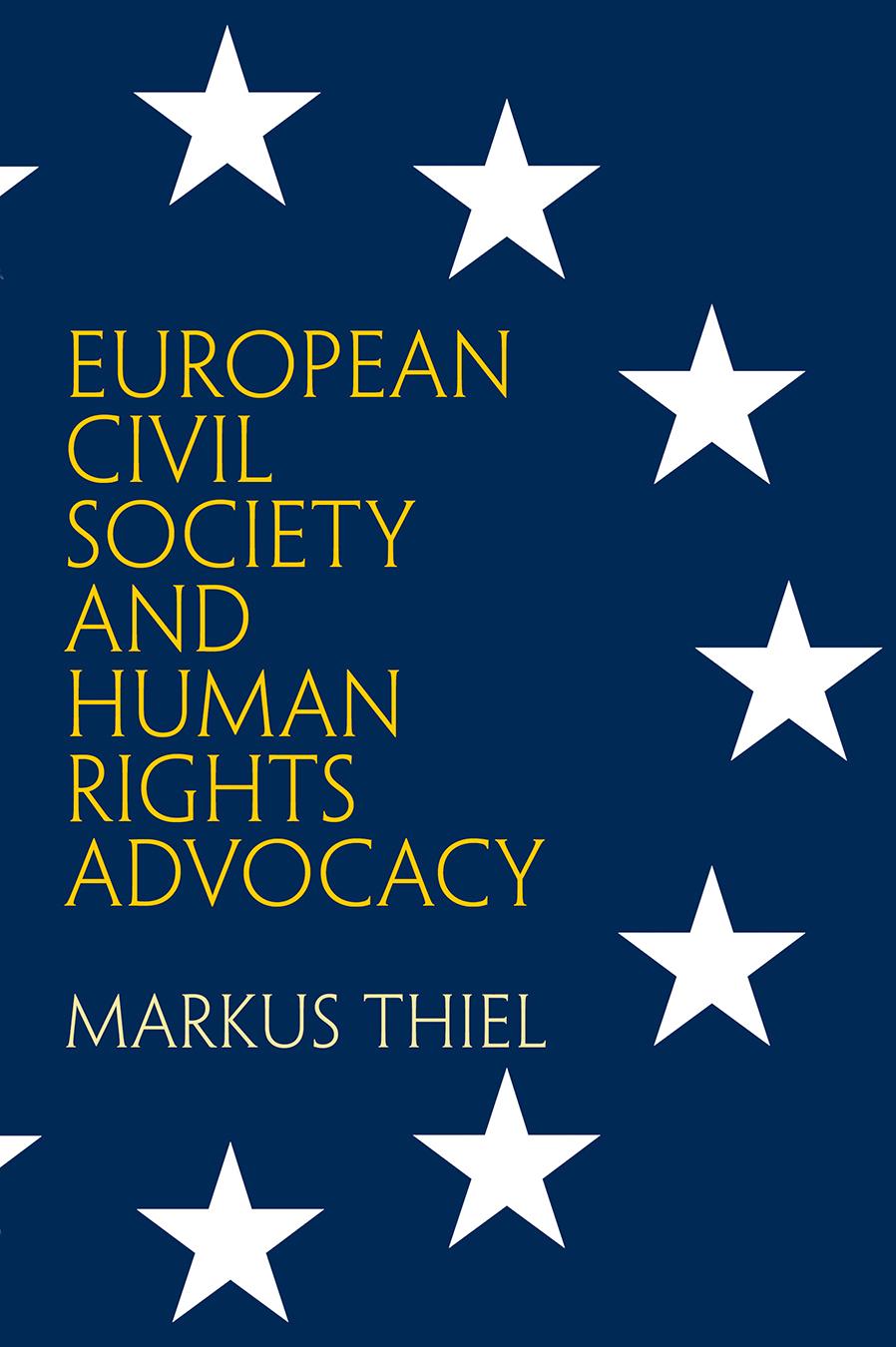
Adherence to basic human rights norms has become an expected feature of states throughout the world. In Europe, the promotion and protection of human rights through national governments has been enhanced by the diversity of intergovernmental organizations committed to this cause. The latest addition to the continent's rights organizations arrived ten years ago when, based on the EU's Lisbon Treaty, the Fundamental Rights Agency (FRA) was created as a functional institution to highlight and improve human rights within EU member states. In contrast to other regulatory agencies in the EU, the FRA provides a research-based advisory function for EU institutions and legislation and performs a public-diplomacy function in promoting fundamental rights across EU member states.
The linking of civil society with internal rights policies has yet produced very little scholarship. Markus Thiel's European Civil Society and Human Rights Advocacy not only fills this vacuum: it also offers a timely analysis in the context of Europe's proliferating human rights challenges, like the current refugee crises and the nationalist responses that geopolitical changes have provoked. European Civil Society and Human Rights Advocacy examines the interaction between the FRA and hundreds of transnational civil society organizations working with and on behalf of vulnerable populations in EU member states and probes the high normative standards of human rights attainment and transnational participatory governance in the EU.
Thiel surveys how networking among civil society organizations takes place, to what extent they are able to set the agenda or insert themselves into EU decision-making procedures, and how they are able to exploit the opportunity structure presented by the FRA's institutionalization of a voice for civil society. Thiel draws conclusions for the larger issues of human rights promotion, transnational citizenship, and participatory governance in the region, reflecting broadly and critically on the legitimacy of EU human rights norms through a political sociology perspective.
Before Memmo my notes were scattered across PDFs. Now a workspace pulls everything into one place — I see exactly what's still left to study.
Memmo's summaries are gold before exams. I don't have to re-read 800 pages two weeks before — just the important parts.
The AI chat has saved me the night before an exam more than once. I just keep asking until I get it — no waiting on a study group to reply.
The quizzes hit exactly what I need to know. Memmo tracks what I get stuck on — so I only practice what's worth it.
Flashcards with spaced repetition are magic. Memmo knows when I'm about to forget something and brings it back.
The AI podcasts are my favorite. I listen on my way to school and get a recap without sitting at a computer.

Handbok i kvalitativa metoder
281 kr

Hållbar utveckling: en introduktion för ingenjörer och andra problemlösare
334 kr

Brymans Samhällsvetenskapliga metoder
390 kr

Projektledning
491 kr

Den orättvisa hälsan: om socioekonomiska skillnader i hälsa och livslängd
326 kr

Vetenskapsteori för nybörjare
196 kr

Organizational Leadership
429 kr

På väg mot läraryrket
172 kr

Det sociala livet i skolan: Socialpsykologiska perspektiv
253 kr

Betygsättningens didaktik
151 kr

Personality
402 kr

Studying Leadership
404 kr

Managing Innovation
477 kr

Introduktion till samhällsvetenskaplig metod
347 kr

The Psychology of Sex and Gender
698 kr

Evidens och kunskap för socialt arbete
207 kr

Introduction to Leadership
605 kr